I’m just coming up for air after a bout of intensive lecturing. I teach a few different classes for American university students in London, but my favourite, semester after semester, is my documentaries class. It is here, in a deliberately darkened classroom near Holborn, that I share the highlights of twenty years immersed in the world of British documentary. We cover the whole factual spectrum, from independent feature documentaries to heavily formatted reality, and everything in between.
Usually, my students arrive having been exposed to roughly two kinds of factual fare: worthy subject based documentaries, like Ken Burns’ marathon series that their parents watch, or the far-from-real world of the Real Housewives or Kardashians. If I’m lucky these days, and frequently I am thanks to Netflix, they will have streamed a few American documentary features like Blackfish or Girl Model. They know Sherlock, and Doctor Who but have never heard of Louis Theroux or the term “fixed rig“. They are a blank slate when it comes to British factual, and I have fifteen weeks to make my mark.
I have to begin by introducing them to something else they have never heard of: Public Service Broadcasting. For while the BBC is in a perilous state at the moment, with no reprieve in sight, the PSB tradition it stems from is crucial to understanding just how the Brits got so great at making documentaries. I wrote my entire MA thesis on the topic. It’s important.
John Grierson
In class, after we look at the notion of public service broadcasting, and how it was extended with the creation of Channel 4 in the 80s (also, sadly, under threat), we turn to John Grierson, who coined the term documentary, defining it as the “creative of treatment of actuality”. We have a look at Grierson’s most famous sequence in his seminal film Night Mail, which shows the postal train rhythmically chugging north to Scotland, to words by W.H. Auden and music by Benjamin Britten:
We learn just how Grierson came to make propaganda films for the British government, by dipping into Britain Through A Lens: The Documentary Film Mob, made by the excellent Lambent Productions. It includes a clip from Grierson’s box office hit Drifters (1929), about the British herring trade. While I recognize I need to tread softly and not show Drifters in its entire, silent, black and white glory, my students were gratifyingly engrossed when I showed a modern take on deep sea fishing, Channel 4’s recent The Catch, a fixed rig series which was mesmerizing from start to finish.
After our crash course in PSB and Grierson, we look more in depth at contemporary examples of Grierson’s creative treatment of actuality, in its many guises. We explore the topic with the help of a specially curated Flipboard Magazine; I often ask students to use articles in it as a starting point for further research. We also hear from a number of leading filmmakers – Kim Longinotto, Brian Hill and Christopher Hird have all been recent guest lecturers.
As students gear up to make their own three minute film for a final project, it’s critical for them to see how a simple construct can make a powerful film. Marc Isaac’s beautifully made first film Lift – shot entirely in the elevator of a tower block in East London – is a great example.
Lift
While it would be a joy to spend our entire time looking at the work of talented British independent documentary makers, my charges are about to enter the real world and many are hoping for a career in television. So a large chunk of our time is spent looking at the world of formats, with the occasional help of the always entertaining Gogglebox and Charlie Brooker. My students are surprised to learn just how many of the American shows they watch are British formats made by British production companies. But our focus is not so much on this crossover as on those reality formats in the UK that traditionally haven’t had a hope in hell of appearing on mainstream US television. In the hopes of fostering transatlantic fertilisation, I spend a lot of time exploring the intersection of public service and reality, looking at how some UK production companies are doing both, in really interesting ways. For more on that, stay tuned…
One of the surprise hits of this year’s Sheffield Doc/Fest, where it had its world premiere, Addicted to Sheep is that increasingly rare specimen: an observational documentary, largely made in the cinéma vérité tradition. On the big screen it’s a treat for the senses, immersing you in the lives of a family of tenant sheep farmers in the north of England. Currently screening in UK cinemas, it’s been getting rave critical reviews. I recently did a post-screening Q&A with the director Magali Pettier at Bertha Dochouse. Here’s a brief excerpt:
There were quite a few scenes in there when they clearly could use another hand. Did they ever say, ‘Magali, could you help me with this’?
Yes, and I do feel it sometimes, especially with the scene with the gate [where the farmer struggles at some length to fix a gate]. But my role as a filmmaker is to observe and see what is happening. If he had fallen and broken his leg of course I would go and help. But you shouldn’t intervene, and my aim is to film what is happening, and if I hadn’t been there, there wouldn’t be anyone to help him. He wasn’t in any danger. I think sometimes, having been brought up on a farm, I knew when to be there to help, and when to be quiet, because there are some very tense moments and you have to make yourself very small.
Magali Pettier
They certainly didn’t expect you to be spending Christmas Day with them!
They certainly didn’t. It didn’t take too much convincing and they said yes you can come while we open presents but after that we’d like to have the day to ourselves. They did make me feel like part of the family, and I stayed in the house with them when I was filming them.
It’s quite impressive, and in some ways these days slightly old-fashioned to have such an observational style. You had some interviews on the go, to give context to their lives. Otherwise it’s very minimalist. Have you been surprised how well the film has been received by audiences?
So far we’ve had a really good response. People appreciate they are not being told something all the time. It is filmed in a way that allows them to experience that environment and they feel like they’ve been there and that they know the family. For me that was the aim. I wanted the film to touch on social issues but I didn’t want it to be about social issues. I wanted people to think about it, and open up a conversation, but I wasn’t going to make a campaigning film. I wanted it to be about real people.
How do you know, in a film like this, that it’s time to stop filming?
I spent about 45 days over 18 months there. I could tell they wanted to get on with their lives! And going to those places and having me always behind or in front of them, or sometimes with a radio mic on them, I could really feel it when there was stress on the farm, that it was time. I had asked enough of the family, and we had to make the film with what we had.
And the family is happy with the film?
They liked it. But they said at first that they were not sure what the community would think. But we had a preview in the community with feedback forms and everyone agreed it was a good representation of the area. So that gave them confidence that it was okay – the community liked it so it was fine.
Check out this link for upcoming screenings of Addicted to Sheep.
So I’ve heard from a fair number of people that they’d like more blogs about films they can actually watch *now* rather than new docs which could take an eternity to come to a small screen near your sofa. So, obligingly, here’s a few films that you can watch now (if you’re in the UK, that is…will follow up soon with a US Netlix post).
Channel 4’s factual archive hosts more than a few outstanding documentaries and is altogether more satisfying in its scope and range than the BBC online archive, including films from a number of the UK’s leading documentary makers. Here are a couple of my favorites:
A classic from Kim Longinotto, this is a great introduction to her work. Here’ s my write-up on it for Sheffield Doc/Fest 2002:
Nine year old Fouzia stands in her finest white dress to recite her poem called “The Day I Will Never Forget.” But instead of a tale of a cherished holiday memory, she talks about her forced circumcision at her mother’s insistence. Kim Longinotto’s latest film demystifies the practice of female genital mutilation through engrossing stories of Kenyan women. As young girls like Fouzia cope with the painful aftermath of their trauma – and in the film’s most difficult scene we witness it firsthand – older women demonstrate how entrenched cultural beliefs can override the maternal instinct to protect. But times are changing. Nurse Fardhosa teaches hygiene to circumcisers in Nairobi, while quietly encouraging them to stop. And a group of runaway girls are seeking court action against their parents…Gripping devastating, but ultimately hopeful.
Nick Broomfield’s dogged following of the South African white supremicist leader Eugene Terre’Blanche comes to a climax in one the most famous scenes from Broomfield’s impressive body of work. Deliberately showing up late for a long-requested interview, the tongue lashing Broomfield receives sheds more insight on Terre’Blanche than a tradtitional interview ever could. Funny and riveting in turns, this is Broomfield at his best.
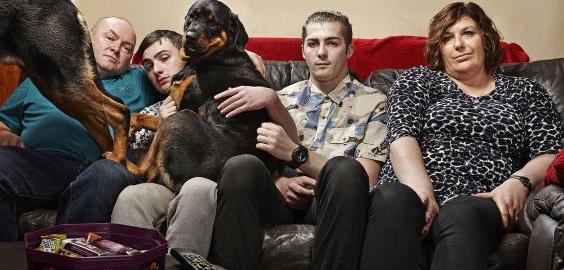
Finally, be sure to check out From Russia with Cash (top picture above), which will be available on Channel 4 for a couple more weeks. Director Dan Reed sheds a long overdue light on just how easy it is to launder money through London’s property market. Secretly filming throughout, Reed sends actors posing as Russian government minister “Boris” and his trophy girlfriend to five top end properties, where estate agents eager to earn their hefty commissions prove all too willing to provide advice on how Boris can buy the property with what he clearly states is dodgy money. In the aftermath of the film’s broadcast last week, two investigations have been launched, as well as parliamentary questions. Reed is one of the most talented documentary makers working today – you can see several of his films on the Channel 4 archive including the multi award-winning The Paedophile Hunter and Terror in Moscow.
Docs on Screens is taking a summer hiatus – and a lengthy trip to the US. See you in the autumn, and thanks for reading if you have got this far!
In September 2013, veteran doc maker Fergus O’Brien took up a new post as Executive Producer at the BBC, working with head of documentaries Ayesha Rafaele. On his first day, he was handed a very big project: “Literally I was walking in the door and I bumped into Ayesha and she said ‘Do you fancy exec-ing the Met?’ I’m not sure I knew exactly what that would mean but I said yes.”
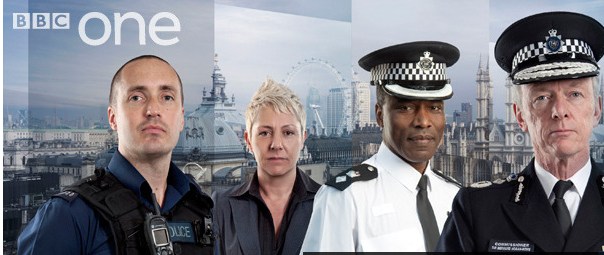
O’Brien soon found himself immersed in steering one of the biggest access-driven documentary series in the BBC’s recent history. Airing on BBC One, The Met: Policing London is the first time a broadcaster has been given comprehensive access to London’s police force.
Fergus O’Brien
For O’Brien, it has been rather a bumpy ride: “Inevitably with stuff that’s dealing with the law and criminality and so on, the phone never stopped. You’re often managing people’s worries, and people’s concerns, and keeping an eye on the legalities of things and keeping a steady line of contact open with our editorial policy team and our legal team.”
Initially a six part series, the team had to drop one of the episodes, when legal restrictions prevented them from airing a major storyline about domestic abuse: “That was very difficult – it’s hard to say goodbye,” says O’Brien. “It would have been a really strong story and often those stories, where the victim is willing to be on camera, aren’t told. Unfortunately through the peculiarities of the legal system we couldn’t show it.”
As director of such films as Channel 4’s Seven Days and the acclaimed, and very funny, The Armstrongs (BBC One) O’Brien is used to following a variety of strong characters across numerous settings. But helping the four shooting teams negotiate their way through the labyrinthine Met was a job like no other: “Each of the teams was assigned to a response team in a different borough of London, and a cross-section of boroughs which would reflect the diversity of the city,” he says. “And each team also took on one or two specialist units, whether it was homicide or Trident. The idea being that the bigger units would hopefully provide us with a spine for each film and something we could come back to, and then we could pepper it with a mixture of different response stories to flesh things out and give a sense of variety in each programme.”
Whilst access had been given from the top, it continued to have to be negotiated throughout: “We had to get consent from everyone, even if they were in the background,” says O’Brien. “It’s the usual thing, from our point of view: unless people want to do it there isn’t a point. If they feel they are being forced into it, it just isn’t that great.”
The production ended up with 2,000 hours of footage, shot over the year, and edited over many months. Even now, as the series is airing, O’Brien is still putting out fires: “It’s not the same as covering a story and when it is done and dusted in the courts you put it out. It is just ongoing; it’s daily. Every day now we have to check every single case across the series to make sure people haven’t re-offended and we’re not in contempt of court. It’s a huge part of it.”
The Met: Policing London is airing on Mondays on BBC One at 9pm until early July. Read about a very different way to film police docs here.
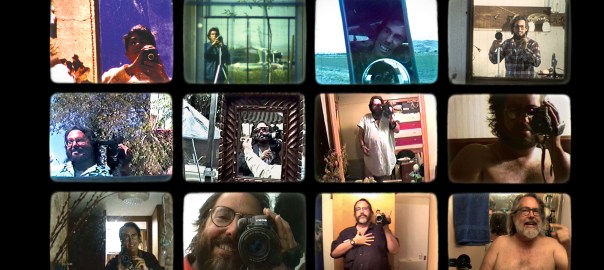
A film about an eccentric early adopter of autobiographical filmmaking kicks off the Open City Documentary Festival tonight. Sam Klemke’s Time Machine, directed by Matthew Bate (who made the fabulous Shut Up Little Man! An Audio Misadventure) tells the story of how Klemke for 35 years has documented his own underachieving life – in end of year video diaries detailing his spiraling girth and roller coaster love life. It’s just one of many intelligent, thought provoking docs dominating the festival, whose 5th edition sees it expand to cinemas across London.
Since its inaugural year in 2011 the festival has grown four-fold in numbers, from 1,000 to 4,000, according to festival founder and director Michael Stewart: “We’re trying to grow about 20% in terms of audience each year, up to the point where we have the right kind of audience. We’re not in the business being a 100,000 person festival,” he says.
The festival maintains a principle of showing films which otherwise wouldn’t get distribution in Britain. Whilst the first year showed an overambitious 180 films, the festival has decreased the number of films, in order to ensure each one receives the attention it deserves, according to Stewart. University College London continues to fund about a third of the festival, but this year all screenings have shifted from the university’s lecture theatres to cinemas. The ICA, Bertha Dochouse, Regent Street and Picturehouse Central are among the venues, which Stewart hopes will draw a diverse crowd of doc lovers.
It remains to be seen whether the geographical expansion of the festival will detract from its feel: “How you build a festival in the middle of London and which is all over London but has a festival hub atmosphere is a challenge,” admits Stewart. “We’re working on that.”
Michael StewartOpen City is also running a number of industry events, including a session on Wednesday, A Smart Portrait of London, on the data generated by digitization of our cities. The industry events also include a number of radio sessions, as well as making online docs for the likes of the Guardian, Vice and Dazed. According to Stewart, practitioners in London are hungry for such fare: “What we have put on for industry has really expanded. We’ve got a whole week of events, doing things which people can’t get elsewhere. There are 100,000 people working in the digital film industry in London and they’re not served properly. They don’t all go to Sheffield by any means.”
The Closer We GetOpen City closes on Sunday evening with a moving personal doc from Scottish filmmaker Karen Guthrie, The Closer We Get, in which Guthrie returns home to look after her ailing mother and explores some painful family secrets.
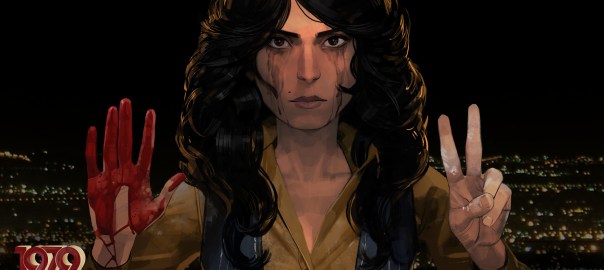
The worlds of gaming and documentary coalesce in a fascinating new project by a Grand Theft Auto producer. In 1979 Revolution, the story of the Iranian revolution is played out in a vibrant immersive experience that puts you in the middle of the crowd, and having to make a series of life and death decisions. Using extensive research, including audio interviews, still photography and academic consultants, the team takes users through a survival game that incorporates chaotic street scenes, and backroom interrogations. Told through the eyes of Reza, a young photojournalist living in Tehran, the project was developed in collaboration with contributors such as photographer Michel Setboun, whose photographs form an integral part of the experience. As described in Ink Stories’ website, Reza’s journey is a turbulent one: “Surrounded by a group of impassioned key figures involved in overthrowing the regime – Reza’s engagement becomes a high stakes chess match of decision making – whereby everything is at risk.”
At Sheffield Doc/Fest’s Interactive Exhibit, I spoke with Ink Stories founder Navid Khonsari about the project, asking him whether, by gamifying such events, he runs the risk of criticism. Here’s what he had to say:
Our goal is to educate people whose opinion of gaming is limited. So that’s part of the challenge – and it’s a challenge. Interactive documentaries are the step between us and documentaries, and we’re actually the full monty. With this we’re creating a new genre – we’re calling it vérité games. So the challenge of that has been great. If you really want to have an impact you have to follow that old saying of live a day in another person’s shoes. This lets you live, you make choices. When you are on the frontline with your brother and your cousin, and that relationship has been developed over an hour and forty five minutes, and they start shooting and you have to decide who you are going to push out of the way, that’s real. The suspense and the drama comes from that. And quite simply it has a greater outreach than interactive documentary.
Navid Khonsari at Sheffield Doc/Fest
Khonsari is convinced that the experience will appeal not only to the gaming generation, but also to an older generation interested in the topic: “We don’t alter the history that has taken place – that is defined as it is. But what we are doing is allowing you to have your own narrative in there, based on people’s experiences. What would it be like to be on those streets, to be those people that believe in the possibility of change? And then to have people go for it, fight for it, have it turn somewhat chaotic, and yet in their opinion all succeed because the Shah leaves. And then the aftermath winds up becoming that the most powerful, the most vicious of those who help the revolution succeed winds up taking over.”
Here’s a BBC item from its premiere at Sundance that gives you a glimpse of the game, and includes an interview with co-creator Vassiliki Khonsari:
With the support of the Sundance Institute, the team has crowdsourced memories of the revolution, and will be engaging in extensive outreach at they roll it out. For more information, check out the Ink Stories website – which features abundant press about a project which promises to break new ground in interactive learning.
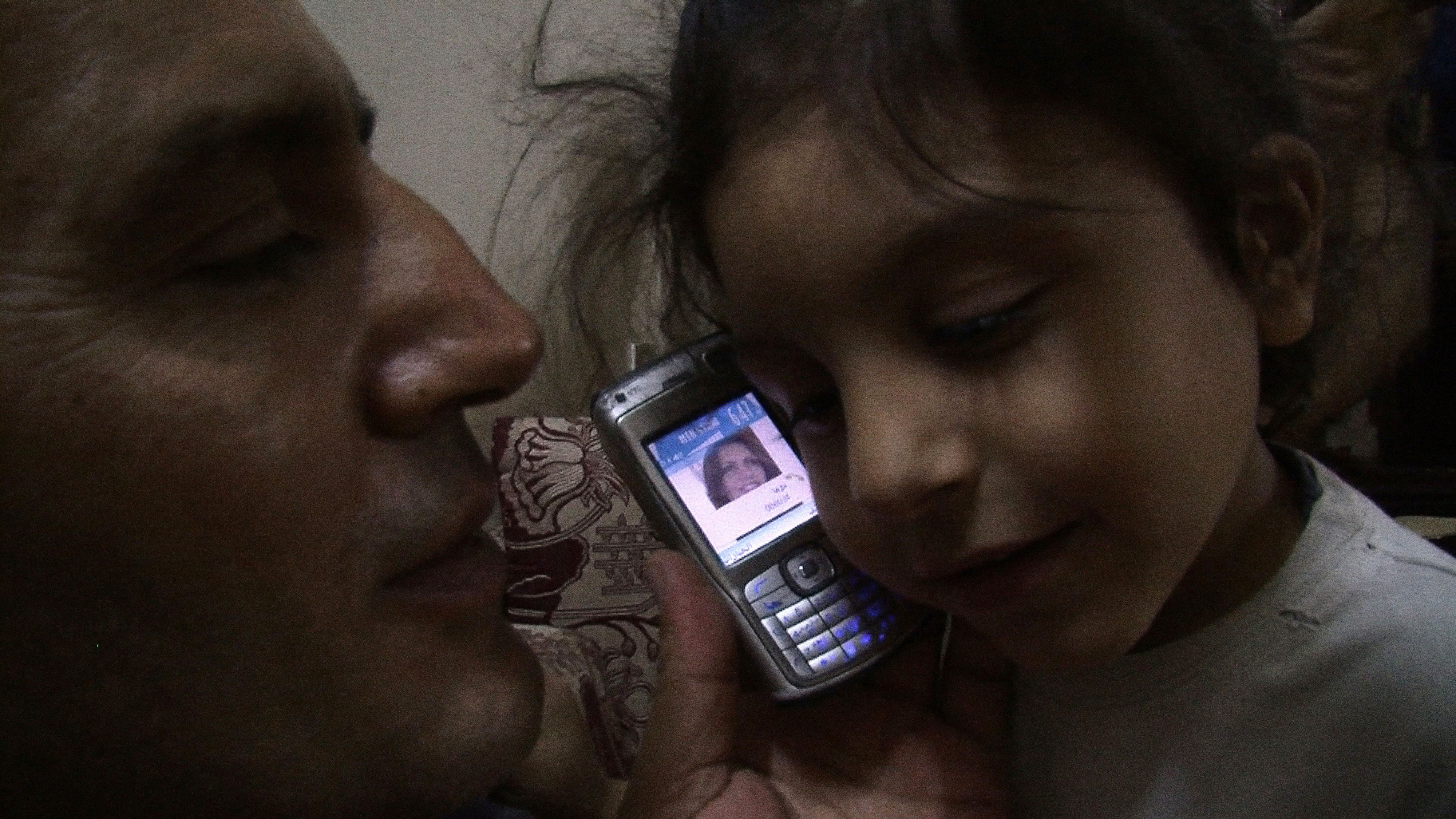
British documentary Sean McAllister is known for launching himself into foreign lands, often in the midst of war, and finding unforgettable personal stories. Whether it’s via a piano player in Baghdad, a postal worker in Japan, Sean’s own “minders” in Iraq, these are stories of ordinary people – though always strong characters – struggling to survive in an often unkind world. Sean’s latest film, A Syrian Love Story, is perhaps his best yet. It begins as a very local story about Amer and Raghda, a couple who met as political prisoners in Syria and went on to have four sons together. When Sean is arrested with footage of them in his camara, the family has to abruptly flee to Lebanon, and the film turns into a larger story about lives in exile. Sean continues to follow them as they struggle to find solid footing, not least in their marriage, whilst watching a deteriorating Syria from afar.
Sean and BobI spoke to Sean a few days before the film’s world premiere at Sheffield Doc/Fest, and he explained a bit about the circuitous way the film was made:
It’s been a long time in the making. Is this your longest project?
Yes, it’s a labour of love, isn’t it? It didn’t get commissioned. That’s why it went on and on and on. I suppose the interesting side of it is that I’d given up on it actually. Then Matt Scholes, who graduated from Sheffield University film school, read an interview with me about it, and contacted me and said rather than working in the industry I’d like to edit this material of yours. I said I’ve given up on it – it’s not happening. And he said, well let me just have a look at it. And he went off for three months and started cutting it together and got me excited again. So I went off filming again because of him.
That’s amazing. At what point had you given up on it?
I gave up on it so many times. But the most significant point probably was two years ago, when I finished my Yemen film. I took off from Syria and went to Yemen and made The Reluctant Revolutionary. Nick (Fraser, of BBC Storyville) had sort of wanted a film from Syria. I gave him the Yemen film. I think he felt after the Yemen film and post Arab spring that it wasn’t so interesting to have an Arab spring film again…So he then sent me off to Greece to make a film. So I used the development money in Greece to fly off to Lebanon to film them, with the development money from Greece.
Amer and Bob speak to imprisoned RaghdaThere’s no Greece film, huh?
There’s no Greece film. But like at the beginning, when I wanted to go to Syria and couldn’t get Syria commissioned, they sent me to Dubai. So I used the Dubai development to go to Damascus. So where there’s a will there’s a way. At the end of the day Nick saw there was nothing happening in Greece, and I was very passionate about this. And by then it wasn’t Arab spring; it was a different story. The arc of it had changed over the course of five years; it became a story of exile. It became something a bit more unusual because of the time frame. And this was all possible because Matt had got on board to construct the material, so we had stuff to show. And then when the BBC came on board, we pitched to the BFI. It’s perfect for a BFI pitch because they need to see what they’re getting into. And we had certain scenes cut, and they were excited.
The family’s story arc changed thanks to you, probably in a more direct way than has previously happened in your films.
I just came back from the border, screening the film with Raghda, and one of my questions (in preparation for post screening Q&As) was did she blame me for life today? Because I got arrested and they were all thrown into exile….And she laughed and said “I cried when you were arrested, I cried for you. The only people I blame in any of this are the regime.”
A Syrian Love Story has its world premiere screenings 7 and 9 June at Sheffield Doc/Fest. It will then be playing at festivals internationally and following a cinema release will be broadcast on BBC Storyville in early 2016.
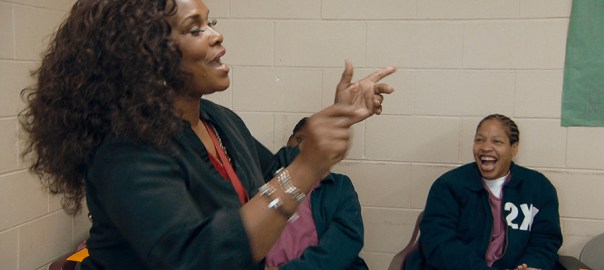
Twenty minutes into Kim Longinotto’s latest film, Dreamcatcher, which is screening at Sheffield Doc/Fest, a chilling scene takes place. The setting is an after-school club at a Chicago high school, where at-risk teenage girls are being counseled on how to say “No” to boys. As the teenagers munch through copious amounts of junk food, a girl confesses that she was raped at the age of 11 at a friend’s house. Another girl interrupts to tell a story of long-term abuse by a family friend, then another story of abuse follows, each more harrowing than the one before it. It’s astonishing to hear the details of these unreported crimes, and as they quickly pile up, to realize how endemic it is to these girls’ worlds. It’s the sort of scene that stays with you for a very long time.
For anyone familiar with London-based Longinotto’s extraordinary body of work, however, such moments are to be expected. Her subjects often take advantage of the presence of the camera to make their marginalized voices heard. While she is considered an “observational” filmmaker, and avoids interfering in the action while filming, she is well aware that by being there, she very much changes what is taking place. “It’s something that has happened a lot with making films,” she says. “People grab the opportunity to have a witness. It’s not ‘fly-on-the-wall’— a term I hate. You’re going in as someone who is going to make something with them. They feel part of it.”
Having seen most of Longinotto’s films, I point out to the filmmaker that my strongest memory of such a moment was the 8-year-old girl Fouzia in The Day I Will Never Forget (2002), who uses the camera to recite the titular poem, protesting the practice of female genital mutilation.
“Yes, The Day Will Never Forget poem is exactly like that scene; they grab their chance,” Longinotto exclaims. “Students at film school often say, ‘Being a documentary maker, I feel bad that we’re going in and we’re taking advantage of people.’ And I always say, ‘Well, why do you think that? Is it because you’ve been watching reality TV? That’s not the only way of doing it.’ If you are using that analogy, Fouzia completely used me: She told me where to stand, she bullied me into going into her house, and she wanted me there because she knew her mum would listen. So she used me, but I loved being used. We used each other. You wouldn’t even use the word ‘use.’ We were working together.”
Kim Longinotto
Indeed, when Longinotto first met the Chicago teenagers, she encouraged them to take control. “I said to them, ‘Look, this is your film and I really want you to feel good about the film and be part of it. And you will have the film when it’s finished. And we’re doing it together; I’m relying on you. I’m not going to interview any of you. This is your film, so you do whatever you want.'”
Longinotto also showed the girls excerpts from two of her films that feature strong women working to fight abuse: Rough Aunties (2008) and Sisters-in-Law (2005). “They all went very quiet and went off and didn’t say anything, but we all had a bit of a hug because it was quite emotional,” says Longinotto. When it came to filming the girls in the after-school club, Longinotto felt that they had built up a trust that allowed for intimacy: “I knew in that scene, I could go really close and film them. I was half a meter away from them; you can see how closely it was filmed. And there was this real level of trust.”
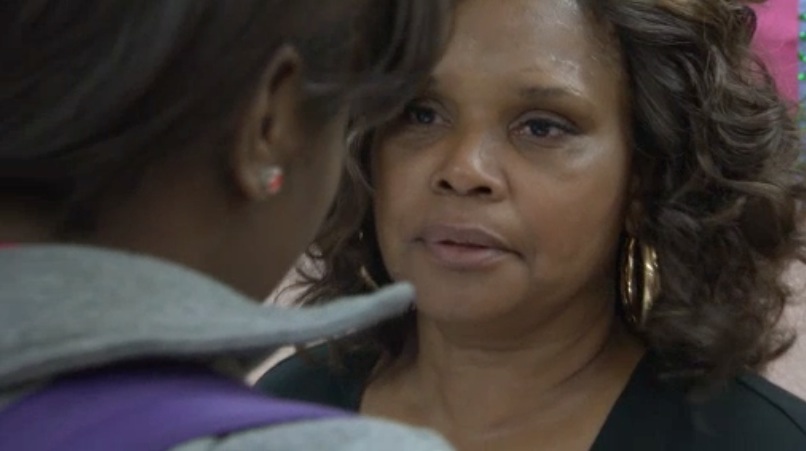
The in-class confessions came as a surprise to the girls’ mentor, Brenda, who had been running the group for two years and was trying to prevent the girls from being abused, not fully realizing the extent to which they already had been. Brenda is the “dreamcatcher” of the title—a mesmerizing woman who has overcome a horrific life on the streets to devote herself to encouraging girls to do the same. Articulate, impassioned, non-judgemental and utterly focused, Brenda exuded a strength in character that convinced producer Lisa Stevens that hers was a story well worth telling.
Stevens met Brenda through her coworker Stephanie, when producing the feature-length doc Crackhouse USA (2010); Stephanie’s son is currently serving 42 years in prison. Recognizing the strength of both the characters and the story, Stevens nurtured the relationship for several years, ultimately bringing the idea to Teddy Leifer of Rise Films, with whom Longinotto made Rough Aunties (2008). A trailer that Stevens shot of Brenda was integral to convincing Longinotto to come aboard the project. “If I’m being totally honest about it, I thought, ‘A film about prostitutes? Do I really want to do this?'” the filmmaker recalls. “I find films dispiriting, if there’s nothing to hope for or fight for. But when I saw the trailer, and saw her feisty and full of energy and joy—Brenda and Stephanie both are—and that they are actually doing things, they are changing lives, I thought, ‘I really want to do this.'”
Lisa Stevens
Longinotto, Stevens and a sound recordist traveled to Chicago for a ten-week shoot. Dreamcatcher was a far cry from the other US-focused film Longinotto had directed—Rock Wives (1996), which looked at the privileged lives of wives and girlfriends of rock stars. Indeed, she found Chicago to have much in common with Durban, South Africa, the location for Rough Aunties: “The neighborhoods where we were living, the largely white neighborhoods, everything worked, the pavements were nice, the roads were nice, there was lighting,” she recalls. “And then you’d go into the black neighborhoods and a lot of the houses were boarded up. There were actually plants growing out of the middle of the road…It’s surprising because America is the richest country in the world, supposedly. And Chicago is where Obama lives. It takes your breath away.”
Dreamcatcher was edited by Ollie Huddleston, with whom Longinotto has made eight films. When I visited them halfway through the ten-week edit, it was clear, as Longinotto is quick to point out, that they are equal partners in the post-production process. They were working their way through a second viewing of the rushes—an impressively restrained 30 hours. “That’s what’s fantastic for me, because she really shoots very little,” Huddleston says. “And she knows why she shot it and she shot it with a beginning, middle and end-ish in mind—or some idea that you need one.” Longinotto frequently sits back while Huddleston brings his considerable story-making skills to each sequence, their discussion focused on what each scene contributes to the story. They often finish each other’s thoughts, in a shorthand that speaks to the many months they have passed together in close proximity. “I think editing is the bomb. It’s the most important thing,” says Longinotto. “I can’t imagine doing it with anyone else.”
Dreamcatcher follows Brenda in her day job, counseling incarcerated prostitutes, and at night on the streets, as she speaks to women in a roving van, an all-night cafe, or anywhere that can provide a brief respite from the ever watchful pimps. Brenda’s ever-changing array of wigs are testimony to the many facets of her character, as she shifts between champion, motivational speaker, sympathetic ear and confessor. There is nothing that her girls can tell her that she hasn’t seen before, or witnessed herself firsthand, nor seemingly any subject that is off limits. The film is full of revelations.
Like many of Longinotto’s films, Dreamcatcher is a story where many men do not come out well; the Chicago of the film is a world of baby daddies and violent pimps. Homer, the film’s major male character, is a reformed pimp who now works with Brenda as a public speaker, but, rather creepily, says he has few regrets about his past.
Dreamcatcher is an important contribution to Longinotto’s life work documenting the attempts of girls and women to recast themselves in a world dominated by men. It’s a compelling, harrowing and utterly uplifting story of redemption that should have a long life as a resource for those working to help those with lives mired in prostitution and substance abuse.
Longinotto’s hope is that the film, above all, will bring awareness to the inherent hopelessness of criminalizing prostitutes. “I want the film to decriminalize the women—that’s what I want,” she maintains. “And help them when they’re in jail. I don’t feel comfortable with using a film to criminalize anyone. I think films have to be seen in a wider way. It’s about changing a mindset and opening windows and getting people to think more humanely and differently.”
—–
This article first ran in Documentary Magazine and on my blog in the run up to its Sundance World premiere in January…
As promised, here are more of my favourites from the films I’ve already seen, and written about, for Sheffield Doc/Fest:
Good Girl
An acclaimed filmmaker from a young age, Solveig Melkeraaen Is used to being in control of her life in Norway. When she is felled by a serious depression, which sees her undergoing electroshock therapy treatment in a psychiatric institute, she turns the camera on herself, in an attempt to take back control. In this intimate and brave exploration of depression, we follow her on the road to recovery, as she teases out the reasons for her breakdown – a journey which sees her trying to puncture the stigma and silence that so often accompanies mental illness. Surrounded by her supportive siblings and loving partner, Solveig seems to be well on her way to recovery — until a relapse threatens her fragile progress. Unflinching, blackly funny, and beautifully filmed – with highly stylised dramatic sequences – Good Girl breaks new boundaries in autobiographical filmmaking, and shines a light on how this devastating illness weaves its destructive path.
Carol Nahra
3 1/2 Minutes, Ten Bullets
It became known in America as the “loud music trial”. In an encounter which lasted a scant three and a half minutes, a middle aged white man named Mike Dunn repeatedly fired into a car of unarmed black teenagers, after they refused to turn down their rap music, killing 17 year old Jordan Davis. Now the case has come to trial, and the nation is watching. Dunn’s attorney is using Florida’s controversial “stand your ground” law to argue self defence. In the wake of the Trayvon Martin case, in which a white man walked free in Florida after gunning down an unarmed teenager, tensions are running high. Director Marc Silver skilfully weaves a compelling narrative through beautifully shot courtroom scenes, interviews with the victim’s parents and friends, and shocking telephone conversations between incarcerated Dunn and his distraught fiancee. A riveting look at a flawed legal system in a country where race relations are balanced on a knife’s edge.
Carol Nahra
Orion: The Man Who Would Be King
As a teenager in 1960s Alabama, Jimmy Ellis’ wonderful singing voice was unlike any other. Except, that is, for one Elvis Presley. Hampered by his over-resemblance to the King, Jimmy’s own singing career floundered. Then, in 1979 he found fame as a masked singer called “Orion”, a persona deliberately evolved to create intrigue in the wake of Presley’s death. Over the next years he played to legions of grieving Elvis fans, and developed his own fanatical fan base, many of whom remained in wilful denial about the true identity of their idol. With his contract stipulating he never remove his mask in public, Ellis’ success came at a high price for the singer still hoping to succeed on his own terms. Jeanie Finlay’s nuanced portrait of Ellis serves as a riveting cautionary tale of the music industry, and a memorable exploration of identity.
Carol Nahra
Best of Enemies
The year is 1968 – one of the most turbulent in 20th century America. The three television networks are competing for supremacy of the airwaves in the run up to the presidential election. Lagging a distant third, ABC takes an audacious punt, and schedules a series of head to head debates during the Republican and Democratic conventions. Duking it out were two heavyweight thinkers – the rightwing William F. Buckley Jr and the liberal Gore Vidal. Buckley saw Vidal as a moral degenerative; Vidal considered Buckley’s views to be dangerously anti-democratic. Both recognized the power of television in the changing media landscape, and soon a nation was transfixed. Robert Gordon and Academy award-winning director Morgan Neville bring an abundance of fantastic archive, and interviews with cultural commentators – including the late great Christopher Hitchens – to tell the story of a famously acidic rivalry which would endure for decades.
Alden is an ambitious Wall Street psychologist, while Rochelle struggles as a carer on a zero hours contract and Keith tries to make sense of his life behind bars, as a result of Clinton’s “three strikes and you’re out” policy. Through their stories, and four others, Katharine Round humanises the bleak fact that growing inequality is driving a terrible wedge through modern society. Jumping back and forth in time, and between characters and experts, this is an engrossing, cinematic, thought-provoking essay which flags up some root causes of today’s societal woes – and raises disturbing questions about the future. Inspired by the best-selling book The Spirit Level, The Divide demonstrates the terrible impact that decades of misguided economic decisions is having on modern lives – and the truth behind the adage that money can’t buy happiness.
Carol Nahra
Cartel Land
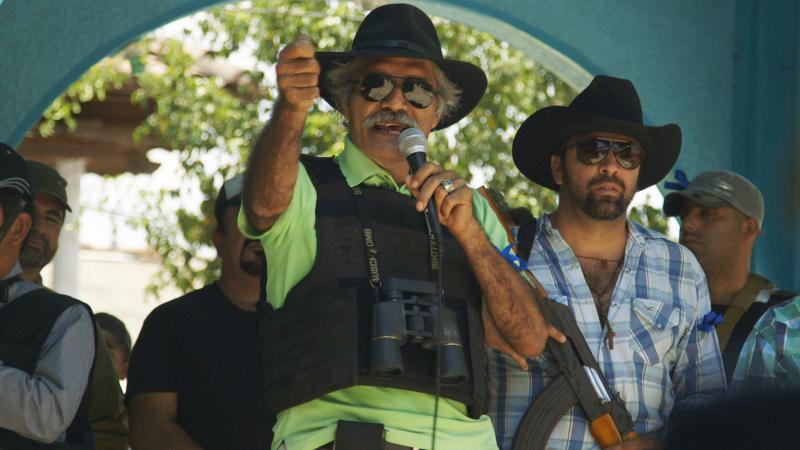
In this double Sundance winner, Matthew Heineman takes us deep into the world of Mexican drug cartels by embedding himself with two vigilante groups on either side of the US-Mexico border. Camouflaged to help spy on drug runners, veteran Tim Foley is a man who wears his hard past on his face. Meanwhile, across the Rio Grande, surgeon Dr. Jose Mireles looks straight out of central casting, with chiselled features and a prominent moustache. As head of the Autodefansas, he is leading a group of men determined to obliterate the region’s most dangerous drug cartel, the Knights Templar. Heineman repeatedly places himself in harm’s way, filming the chaos as the group begin taking over towns – in so doing adapting many of the violent tactics of the drug lords they’re trying to overpower. A visceral journey into North America’s heart of darkness, Cartel Land will be talked about for years to come.
Carol Nahra
Dreamcatcher
Here is my Doc/Fest write-up. I’ve also written about the making of this film in another post:
Brenda is a mesmerising woman who has overcome a horrific life on the streets of Chicago. She now has a singular focus: to help other women do the same. Kim Longinotto follows Brenda in her day job, counselling incarcerated prostitutes and at-risk teenagers, and at night as Brenda takes to a van to provide brief respite to women from the watchful eyes of controlling pimps. Brenda’s ever-changing array of wigs are testimony to the many facets of her character, as she shifts between champion, motivational speaker, sympathetic ear and confessor. As often is the case in Longinotto’s films, the presence of the camera stirs many to speak up about their blighted lives in powerfully moving scenes. Made with longtime editor Ollie Huddleston, Dreamcatcher is an electrifying contribution to Longinotto’s life work documenting women’s attempt to recast themselves in a world dominated by men – and a devastating insight into America’s urban underclass.
Carol Nahra
How to Change the World
The idea was simple: send a boat to bear witness, in the Quaker tradition, at the scene of a crime. When journalist turned environmentalist Bob Hunter carried out this plan, with a handful of other peaceniks, an ecological revolution was born. How to Change the World takes us through the eventful early years of Greenpeace, from hiring a fishing boat to sail into nuclear testing waters in 1971, to the establishment of Greenpeace International in 1979. Director Jerry Rothwell’s confident, breezy and layered style suits the group itself – an unlikely collection of mystics and mechanics. The huge media interest they attracted from their first save-the-whale-mission thrust the group into the international limelight, and fractures quickly developed. Rich archive and animation is interwoven with outspoken and sometimes conflicting interviews with Greanpeace founders, including Sea Shephard head Paul Watson, who admits he never bought into the “bear witness” ethos.
February, 2003. Filmmaker Amir Amirani is participating in the Berlinale Talents summit. As the days progress he becomes aware of the momentum building up for a demonstration against the looming war in Iraq. Vehemently opposed to the war, he has a hard time deciding whether to stay in Berlin or return to London to take part in what would be his first political act. In the end, he stays in Berlin, and marches with half a million others. But when he returns to London, and hears about the three million strong London march – the biggest in the city’s history – he is filled with regret for missing that moment in London’s history. Over the next two years, that regret niggles away at him. Eventually the niggle turns into a full blown itch, and he starts reading up on the demonstration, and how many people mobilized around the world to protest. One day, whilst recording a radio programme for the BBC, Amirani has a moment of clarity and realizes what he needed to do is make a film about it.
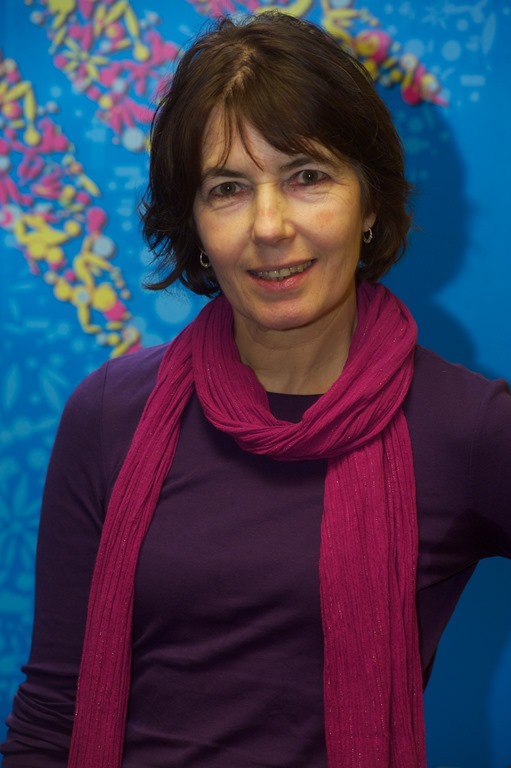
A decade later, and with the participation of a huge range of subjects including Damon Albarn, John Le Carre, Brian Eno, Danny Glover, Richard Branson, Noam Chomsky, Ken Loach, and Hans Blix, We Are Many is about to get a UK cinema release. It’s a masterfully told, moving story – the film received extended standing ovations when it had its world premiere at Sheffield Doc/Fest. Below Amirani tells me about the long journey he’s been on to make this film.
Amir Amirani: In 2005 I had one of those lightbulb moments, and thought ‘hang on a minute’. The demonstration happened in London; it happened in Berlin; it happened in a few other places. This was a coordinated global day. This must have been the biggest demonstration in history. That is a story.
Preparations for demonstration in NYC: Photo by Mario Tama/Getty Images
Carol Nahra: And what were the biggest challenges in the making of it?
AA: The first challenge was piecing the story together because no one had done it before. So I had to track down the activists and meet them here. But it was global – it happened in 72 countries; thirty million people took part. How do I find my characters? How do I piece together the background of how this day happened? That took nearly four years… I ended up filming in seven countries. The challenges were finding the people, piecing the stories together, hearing whose idea was it, how did the idea spread, who were the protagonists in each of those countries. Then doing lots and lots of research, going and meeting those people, writing treatment and so on. But also I had no money at this stage.
Amir Amirani
CN: That’s what I was wondering.
AA: Between 2006 and 2011, I wasn’t working full time on the project. So over those four or five years I basically had to supplement my living to pay my bills. I had to remortgage three times. In 2010, I pitched it around a few places. It was Best International Project showcased at Sunnyside of the Doc. Lots of interest, no money. From 2011 I thought I’d do Kickstarter campaign. The money came through in the beginning of 2012.
CN: How much did you make?
AA: $92,000. At the time it didn’t exist here – it was only in America. I had to get a fiscal sponsor over there. It ended up being £52,000…Also, Stephen Fry tweeted the Kickstarter campaign. And then (comedian) Omid Djalili matched what I raised on Kickstarter.
CN: What did you spend the money on?
AA: I paid myself a smidge from that to just start living. With the Kickstarter we had to buy the Avid kit. I knew immediately we wouldn’t be able to hire an edit suite or Avid equipment. So we bought the kit. I had to make the £50,000 on Kickstarter stretch as far as it possibly could, until Omid’s money came through. That has been the pattern ever since: money would come through, we’d spend it, it would run out, until another investor came along. The budget has ended up being a little over £500,000. With the true value probably over a million.
Executive Producer Omid Djalili at world premiere at Sheffield Doc/Fest
CN: You were aiming for the 10 year anniversary of the demonstration. I saw you when you had missed that and you were quite low.
AA: That was a key moment. When we didn’t make the anniversary we had completely run out of money at that time. And we had missed the deadline. And on top of that, we didn’t know where to turn next. For two months I couldn’t do anything. Then one of the investors came through with a bit more money and we were able to finish it.
CN: What are you most proud of in this whole journey you’ve been on?
AA: That I didn’t give up – because of the number of times I was close to throwing in the towel. Because financially it was a disaster. It’s taken many years of my life. But I’m very proud of the film. I’m very proud that I didn’t give up and I was able to tell the story.
——————————————————
On May 21 We Are Many screens at 100 cinemas throughout the UK. Post screening there will be a satellite event broadcast from Curzon Mayfair, London with Jon Snow in discussion with Amirani, Djalili, convenor of the Stop The War Coalition Lindsey German, professor of international law at UCL Philippe Sands and actor Greg Wise. The film will then have a limited UK release.














![Amir-5[1]](https://docsonscreens.com/wp-content/uploads/2015/05/amir-51.jpg)

 Docs on Screens