Tag Archives: podcast

Time After Time: My Sheffield DocFest 2023

Two years ago when I attended Sheffield DocFest I had the very eerie experience of doing a number of Q&As to depleted audiences, as the pandemic continued to wreak havoc, and delegate attendance was deliberately kept to a minimum. This edition, held in mid-June couldn’t have been more different, as venues throughout the city filled with delegates, basking both in mostly glorious weather as well as a beloved festival back in full flow. I’ve never known so many people to say they’d be going.

Having attended DocFest around 25 times, inevitably my few days there were a journey back and forth in time, reconnecting with festival buddies, remembering festivals past. The festival screened 37 World Premieres, with more than 120 films from 52 countries of production. The film programme, overseen by DocFest’s much respected Creative Director Raul Niño Zambrano, was a strong one. There were some big crowd pleasers, like the new Wham! documentary and Let the Canary Sing, a new film about the legendary Cindi Lauper, although I didn’t manage to catch either.

Much of the rest of the programme was made up of creatively crafted films reflecting the dark strands of our current lives. Quite a few experimented with the form of nonfiction storytelling, constructing scaffolding in which actualité scenes could unfold. I did a Q&A with Iranian director Mehran Tamadon for one such film, My Worst Enemy. In it, Tamadon explores torture techniques of the Iranian regime by placing himself in the hands of survivors, asking them to treat him as they had been treated. The film takes shape with the remarkably intense contributions of actress, activist and former detainee Zar Amir Ebrahimi. I had seen the film at the Visions du Reel festival (which I wrote about for Documentary Magazine). It makes for very uncomfortable, thought-provoking viewing.

Mehran Tamadon and Zar Amir Ebrahimi in My Worst Enemy

I also had the good fortune to do a Q&A with the team behind the tear jerker of a personal gem My Friend Lanre. Director Leo Regan first started filming with Lanre some thirty years ago, when they were both young photographers. A couple decades on Regan picks up again with Lanre, now terminally ill and looking back with emotion on the ups and downs of his life. It’s a film that manages to be life affirming and celebratory, whilst also dealing with death and addiction. It was a privilege to watch in the amazingly wondrous projection of Sheffield’s Light Cinema, and follow it by chatting to a very emotional Leo, his producer Mary Carson, and editor Chloë Lambourne (who also edited the wondrous For Sama). 

I was happy to reconnect with Leo, who I first met in 2001, when he came to DocFest with his film Battlecentre. He shot the film on DV, which was so new that I interviewed him for an article at the front of the festival catalog extolling the virture of the technology for documentary:

It’s hard to imagine the current world of documentary existing without digital technology, and the freedom it allows in shooting. A prime example was another film I had the pleasure of watching in the Light Cinema, The Body Politic, a profile of Baltimore’s mayor Brandon Scott. Having lived several years in Baltimore before movng to the UK, I was particularly interested in this film, although I know that the crime plaguing the city has not improved in the quarter century since I moved away. As this was the third screening and the director and producer had returned to the US for its American premiere, I did the Q&A with Associate Producer Jahsol Drummond, who was enjoying his first time out of the country. He described how fresh out of high school he joined the shoot during the protests in the wake of George Floyd’s murder, and never left it. Shot over several years, the film is a compelling portrait of a man determined to try a new approach to breaking the cycle of urban violence, and a clarion call for others to do the same.

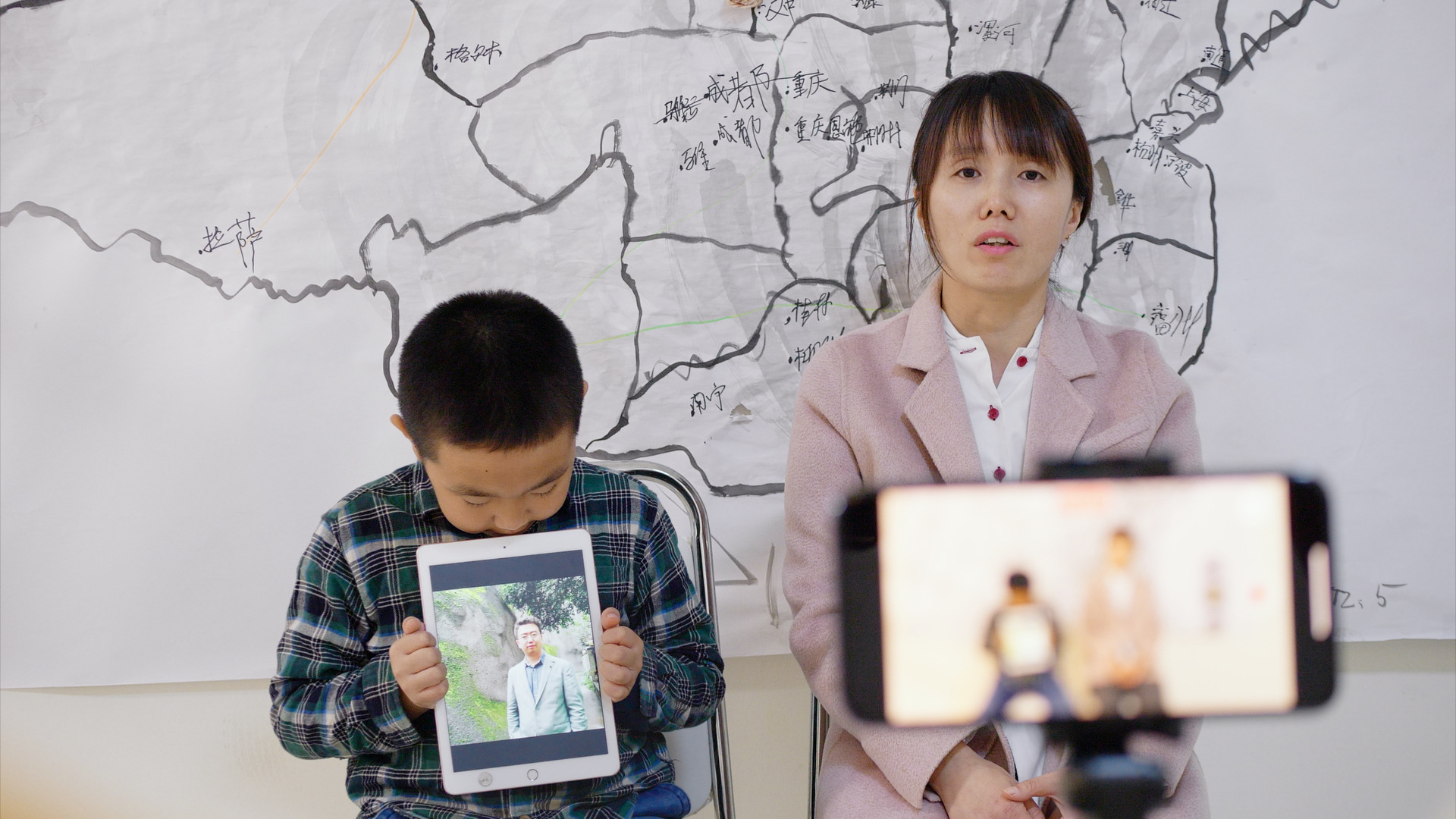
Perhaps the most jaw dropping film I saw at DocFest was Total Trust, which takes us inside China, where nefarious surveillance dominates the lives of the journalists and activists brave enough to be filmed. Directed remotely by Jialing Zhang (One Child Nation and In the Same Breath), and filmed by anonmymous crew, the film weaves together accounts which are astonishing in their details. In once scene a journalist recounts how her captors knew her period cycles, and would try to tease out her cooperation by offering broth. For the family of a recently released activist, life was a constant stream of spying neighbours, literally camped out in their corridor to intimidate them. Government PR campaigns encourage such spying, building an atmosphere that one contributor describes as a boiling frog.
While such a scenario seems for us a far off dystopia, many of the themes of Total Trust were echoed in Kate Stonehill’s Phantom Parrot, which shines a spotlight on the UK’s own abuse of surveillance techniques. The film tells the story of human rights activist Muhammad Rabbani, who refuses to give up his devices when detained under the draconian Schedule 7 of the Terrorism Act, which allows for border detention of anyone coming into the UK. In the Q&A that I did with Stonehill and Rabbani following the film, they recounted the ongoing discrimination inherent in the Act, which has recently been extended to include migrants.

I have to credit DocFest with deepening my interest in audio. In 2005, the same year I learned the word podcast, then festival director Brent Woods asked me to record a DocFest podcast. Although I doubt its listeners made triple digits (and unfortunately its now long lost to the interweb) – it did give me a chance to interview Michael Apted and other festival guests.

After DocFest hosted radio legend Ira Glass in 2013, I went on to binge the entire back catalogue of This American Life, and was an early fan of its spin off Serial, and countless podcasts since. This year’s festival honoured the dominance of the genre with a number of panels focused on it, including a fun look at the making of the wonderful Soul Music, a long running BBC series that’s a favourite of ime. I also attended the Whicker’s podcast pitch where four very impressive ideas sought a generous (by podcast pitch standards) award of £5000 (with £2000 going to second place).

The podcast theme bled into the film programme via the delightful film Citizen Sleuth, which I came to learn was made by a fellow Clevelander, Chris Kasick. He deftly and with great humour, integrity and skill charts the increasing self doubts of amateur journalist and podcaster Emily Nestor. Having built up a devoted and humongous band of followers through her podcast Mile Marker 181, Nestor gradually begins to understand that the only crime at the heart of the podcast’s tragedy were the innocent people she was casting doubt on. Here’s a doozy of a clip from the film:

While many of the filmmakers who came to DocFeest this year were new to me, there were some familiar faces from close to home. British filmmakers Jeanie Finlay and Kim Longinotto returned to DocFest with films several years in the making, in part because of the pandemic. Both had their world premieres at the Sheffield Crucible to rapturous audiences. Finlay’s film Your Fat Friend, which profiles fat activist and podcaster Aubrey Gordon, went on to win the festival’s audience award. Longinotto, co directing with Franky Murray Brown, premiered Dalton’s Dream, following the life of Jamaican X-Factor winner Dalton Harris – it will show later this year on BBC Storyville. You can read my post screening interviews for Filmmaker Magazine with Finlay here and with Longinotto and Brown (pictured at top with contributor Dalton Harris) here.

A full list of film and pitch winners for Sheffield DocFest 2023 can be found here.
New Podcast: DocHouse Conversations

As we remain in lockdown for the foreseeable future it’s sometimes hard to focus on the positive. But I know what has given me a great deal of enjoyment and fulfillment during these strange, endless weeks. In late March, in the first days of lockdown, we launched a podcast at Bertha DocHouse, where I work as a Programming Associate. So every two weeks for the last couple of months I have had the chance to talk with one of my favourite documentary makers about their working lives. All four of my guests to date have a number of films available online to stream – so the idea is that you can dig deep into their body of work before listening to our chat. It’s been a fascinating journey – I hope you will subscribe and share with any doc lovers out there. It’s available on Apple Podcasts and just about any other podcasting platform.

Here are the first four episode guests, starting with the most recent:

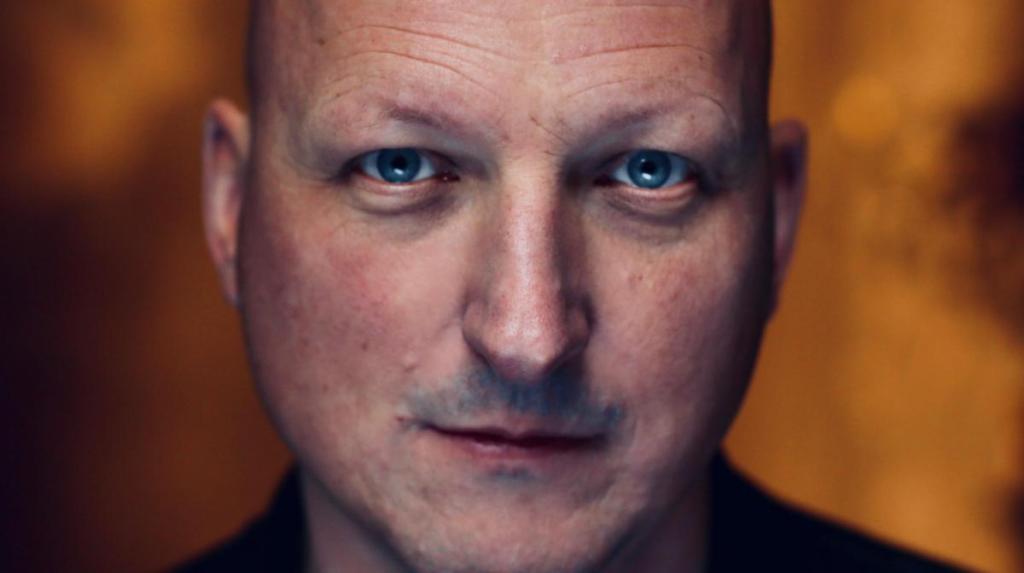
Dan Reed

In a documentary-making career spanning a quarter century, Dan Reed has established a reputation as one of the most dedicated and talented filmmakers working in Britain today. With a slew of awards under his belt, he is also one of the most heralded. 

Long known in the UK, Dan came to worldwide prominence last year with his devastating portrait of sexual abuse Leaving Neverland. The two-part Channel 4/HBO film won a number of awards and was widely hailed by viewers and critics as a forensic examination of the longterm trauma of sexual abuse.

At the same time, Dan found himself bombarded by a global legion of Michael Jackson supporters, many of whom had never watched the film. 

As Dan himself admits, he’s no stranger to navigating difficult terrain. From his work amongst gang members in South Africa in Cape of Fear (1994), to covering both sides of the Balkan conflict in The Valley (2000), he has often placed himself in dangerous positions.

In recent years, Dan has explored complex stories of trauma through intimate personal testimony. The films use user-generated content, CCTV and interviews to powerful effect, depicting the timeline of terrorism events as they erupt across everyday settings: an opera in Moscow, a mall in Nairobi, luxury hotels in Mumbai, and the Paris office of Charlie Hebdo

Alongside his terrorism films, Dan has built up a stable of observational documentaries, embedding himself amongst Russian gangsters, drug abusers and escorts. The Paedophile Hunter (Channel 4, 2014) won two BAFTAs and a Grierson award for its portrait of paedophile vigilante Stinson Hunter

Watch Dan’s films: 

Leaving Neverland (2019)

Calais: To The End of The Jungle (2017) 

Three Days of Terror: The Charlie Hebdo Attacks (2016)

From Russia with Cash (2015)

Escorts (2015)

The Paedophile Hunter (2014)

Terror at the Mall (2014)

Legally High (2013)

#SHOUTINGBACK (2013)

Children of the Tsunami (2012)

Terror in Mumbai (2009)

Terror in Moscow (2003)

The Valley (2000)

Cape of Fear (1994)

Daisy Asquith

In more than twenty years as a filmmaker, Daisy Asquith has told human stories the length and breadth of the UK, and beyond.

She has also taken viewers into the world of clowns, young mums, Holocaust survivors and house clearers, in empathetic, nuanced portraits which have earned her multiple awards. She forms tight bonds with her subjects, some of whom she has been filming for many years. 

In Crazy About 1D for Channel 4, Daisy memorably explored the legion of passionate One Direction fans. The response to her film was so vitriolic that she decided it was worthy of further study. The resulting PhD thesis This is Not Us focuses on performance, relationships and shame in documentary filmmaking. Daisy now runs the MA in Screen Documentary at Goldsmiths. 

Daisy’s most recent work includes her moving personal documentary After the Dance. From behind her camera she embarks on a journey with her mum to find out more about her grandparents, who gave her mother up for adoption after she was born illegitimately in Ireland in the 1940s. 

Daisy has also directed the archive based Queerama. Released to coincide with the 50th anniversary of the partial decriminalisation of homosexuality in 1967 the film edits together 100 queer films to an original soundtrack by John Grant, Goldfrapp and Hercules & Love Affair.

WATCH DAISY’S FILMS

THIS IS THE REAL ME: DOC PARTICIPANTS SPEAK! (2018) 
QUEERAMA (2017) 
AFTER THE DANCE (2015) 
CRAZY ABOUT 1D (2013) 
MY GAY DADS (2010) 

Orlando von Einsiedel

Orlando von Einsiedel is drawn to telling inspiring stories of humble heroism from around the world, often combining intimate personal narratives with macro level politics, powerful visual aesthetics and on-the-ground journalistic muck-racking. He has worked in impenetrable and difficult environments, from pirate boats to war zones, and has won over 100 international film and advertising awards.

Orlando’s debut feature documentary VIRUNGA charted the story of a group of courageous park rangers risking their lives to build a better future in the Democratic Republic of Congo. BAFTA and Academy Award nominated, the documentary won over 50 international awards including an EMMY, a Grierson and a duPont-Columbia Award for outstanding journalism. The film was also recognised for its role in protecting the Virunga National Park winning a Peabody, a Television Academy Honor and the prestigious 2015 Doc Impact Award.

Orlando’s forty minute film THE WHITE HELMETS follows the lives of a group of heroic Syrian civilian rescue workers in 2016. The film was released as a Netflix Original and won the Academy Award for best documentary short. It was also nominated for two EMMYs, including one for Exceptional Merit in Documentary Filmmaking.

His subsequent feature EVELYN, a deeply personal story and road trip odyssey about the loss of his brother to suicide, won the 2018 British Independent Film Award (BIFA) for Best Documentary. The Evening Standard newspaper called it “Phenomenal” and “Life-changing”.

Watch Orlando’s films: 
SKATEISTAN (2011) on Vimeo or YouTube.
VIRUNGA (2014): watch on Netflix.
THE WHITE HELMETS (2016): watch on Netflix.
EVELYN (2019): watch on Netflix and DocHouse’s Q&A
RADIO AMNIA (2011): watch on IDFA.
AISHA’S SONG (2011): watch on Vimeo. 

Victoria Mapplebeck

Victoria Mapplebeck doesn’t shy away from telling difficult stories about her personal life. In her first smartphone short 160 Characters, Victoria documents the highs and lows of raising her son alone.

She took the journey even further in the BAFTA-winning film Missed Call, made in collaboration with her teenage son Jim, as they decide to reconnect with a father who’s been gone over a decade. 

Victoria was nearing completion of Missed Call when a routine mammogram revealed she had breast cancer. She decided to keep filming, using her iPhone to chronicle life after the diagnosis, as she undergoes chemo and months of uncertainty. The resulting film, The Waiting Room, is a nuanced and intimate account of the toll of undergoing cancer treatment. An accompanying VR piece takes you even further inside Victoria’s perspective.

During the global lockdown caused by COVID-19, Victoria is continuing to film. As she told me in this interview  “There’s something about scrutinizing the hell out of difficult stuff that I find helps. It maybe doesn’t help everybody but it helps me. It’s almost like it brings emotional dramas into closeup and puts it at a distance at the same time.”  

Watch Victoria’s Films:
THE WAITING ROOM (2019)
THE WAITING ROOM VR
MISSED CALL (2018)
160 CHARACTERS: (2015)
SMART HEARTS (1999) 


You can sign up to DocHouse Conversations here. The next episode will feature a panel of filmmakers whose plans for the release of their latest documentary have been blown up by the COVID-19 pandemic.

Serial and the Imposter – True Crime’s New Wave

serial


I couldn’t possibly have been more primed to become a Serial podcast fan. Hailing from a family of lawyers, in my early twenties I was obsessed with true crime writing – my favorite book was Fatal Vision, not least for the very messy relationship between author Joe McGinnis and convicted murderer Dr. Jeffrey MacDonald. With the launch of Court TV in the early 90s I turned to TV for my true crime fix, enjoying even the most mundane of trials for their revelations about real lives. Having been raised in Cleveland, Ohio, in a truly barren television era, the only factual offerings being the news, 60 Minutes and Candid Camera, I was desperate for real life stories. No wonder then, since moving to London in 1996 I have become obsessed with documentaries and all of the messy truths they unearth, and made them the focus of my working life.

A latecomer to This American Life, I’ve spent the last 18 months listening to all of its 500+ archive, while walking the parks of North London. When This American Life announced recently they were launching a second podcast, Serial, its episodic unfolding of a long-ago Baltimore murder seemed tailor made for me.

What I didn’t expect was that five million people would feel the same way. Having devoured its first episode within hours of launching, I didn’t have long to be a smug early adopter before it became the most successful podcast in history. This week, before the end  of its first season, it has won an DocLab award at IDFA, for Digital Storytelling.

As a Serial fan, I find myself a mid-level obsessive – not at the level of pouring through the sprawling Reddit site, where amateur sleuths strut their stuff. But I have begun listening to Slate’s Serial Spoiler podcast, and read a score of articles dissecting its success. For me, and many of its fans, what’s mesmerizing about the storytelling is the way that producer Sarah Koenig takes listeners through a journey that is meant to mimic her own, and all the twists and turns she has undergone trying to figure out whether Adnan Syed murdered his ex-girlfriend in 1999.

More than anything, this masterful manipulation of the journey of discovery reminds me of the equally brilliant The Imposter documentary. In telling how a 20-something Frenchman impersonated a missing Texan teenager – and was accepted into the family home – the talented British production crew steers the audience through the same journey they undertook, when exploring the long ago story. The Imposter is worth buying the DVD, as it contains a thoroughly engrossing making of extra.

Both stories investigate old crimes in astonishingly innovative storytelling. As Serial approaches its first season finale, I’m looking forward to its phenomenal success kicking off a new wave of true crime investigative journalism.