Fixed Rig Focus: The Editor

Factual editor Sam Santana has worked on an enormous range of British factual television in a career spanning 17 years, including the award-winning Katie: My Beautiful Face and The Murder Workers. The last five years his work has been dominated by a genre which itself has come to dominate the British TV landscape – the fixed rig. Taking the technology from the Big Brother House and applying it to the wider world, viewers have immersed themselves in the worlds of hospitals (One Born Ever Minute, 24 Hours in A&E), deep-sea fishing trawlers, police stations, model agencies, secondary schools and even an African tribe. Santana has worked on many of them, and been instrumental in helping train a new generation of editors through a training scheme run by The Garden Productions.

sam 4
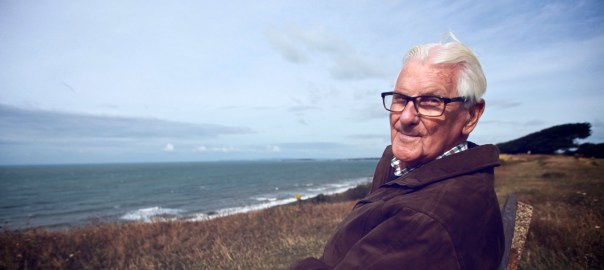
Sam Santana


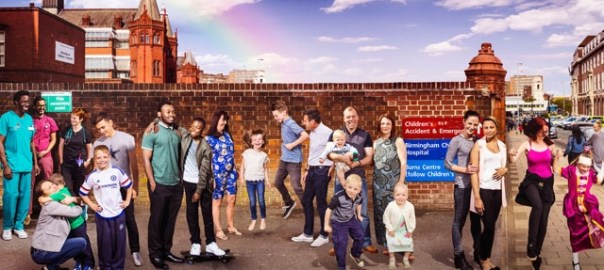
Santana’s latest programme, Inside Birmingham Children’s Hospital, is currently running on Channel 4. The series, made by fixed rig experts Dragonfly TV,  uses a wide range of filming techniques to supplement a 80 plus camera hospital rig, including mobile phone footage, still photography, single camera crews, as well as patient car footage using GoPros. The viewer feels like a privileged observer to the difficult and very inspirational journeys that families undergo when facing health crises, and I can’t recommend it enough as an example of riveting public service television. I spoke on the telephone to Sam about how his working life has changed with the advent of the fixed rig:

In a nut shell, what is the difference between editing from the rig and traditional factual editing?

Anything in fixed rig is completely different from anything in traditional factual editing. The main difference is there is no producer. You don’t produce your actuality because there is no producer or director filming – it’s a fixed camera. From a technical point of view, with traditional factual when a director brings you his or her rushes you can immediately look at them. You cannot do that with a rig. There’s quite a lot of groundwork you have to do before you can start looking at the material – organising the material, pulling the right microphones, syncing the cameras up. So from a technical point of view that is a big difference. Also, when you’re editing something that has been shot traditionally with a director on a single camera, you have an expectation at the beginning of editing a particular scene that you know how that scene is going to turn out, because the director has shot it with an idea. When you edit a scene that is shot on the rig, you have no idea how it is going to end, you don’t know if it’s going to deliver, and so really it’s in the lap of the editor to try to make it work in one way or another.

download
Jack and parents from Ep 4 of Inside Birmingham Children’s Hospital

What do you enjoy most about editing from the rig?

Really what I enjoy most about it is how really organic is. How pure it is. Because of the fact that you have to go through all those hours and hours of material, not knowing how anything is going to turn out, not having any control over what people are going to say. Because people will forget the cameras are there. I’ve done probably over 40 episodes of 24 Hours in A & E, and Children’s Hospital, and more, and all the time people forget the camera. They may be quite self-aware at the beginning but they forget it. And I think that’s what makes it so pure, so different. And on top of that you have so many camera choices and so many angles. At times it feels that, although you are cutting real life, you feel you’re cutting drama.

What are the biggest challenges?

One of the biggest cons of rig documentary editing is the sheer volume of material and the fact that actually you need the luck of the draw. Because as I was saying before, when the director goes to film, he or she has met a family, a set of contributors. And that’s why they’ve decided to follow a story -because of the research they’ve done before. With most rigs, that research doesn’t happen. So you meet somebody there and then and you just embark on that mini journey with them. And you don’t know how things are going to end. And sometimes you have less choice of who you are going to feature in your programme and therefore that makes things more complicated. So a story that on paper may feel great because it looks big that happened on the rig, it may not then have the dramatic storytelling that you would like it to have.

For 24 Hours in A&E, you get all of your 24 hours of footage, and then, once you’ve looked through it,  producers have to go out and do those follow-up interviews and dig out those background stories, correct?

Yes, for example there’s a particular story in 24 Hours in A&E, one of the last ones I worked on, where you had this tiny story of a young lad who had broken his leg. The doctor thought he was faking it, he was like three or four years of age. So medically it had nothing, you know? It was just a tiny thing. But then because we thought he was funny and quirky on the rig, we then went and interviewed the grandmother who brought him, and she gave an incredible interview that explained to you so many different things and the unconditional love which she had. It transformed the rig material. And a story that was only seven minutes in terms of screen time completely kidnapped the film I think. 

How much do you think your fixed rig experience is informing jobs you do that aren’t fixed rig?

I think whenever you go back to traditional observational documentary making there are things that you have to untrain yourself about. Because the rig provides you with an amazing amount of multicamera footage to cut to. It’s easier to create dramatic pauses on a rig than on single camera. And so you have to sort of make sure that when you go back to single camera observational documentary making that you forget the rig quickly. Because if you don’t you won’t get it done.

Where is the fixed rig genre heading?

I’m hoping that the rig will provide us a way in the future to blend itself to the old techniques. You know that if someone is talking to you, you can use their voice to take you to the rig and use the rig as an example of what that person is saying. At the moment the rig is used as a bed of shots and actuality, which is unadulterated by anyone else’s voices apart from the interview. It will be interesting to see where the rig takes us in the future.


Catch up with Inside Birmingham Children’s Hospital on All Four. For more on this topic see Fixed Rig Focus: The Exec


Doc/Fest ’16: Six to Watch

For quite a few years I’ve had the good fortune to preview large chunks of the Sheffield Doc/Fest programme, in order to help write the film catalogue. Of the thirty-five films I watched for this year’s festival, which opens on Friday, here are a few of my favourite:

Presenting Princess Shaw

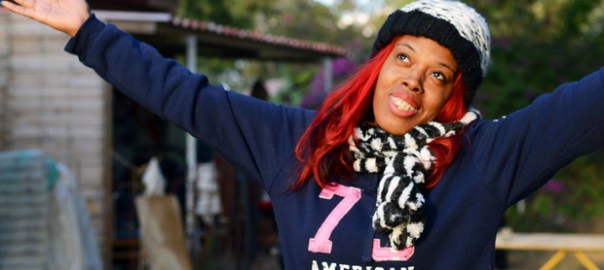
Talented but isolated, New Orleans care worker Samantha spends her spare time uploading acapella videos of her original songs to YouTube, to a smattering of viewers. Unknown to her, in a far away kibbutz, Israeli mash up artist Kutiman is composing his next viral sensation – with Samantha as the star. Following them both, director Ido Haar brings us a gratifyingly heartwarming fairy tale from the digital age.


Weiner

Two years after resigning from Congress for tweeting a picture of his bulging yfront, Anthony Weiner is running for Mayor of New York. His loyal wife Huma is at his side, and the tenacious politician has even invited a documentary crew along for the ride. The trouble is, he’s neglected to curb his digital dalliances, giving us jaw-dropping access to a campaign that is soon in total meltdown.

Mr Gaga

Immerse yourself us in the world of modern dance through the vision of Ohad Naharin, artistic director of Israel’s Batsheva Dance Company. Through extensive archive, observational footage and beautifully filmed dance sequences, Doc/Fest returnee Tomer Heymann focuses on the fascinating stories underpinning Naharin’s creative process, and how an untrained veteran spurned the tutelage of the dance world’s maestros to become one of the most talented choreographers working today.

Unlocking the Cage

In this legal thriller from vérité legends D.A. Pennebaker and Chris Hegedus ,we follow Harvard professor Steven Wise, who is arguing to a series of sceptical judges that New York’s chimpanzees should be persons in the eyes of the law. Wise is convinced he can make legal history – if only he can keep his primate plaintiffs alive long enough to represent them in court.

Life, Animated

After years of silence as a child, Owen Suskind amazed his family by beginning to communicate through his biggest passion: Disney films. Now leaving home, Owen is learning that not every step in life has a Disney guru. Director Roger Ross Williams (God Loves Uganda) returns to Doc/Fest with a masterful film about how one close-knit family navigates life with autism.


National Bird

Lisa Ling regrets the 121,000 lives she spied on electronically in a two-year period for the US Air Force. She’s now trying to make amends by visiting bombing victims in Afghanistan. National Bird follows Ling and two other whistleblower veterans wracked with guilt about the secret US drone war, and the many civilian casualties that continue to be denied by the powers that be.

————–

Sheffield Doc/Fest runs from 10-15 June. I’ll be moderating a discussion about the power of drones, and the themes stemming from National Bird on Tuesday afternoon.

Katharine Round: Making The Divide

Alden is an ambitious Wall Street psychologist, while Rochelle struggles as a carer on a zero hours contract and Keith tries to make sense of his life behind bars, as a result of Clinton’s “three strikes and you’re out” policy. Through their stories, and four others, Katharine Round humanises the bleak fact that growing inequality is driving a terrible wedge through modern society. Jumping back and forth in time, and between characters and experts, this is an engrossing, cinematic, thought-provoking essay which flags up some root causes of today’s societal woes – and raises disturbing questions about the future. Inspired by the bestselling book The Spirit Level, The Divide demonstrates the terrible impact that decades of misguided economic decisions is having on modern lives – and the truth behind the adage that money can’t buy happiness.

As it is garnering press accolades and released in cinemas throughout the UK, I spoke to director Katharine Round about the making of the film.

CN: I found it a really powerful film. I understand how it was inspired by The Spirit Level, but of course it’s a very different entity, isn’t it?

KR: Yeah, it’s a very different entity…I thought it was quite a fascinating book. The challenge of course was how do you make something like that into a film that anybody would want to watch outside of that field?  In a way I’d always thought it had to be done through character because that is where I think film is strongest. So that seemed like the obvious approach but perhaps to others they did expect it to have lots of graphs and analysis. But I thought the book had done that very adequately.

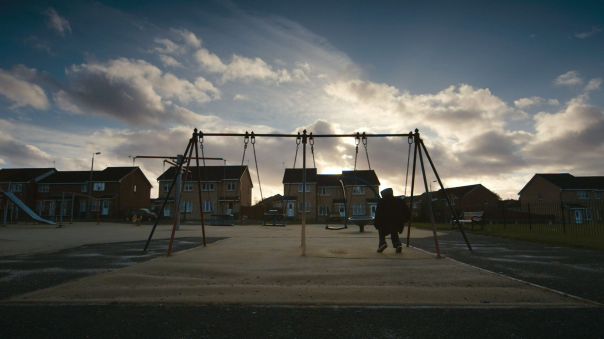
Darren on swing


CN: How hard was it to find these characters and to settle on these characters given that the whole world is your universe?

KR: It was impossible. You know, I’m not going to lie. Normally when you make the film you find the character and then you draw the themes out from the character…But in a way I was looking at it the other way around. So it was how do you something that feels like it’s coming from the personal but illuminating the big picture. It’s a sort of tonal thing….So it did take a very long time.

CN: Where did you get the funding for the film?

KR: We raised initial finances through crowdfunding. At the time it was the most successful campaign on Indiegogo for a UK documentary. And so we raised a fair amount of money but only really enough to pay the bare bones of what was going on. Certainly not enough for me to get paid or lots of other things. But everyone else pretty much managed to get paid which is very important. But it was, and still continues to be, a financial struggle this project, because you underestimate the scale of what you are trying to do.

katharine
Katharine Round

CN: It does seem so painful to me. Now it’s great because the film is coming out and everything, but how painful are these things to make?

KR: In some ways it’s a joy. Meeting all these people is very pleasant. But it’s a very long investment that you’re making. And certainly for the first year or couple of years of that casting process it was tough. There were lots of things happening, very negative programmes coming out in the British media, People Like Us, Benefits Street, you know. I was obviously trying to make something very very different but it was hard to engage people in that. You know they don’t see you as any different from anyone else in that way. Why would they or should they?

CN: I can imagine once you settled into your seven characters it became a much more comfortable experience.

KR: When we edited it, it was actually quite a pleasurable experience. We had all this experience and it was how you kind of navigate it. And John Mister, he was my editor and he’s amazing. And so smart and so unphased at the scale of this task and how to weave together these people into a kind of coherent narrative.

CN: How did you shoot the film?

KR:  I wanted to have quite a particular shooting style where we’d reference a lot of characters in a very similar kind of framing or position. So everyone is filmed in their mirrors; a lot of people filmed in their cars. A lot of people filmed in quite long shots. I wanted the audience to take away the idea that the people in the film are not necessarily that different from each other fundamentally. They’re in different circumstances and that shapes their opinions but fundamentally a lot of what they are looking for, security, a good life for their children, stable income for themselves, a lot of things are very universal. 

The Divide is screening at selected cinemas from 22 April, and goes on nationwide release from 31 May.


Olly Lambert on Abused: The Untold Story

It’s not surprising that in entrusting the storytelling of its darkest hour, the BBC has chosen documentary director Olly Lambert. For fifteen years Lambert has steadily forged a reputation as one of the most talented and nuanced directors working in factual television today. Whether piecing together stories from both sides of the divide in Syria (in the multi award winning Syria: Across the Lines) to putting a human face on the many families caught up in the London riots (or torn apart in divorce), Lambert is very adept at drawing out difficult stories from often traumatized interviewees.

It’s a skill he’d need in spades for tonight’s film, Abused: The Untold Story.  The abuser left out of the title is, of course, BBC entertainer Jimmy Savile, the unfathomably long running serial abuser, the paedophile who lived for decades as a celebrated children’s entertainer, and went to his grave with his crimes still a secret. Lambert’s feature length doc dissects how the abuse finally came to light after Savile’s death. Most importantly it gives voice to a number of Savile’s victims, some speaking publicly for the first time. I spoke with Olly by telephone about the process of bringing their stories to the screen.

Screen Shot 2014-01-17 at 09_34_05
Olly Lambert

CN: It’s a dark topic to immerse yourself in for eighteen months.

OL: Weirdly, now that it is all done – we only finished it on Saturday – there is actually something strangely inspiring about the people in it. What I think comes across is they are so strong. There is nothing victimy about the people. Your starting point with them is a very dark place, the darkest moment of their life, usually. But the fact that they’re able to speak about it really clearly and really powerfully with a bit of distance is an obvious testament to how far they are able to move on from it, and how the very act of talking about it is such a release; almost a physical release. So that sort of becomes part of the film. The act of talking becomes profoundly cathartic. And in a few cases actually quite life  changing. So even though it is a dark place  to go to I think I’ll be able to look back at it and think “well that was worth doing; it was worth going there”.

CN:You said that with a couple of interviewees it was actually life-changing. Can you elaborate on that?

There was one woman, Dee. She’s found the very act of speaking to a stranger, who is also a man, and being able to tell everything that happened to her for the very first time, made her realise she could say it. And she wouldn’t be causing disgust in me, and she actually realised that she was accepted and that it wasn’t her fault and that there was somebody who would listen. Speaking about it in that way to a stranger, and being part of a chorus of voices within the film that all speak of the same experience, has just been really profound for her. She’s a completely different person to the person I met a year ago. It’s very moving. She’s just transformed.

olly
Dee – (C) Minnow Films – Photographer: Richard Ansett

CN: That is very moving. And it is very sad that it has come presumably decades after the abuse.

OL: Yes, absolutely. She’s an interesting story because when it was Savile’s funeral, she watched it. And she said that she didn’t feel anything about it. She said that she should have  felt glad that he was dead. But at the time that he was buried she didn’t realise there were more people like her; she thought she was the only one. It was only when other people started coming forward that this kind of little solidarity developed between people.

CN: Can you talk about how you approach having Savile appear in the film?

OL: There are no images of Saville’s face. One of the first victims I met talked really powerfully about how distressing it was that whenever there was something on the news, that was effectively her story, a story about her, that changed her life. She was exactly the sort of person who should be engaging with the story and yet she wasn’t able to watch it on television because news editors, sort of understandably, but a bit thoughtlessly, would reach for the most garish gross images of Savile as an old man with these sorts of rose tinted glasses and looking very menacing. And of course that makes it very colourful for everyone else but for her it was like just being confronted with someone who had just fucked up her life. Like being confronted by her rapist. There are a few fleeting images of him as a kind of ghost in a way. And it made the film very difficult to edit.  Because obviously having images of him would have been the perfect thing to cut to. But it felt absolutely wrong direction to go in. So that means that the film is viewable, or more viewable, to exactly the kind of people who’d be most affected, so it’s keeping them in mind. It’s also honoring the wishes of the people in the film that don’t want to confront his face any more.

10789114-high-
Kevin – (C) Minnow Films – Photographer: Richard Ansett

CN: What was the biggest surprise to you in the making of the film?

OL: The thing that really jumped out from the very first conversation I had with a victim of Savile was the way that this single event, which might have been a matter of minutes, decades ago, was how they had completely reshaped a person’s life. Had configured everything in their life. In the case of one person, there was a very serious sexual assault which probably took about ten minutes. Immediately, that little girl never really trusted her mum again, because she felt that her mum had allowed it to happen in some way. She cannot have a relationship with a man; she couldn’t have a physical intimacy. She tried to have a relationship with a woman and couldn’t really have physical intimacy. Because of the nature of the assault she had a phobia of being sick, or being around people being sick. And that meant she would never get on an airplane. So she wouldn’t travel. And you know it’s completely present when you’re sitting in the room with her. You sit down with her in her home, there’s nothing remotely “historical” about her abuse. She’s absolutely living it every day… That was the thing that stuck with me that I didn’t really feel had been covered. So that really became the focus of the film – the way that these assaults ricochet down an entire lifetime. And they’re still being played out now in real time. And the film shows that.

Abused: The Untold Story airs 11 April on BBC One at 8.30pm and will then be available on IPlayer.

James Jones on Saudi Arabia Uncovered

In a relatively short amount of time – six years or so – James Jones has carved a name for himself in international current affairs stories, making films for both sides of the Atlantic. most frequently for PBS’s Frontline. Fresh from looking at North Korea, the London based filmmaker’s latest project ventures into another secretive country: Saudi Arabia.  The film, versions of which screen on both ITV and Frontline, uses secret filming by activists to spotlight how a quarter of the population lives in abject poverty, despite its massive wealth. The film takes a hard look at the human rights abuses perpetuated by Saudi’s rulers, abuses that the West has been far too eager to turn a blind eye to, as long as the oil and weapons flow freely.  The UK version also investigates how religious leaders in Saudi are masterminding religious extremism that extends far beyond its borders (it is no coincidence that fifteen of the nineteen 9/11 bombers were Saudi citizens). Taking us into a land where activists risk their lives with every move they make, this film should be compulsive viewing, and serve as a wake-up call as global terrorism escalates. Docs on Screens spoke with James about the making of it:

Why this film now?

So the starting point really in the UK was when Raif Badawi the young blogger was flogged in January 2015. And a couple of weeks later the Saudi king died. And you just saw world leaders, David Cameron, Prince Charles, President Obama, all flock to Riyadh to pay their respects….And it just made me think. I’ve made films in Iraq, North Korea, all these places with kind of questionable human rights records. But the difference between North Korea and Saudi Arabia – North Korea is a pariah state. Everyone knows they have gulags; it’s beyond the pale. And yet we were being incredibly respectful towards a regime that has a very questionable human rights record. And so really I thought – there are people in Saudi Arabia who share our values: are pro freedom of speech, are pro women’s equal rights, all of these things. And yet they’re the ones being locked up or lashed or executed. And so we wanted to go and try to use the same model that we tried out in North Korea in Saudi Arabia. We knew politically it would be a lot more sensitive but we thought it was kind of worthwhile because it mattered more.

There are people in Saudi Arabia who share our values: are pro freedom of speech, are pro women’s equal rights, all of these things. And yet they’re the ones being locked up or lashed or executed.

And that model is giving activists cameras to film secretly?

Yes tapping into a network of activists that already kind of exists. And then sharing our technology in terms of the undercover camera and expertise in trying to focus their efforts in telling a story that would be kind of coherent and gripping for the world. Unlike North Korea, in Saudi Arabia people have mobile phones so that made our job a lot easier.

JJ_905
James Jones

What is the difference between the US and UK versions?

The PBS story is entirely looking at the activists on the ground. So it is all about this network, their footage, and different movements for change and currents for reform and complexity. So it doesn’t go into the same detail about the ideology driving terrorism. The geopolitics of it all is quite kind of focused on the domestic movements. Which in a way makes it kind of more of a coherent narrative.

So the angle of the PBS film is that it’s the movement of activists but not so much the criticism of the West? 

Exactly. So not really going into the central hypocrisy but just telling the story on the ground. And going into more detail, so there’s more context in terms of the different problems Saudi Arabia is facing: the oil price crashing which has led to big cuts, they are fighting expensive wars abroad, etc. And so we have people telling us how it is basically a perfect storm once you combine those elements with people who are unhappy who are protesting.

You have made several films which have been reversioned in the US and UK. What generally do those differences tend to be?

Certainly the Frontline audience is pretty well informed. Their foreign coverage is pretty strong, pretty comprehensive. I think Frontline is great because they tell their stories very clearly. In the UK there’s more of a willingness to be provocative about a subject that matters. British television is just as rigorous, but you can afford to be more bold and more cheeky.

.

PBS Frontline: Saudi Arabia Uncovered airs Tuesday, March 29th British viewers can watch the ITV version here.


Women Directors Shine at NFTS 2016

pacemaker
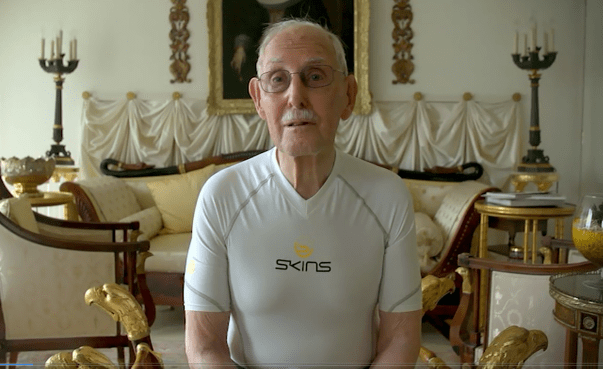
The Pacemaker

I enjoyed a fantastic few hours navigating the world yesterday from the comfort of a central London cinema seat, at the annual National Film and Television School graduation show. My documentary students and I sat through films by eight emerging documentary directors. Only two of them were women, but I am pleased to say that we all agreed that they were the strongest of a very impressive crop. In The Pacemaker, director Selah Hennessy follows 96 year old British newcomer Charles Eugster as he prepares for the 100m race at the World Masters Athletics Championship, only to find that he’s up against a formidable 98 year old who boasts a number of world records. Very well paced, full of warmth and humour, the film was a delight from start to finish.

Equally enjoyable, and provoking abundant laughs in its own right, was Miriam Ernst’s charming 40 minute film The Sunflower Inn. Beautifully observed, it follows the activities of a Rome pizzeria staffed primarily by Down’s Syndrome waiters and waitresses, who enjoy mucho hugs and dalliances whilst learning how to be professional waiters.

A third standout is Tariq Elmeri’s eye opening half hour documentary Forest Gate Girls, in which he has gained access to an all girls Muslim school in East London. The insights into the developing minds of the highly articulate and reflective fifteen year old girls about their relationship with Islam and with Britain felt at times revelatory.

I would have thought it would be difficult to top last year’s films, which I wrote about with equal effusiveness, but once again the NFTS has shown its training in the art of observational film making is second to none.

Does British TV have a problem with independent documentary?

The Unorthodocs season at Somerset House features acclaimed documentaries never seen on British TV. Are UK broadcasters denying audiences access to a golden age of independent film-making?

At first glance, they don’t really have much in common. The Closer We Get is a first person documentary, where filmmaker Karen Guthrie uses a period of caring for her ailing mother to prod into her family’s painful past. In 3 1/2 Minutes, 10 Bullets, director Marc Silver masterfully investigates one of the US’s all too commonplace racially motivated killings. And in The Look of Silence, Joshua Oppenheimer follows up his groundbreaking multi-award winning The Act of Killing with a further journey through Indonesian killing fields, this time through the lens of a single traumatized family. But what these three disparate films do share is the fact that despite widespread acclaim, they have not found a place on British television. Instead they are all running as part of the Unorthodocs strand at Somerset House this winter.  Curated by Dartmouth Film’s Christopher Hird, a champion of independent feature docs, the films in the series collectively serve as an admonishment to UK broadcasters to up their game.

U.S. Protesters Gather For Peace In New York
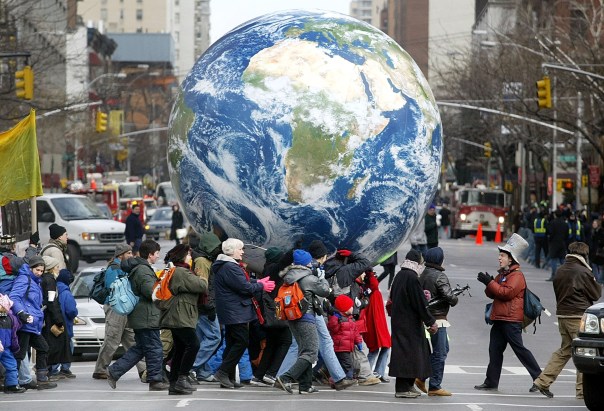
We Are Many; photo by Mario Tama/Getty Images

Much has been written about how we are in a golden age of documentary. Indeed, with many more potential avenues of distribution – along with the technological advances which give us all the opportunity to become filmmakers – the future looks bright for those determined to persevere in this difficult art form. But what is less “golden” about this age, is the fact that British broadcasters – still powerful and still in control of the best way to reach the masses -have largely turned their backs on commissioning single feature length documentaries.

I recently sat on the Grierson judging committee for Best Documentary on a Contemporary Theme – International. It was striking that very few of the outstanding films on our longlist were given television money up front. All too often broadcasters hedge their bets, forcing independent filmmakers down the difficult path of self-financing, and only deciding whether or not to pick up a film once it’s been made.

The long-running BBC Storyville is often cited as an exception, showing some of the best documentaries in every given year, either through acquisition or commission. But Storyville’s commissions are modest, and usually require filmmakers to find substantial funds elsewhere (a process which took a film I produced, Secrets of the Tribe, eight years to finish). Channel 4’s equivalent strand, True Stories, seems to be defunct, and while Channel 4 claims to be open to pitches for single films, it can’t be seen to be championing them in a way we should expect of our public service broadcasters.

Yes, there are a number of outstanding films in any given year on the BBC and Channel 4. Recent examples to name but two include last year’s The Paedophile Hunter on Channel 4, and the BBC’s The Age of Loneliness. But in my mind, with both the BBC and Channel 4 battling for their future in a nightmarishly hostile political climate, these few standouts should be magnified by a factor of ten. Imagine a world where the same budget put into producing twenty-four episodes of Masterchef is plowed into a new strand featuring fifteen documentary features, all by different directors. Yes, they are more difficult to make, and yes some might fail to attract large numbers of viewers. But aren’t two of the most important tenets of public service broadcasting that it supports risk-taking and programming not driven by the marketplace?

Many filmmakers these days persist in making their passion project, broadcast commission be damned. It can be a long and lonely, but ultimately gratifying route. Franny Armstrong makes it look easy. Her 2008 climate change doc The Age of Stupid was funded entirely through crowd-funding, raising an impressive £430,000. But Armstrong, in addition to being a consummate filmmaker and networker, benefited from another factor: she was the first to fund a documentary through crowdfunding. Many more have followed. Today it is a much more difficult, careworn option which involves a lot of targeting, attention to detail and maintenance. Crowdfunding can work for issue driven films that have a built-in following, but it’s certainly not easy.

Amir Amirani struck out trying to get broadcast interest in his film We Are Many – a forensic examination of the global anti war protest of February 2003. A film that would have taken him roughly a year had it been fully commissioned, instead took him eight. Along the way he maxed out his credit card, and remortgaged his house three times, before a Kickstarter campaignand the endorsement of high profile supporters like Stephen Fry and Omid Djalili began bringing in substantial funding. But the end result has been worth it for Amirani: We Are Many has played to rapturous audiences globally, and continues to screen frequently. But there are still no plans for a UK broadcast.

SONY DSC
Gene Cernan, The Last Man on the Moon, photo courtesy of Mark Craig

Mark Craig also went his own way having not initially succeeded with securing British interest in his film The Last Man on the Moon, about astronaut Gene Cernan. But as he told me when I interviewed him about the making of it, he eventually relished producing it with Mark Stewart Productions, without broadcaster input: “In TV there is a lot of guiding and steering and mentoring from the channel, from the execs, to make it fit the remit of that channel. You’re always serving the requirements of that channel, of that slot, the ad sales, etc., ” he said. “So it was very liberating to be free of that and just be faithful to the story, and the character and tell that story in the most interesting and engaging way that one could.” He’s enjoyed an extended festival run with the film, which is soon to be on limited release in the US.

Whilst still very modest compared to the US, there are a small number of funds that British filmmakers can tap into, particularly from foundations with explicit interests in the subject matter. The Wellcome Trust  supports films with a biomedical theme, such as the outstanding The Man Whose Mind Exploded. On a larger scale, BRITDOC operates as an energetic documentary enabler, supporting films in a number of ways, including partnering up filmmakers and NGOs, as well as helping fund more than 200 films in the ten years since its founding.

When I first moved to the UK from the US twenty years ago, the difference between how docs were made in each country was striking. The UK, with its fully funded commissioning system was seen as a utopia by envious American doc makers who usually had to spend years piecing together the budgets for each film. Now, with British television factual programming dominated by formats and presenter-led series, and with so many film-makers chasing so few slots, that gulf no longer seems so vast.

But there are reasons to be hopeful that the BBC will soon prioritise carving out new space for single documentaries. The much respected Patrick Holland is now Head of Documentaries, and speaks of  singles “as an essential part of what we do on BBC Two.” And with the announcement last week that doc champion Charlotte Moore now oversees the entirety of BBC television, now is the time to show that the production of feature length documentaries can and should be a priority for the world’s leading public service broadcaster.

This article first appeared at OpenDemocracy.net

Dan Reed on the Charlie Hebdo Attacks

When your office door is just metres away from your neighbours,  you don’t have much need for their landline: it’s easy to stroll across the hall for a chat, or send an email. But the staff of the Paris-based television production company Premieres Lignes were to come to regret not having their colleagues’ number on the morning of January 7 last year. As two gunmen entered the building and stumbled around looking for the offices of the satirical magazine Charlie Hebdo, alarmed Premieres Lignes staff locked their own office door, headed to the roof, and waited helplessly as the massacre unfolded below. Their continuing regrets over their lack  of heroic action is one of the most compelling sequences in a remarkable film airing tonight on BBC’s This World. Directed by five time BAFTA winner Dan Reed, Three Days of Terror: The Charlie Hebdo Attacks lays out in forensic detail the sequence of events that kicked off with the terrible massacre in the magazine’s meeting room.

Martin Boudot
Premieres Lignes employee Martin Boudot

Reed is no stranger to this territory, having similarly masterfully dissected terrorism attacks in Mumbai, Moscow and Nairobi. He is one of the most accomplished documentary makers working in Britain today (his recent masterclass at Sheffield Doc/Fest is well worth a listen). Docs on Screens spoke with Dan about the making of the Charlie Hebdo film, and what it’s like to continually work in this dark terrain:

Carol Nahra: You start out the film with an acknowledgement of the November attacks. How much did that tragedy affect the making of the film?

Dan Reed: The very last guy we happened to interview was the chief medical officer of the Paris fire service, who was at Charlie Hebdo and is one of the first people into the room. It was Friday the 13th of November, which is the date of the Paris attack, and we were chatting away at the end of the interview. I was saying “Something is going to happen again soon, I can feel it in my bones. It will either happen in Paris or London, there’s going to be another devastating attack soon. And there is no reason why it wouldn’t happen in a way, because nothing has changed to prevent it happening”. Literally, 200 metres from the studio where we shot our interview – which was our regular hangout in Paris where we shot most of our interviews – three or four hours later gunmen turned up and killed 19 people at a cafe on the corner. And the Bataclan was a short walk from Charlie Hebdo. My office in Paris was literally three metres away from the attack where Charlie Hebdo happened. I was working with that TV company (Premieres Lignes). So it all felt very very close… So we had to reference it back and say to people “look this is a film about what happened in November”.  And then we had to find a way in the preamble and the wrap up to make a distinction between the attacks.

dan reed
Dan Reed

CN: So much has been published in the media regarding Charlie Hebdo. What was your aim with this film?

DR: For one thing, to try and actually research the story properly, and figure out what exactly happened. We went into mind numbing detail about what actually happened, when and where. There is always drama in the two story of things…in the unfolding of events. There is often a lot of dead time, when people are waiting for police to arrive, and those are dramatic pauses…We did a lot of research to allow us to understand the drama of the story. We also got hold of a lot of images which had never been seen before – a lot of still images from the security cameras at Charlie Hebdo and the Jewish grocery. There are quite a few kind of scoops and untold bits in our story…So it’s kind of untangling the truth from the lies and the misperceptions and really establishing a proper timeline for the story, that took a lot of work. A lot of these people hadn’t spoken before, or hadn’t spoken at the time.

“There’s this strange process where you start from completely on the outside of events, and six, eight months later by the time you’ve corralled all these people together and got them to talk to you, you end up like a single point of contact for all these experiences.”

CN: Yes and they’re talking about very traumatic, harrowing and recent events. So what was that like?

DR: Again, there’s this strange process where you start from completely on the outside of events, and six, eight months later by the time you’ve corralled all these people together and got them to talk to you, you end up like a single point of contact for all these experiences…Every eyewitness is trapped in their often very narrow perspective. And often has a lot of misperceptions, a lot of questions, a lot of frustrating gaps that we’re able to fill in. So the satisfaction of being able to, if you like, piece together the narrative not only for filmmaking but also for sharing with the other victims – the survivors – that’s satisfying. I happen to speak French fluently, because I grew up speaking French. And that really helps. You’re immersed in this world of trauma and loss and people who can’t get these violent images out of their heads. It’s familiar territory I’m afraid.

laurent leger
Charlie Hebdo survivor Laurent Leger

CN: Can I ask you about Premieres Lignes. They’re your co-production partners, is that right? What was it like for them continuing to work in the same building?

DR: Really really hard. I don’t think I’m betraying confidence by saying there are a number of people within that company who would very much like to move, and of course it’s difficult and very expensive and may not even be a good idea. Very much to varying degrees some of them are definitely haunted by what happened and are reminded every day. It’s difficult not to be.

CN: It’s quite different from some of your other “Terror” films. Terror in the Mall had such abundant multi camera archive. Can you talk a little bit about the archive collection process for this?

DR: The key word is frustrating because I knew in particular that security camera footage existed from a number of locations where the attacks had happened. Because the footage was immediately impounded by the police, and because the prevailing attitude is “don’t let people see anything”, it was impossible to prise the moving pictures from the French authorities. And that was very frustrating because of course we would have used it responsibly.

“There is a huge world of difference between having something shocking in a twenty second clip on the web, and having it in a documentary where the people involved speak, and it’s done with care and compassion and sensibility.”

CN: So there’s a lot of footage that you couldn’t get?

DR: We just literally couldn’t get. There’s a really, really strong taboo in France against any images showing pain and suffering.  I found it kind of unhelpful in some ways…I think you can understand, but at the same time that really blocks a huge amount of journalism and seals off a lot of images. We live in a world where images are often the key to understanding situations. If they are used responsibly in the form of a longform narrative in particular then I think you can definitely justify the use of quite shocking images, if they’re in a context which creates understanding rather than used for just shock purposes. There is a huge world of difference between having something shocking in a twenty second clip on the web, and having it in a documentary where the people involved speak, and it’s done with care and compassion and sensibility. But no matter how you treat the material, the French are like not into that at all… Notwithstanding that I think we got a huge amount. It’s a more emotional story in a way than the others.

gendarmes

CN: Is doing film after film of darkness taking its toll on you?

DR: I don’t think I can do another one like this. I said this after Nairobi – I was being interviewed by the New York Times, saying “this broke my heart and I don’t think I can do another”. And here I am. But in fact I just turned down Terror in Paris 2 for the BBC, because I said “I can’t do this again. I can’t do this again in the same place.” The nature of the material, the darkness is enveloping, and you can kind of get lost in it. I think I can safely say I’m not going to do another blow by blow like these for a while.

Three Days of Terror: The Charlie Hebdo Attacks airs 6 January on BBC Two at 9pm.

Sue Bourne on The Age of Loneliness

The single documentary The Age of Loneliness looks at the “epidemic” of loneliness in Britain, telling the stories of 14 very different contributors. It’s a profoundly moving exploration of an often taboo subject – and one that resonates with most of us, whether we’re currently lonely, have been in the past, or worry about the future when we might be. Docs on Screens spoke to veteran director Sue Bourne about the film, which airs 7 January on BBC One.

Carol Nahra: You were very careful to get a good range of people. How did you go about finding your contributors?

Sue Bourne: Four months research. It just took us forever (laughs). I said ‘I’m not doing a film just about lonely old people – that’s boring and it’s obvious and that isn’t the problem.  It’s an epidemic, and it’s about all ages and there’s something happening’. It was very much for me about a societal change and what was going on. But then I’m not doing a Panorama so I just wanted to give a voice to all those different people. So I said I want a voice from every decade, from every age group. So I drew up my list and then we just hit it for four months. We were in touch with 500 odd people to narrow it down to the 14 who appeared. Charities, blogs, internet, just everything. The thing about lonely people is they’re not out there shouting about it from the rooftop. And so that’s hard. And a lot of the people we met were just too vulnerable to go on telly.

Programme Name: The Age of Loneliness - TX: 07/01/2016 - Episode: The Age of Loneliness (No. n/a) - Picture Shows: Isabel, 19 – Lonely at university - (C) Daniel Dewsbury - Photographer: Daniel Dewsbury
Isabel, 19                (C) Daniel Dewsbury

CN: The ones featured are also vulnerable. You have very emotional scenes where it seems to me they are often articulating their loneliness for the first time, which I found quite painful. How did you find interviewing them?

SB: Well, basically I think they were wonderful, all of them. I think they were brave. Because no one wants to admit to being lonely because in the back of your mind you’re thinking ‘well, why am I lonely? Is it because I am horrible? Why am I Johnny no mates? What’s happened?’ Some of them they have lost their partner so it was obvious why they were lonely. But other people were lonely and wondering if it was their fault, are they to blame. There was certainly one person I thought would be very good for the part because they epitomised a very large group. And I phoned them up and said ‘I want you to be in the film but you have to be honest. And I think your default position is to put on a brave face. And frankly you’re going to have to take that off. And bare your soul. Because if you put the brave face on you’re not telling the truth and the one thing I want this film to be is truthful’. So I was asking a lot….but I think it’s one of the most moving interviews in the film.

CN: Which interview was it?

SB: It was Jaye, the single girl. Because she wants to be a jolly person. But I thought the interview she gave was so honest. It was extraordinary She was really brave to be so honest. But I knew what her default position was – she was battling through life being jolly saying ‘I can cope with it. I can cope with it’. But inside it was tough.

CN: Are you a lonely person?

SB: No. I think I’m alone. My daughter’s dad, my ex partner, is dead. All my parents are dead. I have no brothers and sisters and really no family to talk to. So really it’s just me and my kid and she’s in her twenties and I don’t want to be a needy mother. So I’m acutely aware of the life ahead of me. That it will involve aloneness. So I better get used to it. So I try to train myself to be a bit more positive about it (laughs).

CN: Is that what brought you to the topic?

SB: I think so…In Fashionistas (which profiled six extraordinary older women) I wanted to find role models for the next 30 odd years, who were going to be upbeat and enjoying life and squeezing the pips out of it. Because that’s what I wanted to do. And then again a lot of them were on their own, so what I got from that is you need a particular spirit if you can find it to carry you through life because it ain’t easy and you might well be on your own.

age of loneliness sue bourne
Sue Bourne

CN: Did you ever think of matching people up? Cause it seems like there’s some people who would benefit from each other’s company in The Age of Loneliness.

SB: Well in a way sometimes you look at these films that we do and it’s like – I feel like a social worker. Because what I’m doing is I’m opening them out. I’m giving them a voice. Then I want other people to talk. I want people to look and think ‘why is nothing being done to help them?’. I now want to do Contact the Elderly tea parties because I think that it’s just wonderful. It transforms their lives for one afternoon a month and that’s all it takes…We have to be kinder. That is the wettest things a filmmaker can say – “I just want people to be kinder” – but I do!

CN: I can imagine that a doc about loneliness might not make for like the most filmic pitch.

SB: It took a bit of time and eventually I got in front of Charlotte (Moore) and said ‘Please, just give me this commission’. And she said ‘Okay, it’s yours, go.’

CN: It’s beautifully shot. It looks lovely.

SB: I had (producer) Daniel (Dewsbury) at my side from February. We did all the research together; we talked constantly about what we were trying to achieve, four months of that. And then I decided not to use a cameraman but to use him, and gave him a beautiful camera, nice lenses, and three months to shoot it. And we were this tiny little team. And it paid off. And then we got the drones (used for aerial shots throughout the film). I don’t like gimmicks. I always thought I only want to shoot it if it’s relevant to loneliness. But for me the drones were critical because I wanted to say “It’s everywhere in Britain – anywhere you look you’re going to find loneliness”.

The Age of Loneliness is on BBC One at 10.35 pm, Thursday, 7 January.


Jeanie Finlay on Orion: The Man Who Would Be King

Over the last few years, British filmmaker Jeanie Finlay forged a reputation for making fabulous films about stories from the fringes of the music industry.  The Great Hip Hop Hoax told how a couple of Scottish lads got a record deal by posing as Californian hip hop artists, and Sound it Out profiled the last surviving vinyl shop in the northeast of England.

Finlay’s  latest film, Orion: The Man Who Would Be King, about to be broadcast on BBC’s Storyville, continues this tradition in spades. It’s an utterly engrossing, layered story, beautifully told. Here’s what I wrote about it for Sheffield Doc/Fest, where it had its world premiere in June:

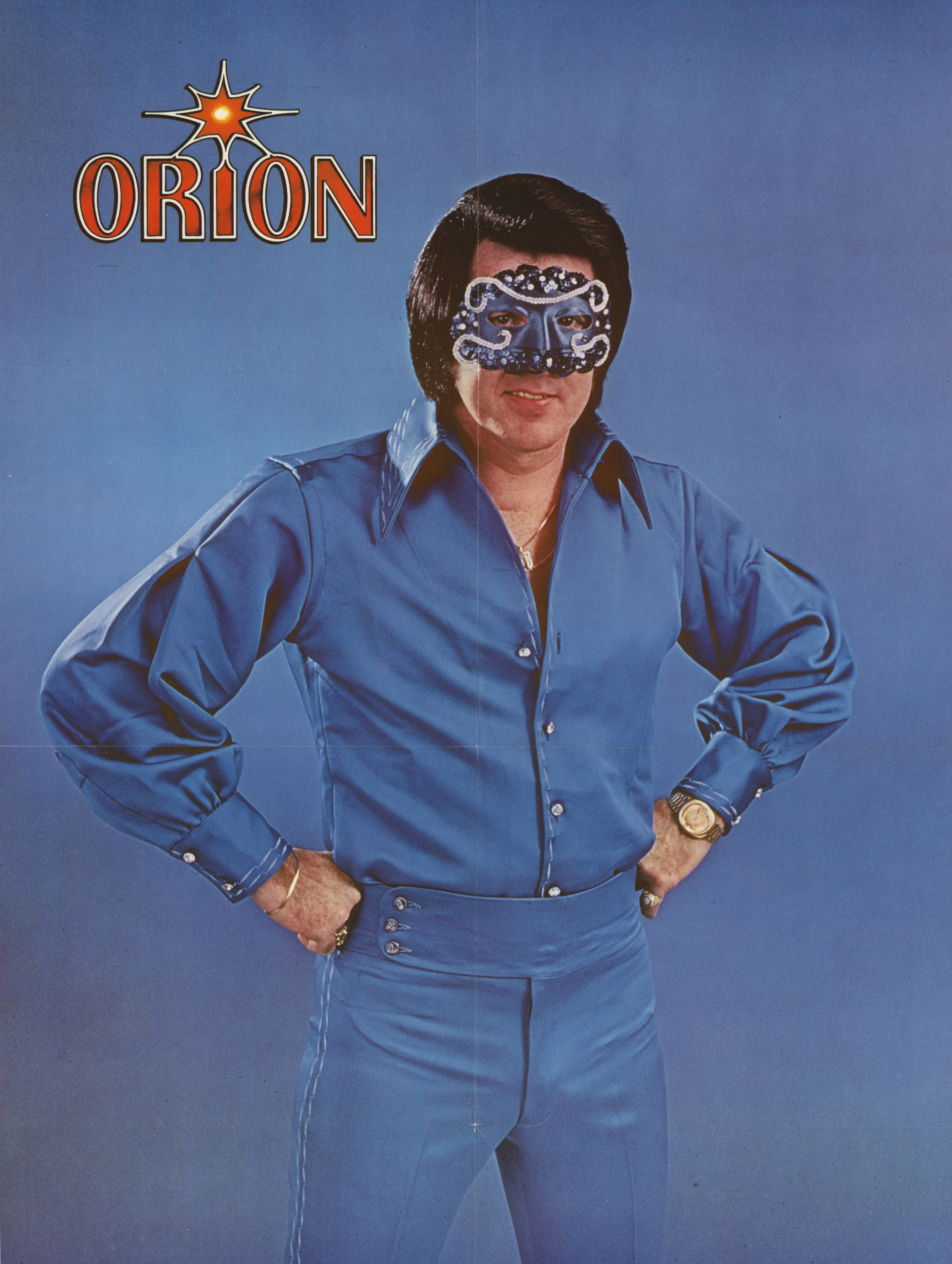
As a teenager in 1960s Alabama, Jimmy Ellis’ wonderful singing voice was unlike any other. Except, that is, for one Elvis Presley. Hampered by his over-resemblance to the King, Jimmy’s own singing career floundered. Then, in 1979 he found fame as a masked singer called “Orion”, a persona deliberately evolved to create intrigue in the wake of Presley’s death. Over the next years he played to legions of grieving Elvis fans, and developed his own fanatical fan base, many of whom remained in willful denial about the true identity of their idol. With his contract stipulating he never remove his mask in public, Ellis’ success came at a high price for the singer still hoping to succeed on his own terms. Jeanie Finlay’s nuanced portrait of Ellis serves as a riveting cautionary tale of the music industry, and a memorable exploration of identity. 

JeanieFinlay_Director_landscape
Jeanie Finlay

I spoke with Jeanie on the telephone, just before she left to take the film on a tour of the American South:

How did you come to this story?

I discovered an Orion record at a car boot sale with my husband 12 years ago. And was just intrigued by this kooky masked man. We took it home and played it. It was confusing: what is this? Because it wasn’t Elvis songs but it sounded like Elvis and the mask was intriguing. And then we did some research and discovered Orion’s whole story. It was a total chance discovery. I wasn’t making films then; I was an artist. Cut forward six years and I’d made Teenland and Goth Cruise and I thought what am I going to make next? I’ll make Orion. But I couldn’t get anyone to fund it. So I got a bit of development money and I shot most of the film on that initial development.

I was told by a senior programmer “If you continue to make music oriented work, no one will fund you.  You’ll get shown at festivals but only in a side bar, and you’ll never be taken seriously.”

It seems like such a great story. Why was it so difficult to get funded?

Part of it was timing. No one knew who I was. It is a guy who is not famous. The story takes quite a lot of explaining. It’s an easy story to dismiss as Americana. Some of the funders told me “We don’t fund Americana. This is Americana.” Also, six years ago, I was trying to make it pre Sugarman and pre 20 Feet From Stardom. At that time I did a panel for Sheffield Doc/Fest called “Just Don’t Call it a Music Doc”. Because I was told by a senior programmer “If you continue to make music oriented work, no one will fund you.  You’ll get shown at festivals but only in a side bar, and you’ll never be taken seriously.” Obviously films like Amy, 20 Feet From Stardom, and Sugarman have changed that discussion. I was always convinced that it was a really great American tragedy.

What kind of response are you getting from audiences, and particularly from Elvis fans to the film?

It’s quite interesting trying to reach Elvis fans. We’ve been going through Elvis tribute artists because they have access to a whole community. But actually going to Elvis fans is tricky. Because they love Elvis, and they have their favourite Elvis Tribute Artists, but they don’t want anyone else. So they are really not interested in Orion. So we’ve been doing some targeted ads on Facebook, and we’ve had no end of abuse from Elvis fans who haven’t heard of Orion and think this is someone trying to pull a scam!

Orion: The Man Who Would Be King, Monday, 16 November at 10pm on BBC Four.

Orion, photo courtesy of Sun Records
© Sun Records