Category Archives: Interview

James Jones on Saudi Arabia Uncovered

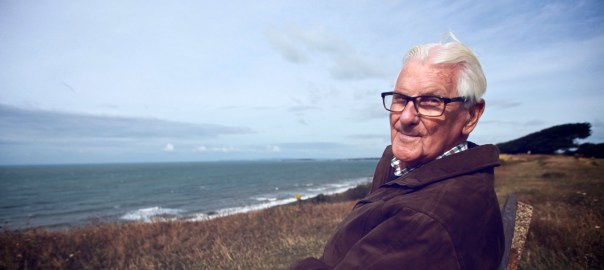
In a relatively short amount of time – six years or so – James Jones has carved a name for himself in international current affairs stories, making films for both sides of the Atlantic. most frequently for PBS’s Frontline. Fresh from looking at North Korea, the London based filmmaker’s latest project ventures into another secretive country: Saudi Arabia.  The film, versions of which screen on both ITV and Frontline, uses secret filming by activists to spotlight how a quarter of the population lives in abject poverty, despite its massive wealth. The film takes a hard look at the human rights abuses perpetuated by Saudi’s rulers, abuses that the West has been far too eager to turn a blind eye to, as long as the oil and weapons flow freely.  The UK version also investigates how religious leaders in Saudi are masterminding religious extremism that extends far beyond its borders (it is no coincidence that fifteen of the nineteen 9/11 bombers were Saudi citizens). Taking us into a land where activists risk their lives with every move they make, this film should be compulsive viewing, and serve as a wake-up call as global terrorism escalates. Docs on Screens spoke with James about the making of it:

Why this film now?

So the starting point really in the UK was when Raif Badawi the young blogger was flogged in January 2015. And a couple of weeks later the Saudi king died. And you just saw world leaders, David Cameron, Prince Charles, President Obama, all flock to Riyadh to pay their respects….And it just made me think. I’ve made films in Iraq, North Korea, all these places with kind of questionable human rights records. But the difference between North Korea and Saudi Arabia – North Korea is a pariah state. Everyone knows they have gulags; it’s beyond the pale. And yet we were being incredibly respectful towards a regime that has a very questionable human rights record. And so really I thought – there are people in Saudi Arabia who share our values: are pro freedom of speech, are pro women’s equal rights, all of these things. And yet they’re the ones being locked up or lashed or executed. And so we wanted to go and try to use the same model that we tried out in North Korea in Saudi Arabia. We knew politically it would be a lot more sensitive but we thought it was kind of worthwhile because it mattered more.

There are people in Saudi Arabia who share our values: are pro freedom of speech, are pro women’s equal rights, all of these things. And yet they’re the ones being locked up or lashed or executed.

And that model is giving activists cameras to film secretly?

Yes tapping into a network of activists that already kind of exists. And then sharing our technology in terms of the undercover camera and expertise in trying to focus their efforts in telling a story that would be kind of coherent and gripping for the world. Unlike North Korea, in Saudi Arabia people have mobile phones so that made our job a lot easier.

JJ_905
James Jones

What is the difference between the US and UK versions?

The PBS story is entirely looking at the activists on the ground. So it is all about this network, their footage, and different movements for change and currents for reform and complexity. So it doesn’t go into the same detail about the ideology driving terrorism. The geopolitics of it all is quite kind of focused on the domestic movements. Which in a way makes it kind of more of a coherent narrative.

So the angle of the PBS film is that it’s the movement of activists but not so much the criticism of the West? 

Exactly. So not really going into the central hypocrisy but just telling the story on the ground. And going into more detail, so there’s more context in terms of the different problems Saudi Arabia is facing: the oil price crashing which has led to big cuts, they are fighting expensive wars abroad, etc. And so we have people telling us how it is basically a perfect storm once you combine those elements with people who are unhappy who are protesting.

You have made several films which have been reversioned in the US and UK. What generally do those differences tend to be?

Certainly the Frontline audience is pretty well informed. Their foreign coverage is pretty strong, pretty comprehensive. I think Frontline is great because they tell their stories very clearly. In the UK there’s more of a willingness to be provocative about a subject that matters. British television is just as rigorous, but you can afford to be more bold and more cheeky.

.

PBS Frontline: Saudi Arabia Uncovered airs Tuesday, March 29th British viewers can watch the ITV version here.



Dan Reed on the Charlie Hebdo Attacks

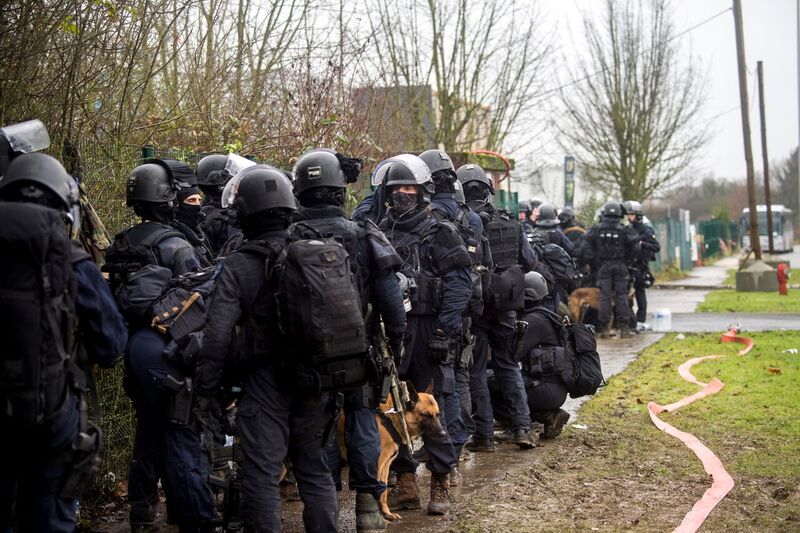
When your office door is just metres away from your neighbours,  you don’t have much need for their landline: it’s easy to stroll across the hall for a chat, or send an email. But the staff of the Paris-based television production company Premieres Lignes were to come to regret not having their colleagues’ number on the morning of January 7 last year. As two gunmen entered the building and stumbled around looking for the offices of the satirical magazine Charlie Hebdo, alarmed Premieres Lignes staff locked their own office door, headed to the roof, and waited helplessly as the massacre unfolded below. Their continuing regrets over their lack  of heroic action is one of the most compelling sequences in a remarkable film airing tonight on BBC’s This World. Directed by five time BAFTA winner Dan Reed, Three Days of Terror: The Charlie Hebdo Attacks lays out in forensic detail the sequence of events that kicked off with the terrible massacre in the magazine’s meeting room.

Martin Boudot
Premieres Lignes employee Martin Boudot

Reed is no stranger to this territory, having similarly masterfully dissected terrorism attacks in Mumbai, Moscow and Nairobi. He is one of the most accomplished documentary makers working in Britain today (his recent masterclass at Sheffield Doc/Fest is well worth a listen). Docs on Screens spoke with Dan about the making of the Charlie Hebdo film, and what it’s like to continually work in this dark terrain:

Carol Nahra: You start out the film with an acknowledgement of the November attacks. How much did that tragedy affect the making of the film?

Dan Reed: The very last guy we happened to interview was the chief medical officer of the Paris fire service, who was at Charlie Hebdo and is one of the first people into the room. It was Friday the 13th of November, which is the date of the Paris attack, and we were chatting away at the end of the interview. I was saying “Something is going to happen again soon, I can feel it in my bones. It will either happen in Paris or London, there’s going to be another devastating attack soon. And there is no reason why it wouldn’t happen in a way, because nothing has changed to prevent it happening”. Literally, 200 metres from the studio where we shot our interview – which was our regular hangout in Paris where we shot most of our interviews – three or four hours later gunmen turned up and killed 19 people at a cafe on the corner. And the Bataclan was a short walk from Charlie Hebdo. My office in Paris was literally three metres away from the attack where Charlie Hebdo happened. I was working with that TV company (Premieres Lignes). So it all felt very very close… So we had to reference it back and say to people “look this is a film about what happened in November”.  And then we had to find a way in the preamble and the wrap up to make a distinction between the attacks.

dan reed
Dan Reed

CN: So much has been published in the media regarding Charlie Hebdo. What was your aim with this film?

DR: For one thing, to try and actually research the story properly, and figure out what exactly happened. We went into mind numbing detail about what actually happened, when and where. There is always drama in the two story of things…in the unfolding of events. There is often a lot of dead time, when people are waiting for police to arrive, and those are dramatic pauses…We did a lot of research to allow us to understand the drama of the story. We also got hold of a lot of images which had never been seen before – a lot of still images from the security cameras at Charlie Hebdo and the Jewish grocery. There are quite a few kind of scoops and untold bits in our story…So it’s kind of untangling the truth from the lies and the misperceptions and really establishing a proper timeline for the story, that took a lot of work. A lot of these people hadn’t spoken before, or hadn’t spoken at the time.

“There’s this strange process where you start from completely on the outside of events, and six, eight months later by the time you’ve corralled all these people together and got them to talk to you, you end up like a single point of contact for all these experiences.”

CN: Yes and they’re talking about very traumatic, harrowing and recent events. So what was that like?

DR: Again, there’s this strange process where you start from completely on the outside of events, and six, eight months later by the time you’ve corralled all these people together and got them to talk to you, you end up like a single point of contact for all these experiences…Every eyewitness is trapped in their often very narrow perspective. And often has a lot of misperceptions, a lot of questions, a lot of frustrating gaps that we’re able to fill in. So the satisfaction of being able to, if you like, piece together the narrative not only for filmmaking but also for sharing with the other victims – the survivors – that’s satisfying. I happen to speak French fluently, because I grew up speaking French. And that really helps. You’re immersed in this world of trauma and loss and people who can’t get these violent images out of their heads. It’s familiar territory I’m afraid.

laurent leger
Charlie Hebdo survivor Laurent Leger

CN: Can I ask you about Premieres Lignes. They’re your co-production partners, is that right? What was it like for them continuing to work in the same building?

DR: Really really hard. I don’t think I’m betraying confidence by saying there are a number of people within that company who would very much like to move, and of course it’s difficult and very expensive and may not even be a good idea. Very much to varying degrees some of them are definitely haunted by what happened and are reminded every day. It’s difficult not to be.

CN: It’s quite different from some of your other “Terror” films. Terror in the Mall had such abundant multi camera archive. Can you talk a little bit about the archive collection process for this?

DR: The key word is frustrating because I knew in particular that security camera footage existed from a number of locations where the attacks had happened. Because the footage was immediately impounded by the police, and because the prevailing attitude is “don’t let people see anything”, it was impossible to prise the moving pictures from the French authorities. And that was very frustrating because of course we would have used it responsibly.

“There is a huge world of difference between having something shocking in a twenty second clip on the web, and having it in a documentary where the people involved speak, and it’s done with care and compassion and sensibility.”

CN: So there’s a lot of footage that you couldn’t get?

DR: We just literally couldn’t get. There’s a really, really strong taboo in France against any images showing pain and suffering.  I found it kind of unhelpful in some ways…I think you can understand, but at the same time that really blocks a huge amount of journalism and seals off a lot of images. We live in a world where images are often the key to understanding situations. If they are used responsibly in the form of a longform narrative in particular then I think you can definitely justify the use of quite shocking images, if they’re in a context which creates understanding rather than used for just shock purposes. There is a huge world of difference between having something shocking in a twenty second clip on the web, and having it in a documentary where the people involved speak, and it’s done with care and compassion and sensibility. But no matter how you treat the material, the French are like not into that at all… Notwithstanding that I think we got a huge amount. It’s a more emotional story in a way than the others.

gendarmes

CN: Is doing film after film of darkness taking its toll on you?

DR: I don’t think I can do another one like this. I said this after Nairobi – I was being interviewed by the New York Times, saying “this broke my heart and I don’t think I can do another”. And here I am. But in fact I just turned down Terror in Paris 2 for the BBC, because I said “I can’t do this again. I can’t do this again in the same place.” The nature of the material, the darkness is enveloping, and you can kind of get lost in it. I think I can safely say I’m not going to do another blow by blow like these for a while.

Three Days of Terror: The Charlie Hebdo Attacks airs 6 January on BBC Two at 9pm.

Sue Bourne on The Age of Loneliness

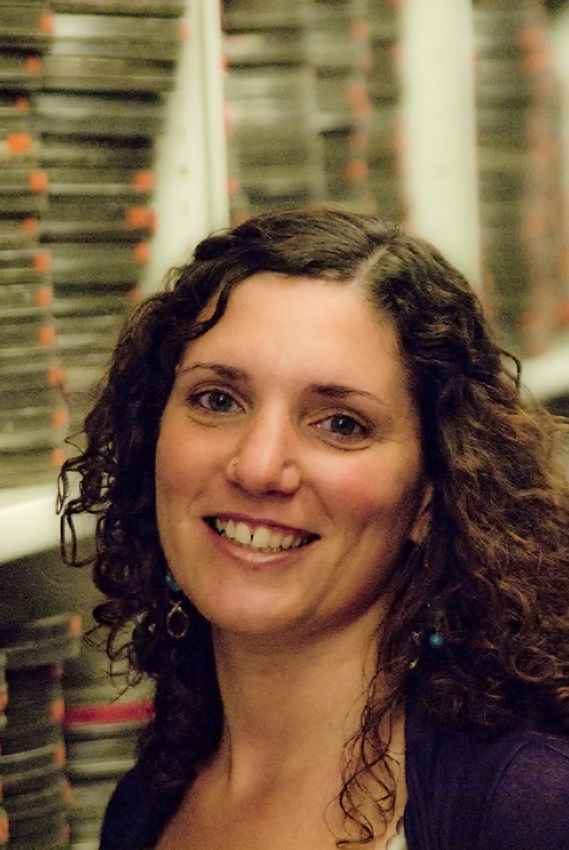
The single documentary The Age of Loneliness looks at the “epidemic” of loneliness in Britain, telling the stories of 14 very different contributors. It’s a profoundly moving exploration of an often taboo subject – and one that resonates with most of us, whether we’re currently lonely, have been in the past, or worry about the future when we might be. Docs on Screens spoke to veteran director Sue Bourne about the film, which airs 7 January on BBC One.

Carol Nahra: You were very careful to get a good range of people. How did you go about finding your contributors?

Sue Bourne: Four months research. It just took us forever (laughs). I said ‘I’m not doing a film just about lonely old people – that’s boring and it’s obvious and that isn’t the problem.  It’s an epidemic, and it’s about all ages and there’s something happening’. It was very much for me about a societal change and what was going on. But then I’m not doing a Panorama so I just wanted to give a voice to all those different people. So I said I want a voice from every decade, from every age group. So I drew up my list and then we just hit it for four months. We were in touch with 500 odd people to narrow it down to the 14 who appeared. Charities, blogs, internet, just everything. The thing about lonely people is they’re not out there shouting about it from the rooftop. And so that’s hard. And a lot of the people we met were just too vulnerable to go on telly.

Programme Name: The Age of Loneliness - TX: 07/01/2016 - Episode: The Age of Loneliness (No. n/a) - Picture Shows: Isabel, 19 – Lonely at university - (C) Daniel Dewsbury - Photographer: Daniel Dewsbury
Isabel, 19                (C) Daniel Dewsbury

CN: The ones featured are also vulnerable. You have very emotional scenes where it seems to me they are often articulating their loneliness for the first time, which I found quite painful. How did you find interviewing them?

SB: Well, basically I think they were wonderful, all of them. I think they were brave. Because no one wants to admit to being lonely because in the back of your mind you’re thinking ‘well, why am I lonely? Is it because I am horrible? Why am I Johnny no mates? What’s happened?’ Some of them they have lost their partner so it was obvious why they were lonely. But other people were lonely and wondering if it was their fault, are they to blame. There was certainly one person I thought would be very good for the part because they epitomised a very large group. And I phoned them up and said ‘I want you to be in the film but you have to be honest. And I think your default position is to put on a brave face. And frankly you’re going to have to take that off. And bare your soul. Because if you put the brave face on you’re not telling the truth and the one thing I want this film to be is truthful’. So I was asking a lot….but I think it’s one of the most moving interviews in the film.

CN: Which interview was it?

SB: It was Jaye, the single girl. Because she wants to be a jolly person. But I thought the interview she gave was so honest. It was extraordinary She was really brave to be so honest. But I knew what her default position was – she was battling through life being jolly saying ‘I can cope with it. I can cope with it’. But inside it was tough.

CN: Are you a lonely person?

SB: No. I think I’m alone. My daughter’s dad, my ex partner, is dead. All my parents are dead. I have no brothers and sisters and really no family to talk to. So really it’s just me and my kid and she’s in her twenties and I don’t want to be a needy mother. So I’m acutely aware of the life ahead of me. That it will involve aloneness. So I better get used to it. So I try to train myself to be a bit more positive about it (laughs).

CN: Is that what brought you to the topic?

SB: I think so…In Fashionistas (which profiled six extraordinary older women) I wanted to find role models for the next 30 odd years, who were going to be upbeat and enjoying life and squeezing the pips out of it. Because that’s what I wanted to do. And then again a lot of them were on their own, so what I got from that is you need a particular spirit if you can find it to carry you through life because it ain’t easy and you might well be on your own.

age of loneliness sue bourne
Sue Bourne

CN: Did you ever think of matching people up? Cause it seems like there’s some people who would benefit from each other’s company in The Age of Loneliness.

SB: Well in a way sometimes you look at these films that we do and it’s like – I feel like a social worker. Because what I’m doing is I’m opening them out. I’m giving them a voice. Then I want other people to talk. I want people to look and think ‘why is nothing being done to help them?’. I now want to do Contact the Elderly tea parties because I think that it’s just wonderful. It transforms their lives for one afternoon a month and that’s all it takes…We have to be kinder. That is the wettest things a filmmaker can say – “I just want people to be kinder” – but I do!

CN: I can imagine that a doc about loneliness might not make for like the most filmic pitch.

SB: It took a bit of time and eventually I got in front of Charlotte (Moore) and said ‘Please, just give me this commission’. And she said ‘Okay, it’s yours, go.’

CN: It’s beautifully shot. It looks lovely.

SB: I had (producer) Daniel (Dewsbury) at my side from February. We did all the research together; we talked constantly about what we were trying to achieve, four months of that. And then I decided not to use a cameraman but to use him, and gave him a beautiful camera, nice lenses, and three months to shoot it. And we were this tiny little team. And it paid off. And then we got the drones (used for aerial shots throughout the film). I don’t like gimmicks. I always thought I only want to shoot it if it’s relevant to loneliness. But for me the drones were critical because I wanted to say “It’s everywhere in Britain – anywhere you look you’re going to find loneliness”.

The Age of Loneliness is on BBC One at 10.35 pm, Thursday, 7 January.


Addicted to Sheep: Interview with Magali Pettier

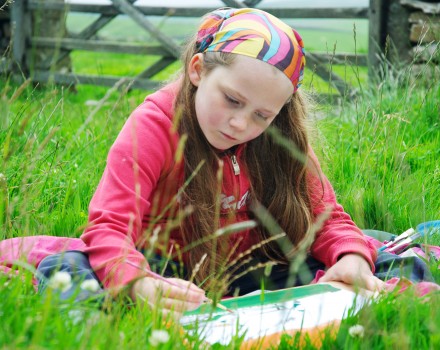
One of the surprise hits of this year’s Sheffield Doc/Fest, where it had its world premiere, Addicted to Sheep is that increasingly rare specimen: an observational documentary, largely made in the cinéma vérité tradition. On the big screen it’s a treat for the senses, immersing you in the lives of a family of tenant sheep farmers in the north of England. Currently screening in UK cinemas, it’s been getting rave critical reviews.  I recently did a post-screening Q&A with the director Magali Pettier at Bertha Dochouse. Here’s a brief excerpt:

There were quite a few scenes in there when they clearly could use another hand. Did they ever say, ‘Magali, could you help me with this’?

Yes, and I do feel it sometimes, especially with the scene with the gate [where the farmer struggles at some length to fix a gate].  But my role as a filmmaker is to observe and see what is happening.  If he had fallen and broken his leg of course I would go and help. But you shouldn’t intervene, and my aim is to film what is happening, and if I hadn’t been there, there wouldn’t be anyone to help him. He wasn’t in any danger. I think sometimes, having been brought  up on a farm, I knew when  to be there to help, and when to be quiet, because there are some very tense moments and you have to make yourself very small.

Magali-Pettier-Director-Producer-of-Addicted-to-Sheep1
Magali Pettier

They certainly didn’t expect you to be spending Christmas Day with them!

They certainly didn’t. It didn’t take too much convincing and they said yes you can come while we open presents but after that we’d like to have the day to ourselves. They did make me feel like part of the family, and I stayed in the house with them when I was filming them.

It’s quite impressive, and in some ways these days slightly old-fashioned to have such an observational style. You had some interviews on the go, to give context to their lives. Otherwise it’s very minimalist. Have you been surprised how well the film has been received by audiences?

So far we’ve had a really good response. People appreciate they are not being told something all the time. It is filmed in a way that allows them to experience that environment and they feel like they’ve been there and that they know the family. For me that was the aim. I wanted the film to touch on social issues but I didn’t want it to be about social issues. I wanted people to think about it, and open up a conversation, but I wasn’t going to make a campaigning film. I wanted it to be about real people.

Caption-Still-of-Esme-Hutchinson-on-filming-location-in-Upper-Teesdale-for-Addicted-to-Sheep-addictedtosheep-440x350

How do you know, in a film like this, that it’s time to stop filming?

I spent about 45 days over 18 months there. I could tell they wanted to get on with their lives! And going to those places and having me always behind or in front of them, or sometimes with a radio mic on them,  I could really feel it when there was stress on the farm, that it was time.  I had asked enough of the family, and we had to make the film with what we had.

And the family is happy with the film?

They liked it. But they said at first that they were not sure what the community would think. But we had a preview in the community with feedback forms and everyone agreed it was a good representation of the area. So that gave them confidence that it was okay – the community liked it so it was fine.

Check out this link for upcoming screenings of Addicted to Sheep.

Addicted-to-Sheep-Jack-talking-2-440x350

BBC Exec Fergus O’Brien on the Making of The Met

In September 2013, veteran doc maker Fergus O’Brien took up a new post as Executive Producer at the BBC, working with head of documentaries Ayesha Rafaele. On his first day, he was handed a very big project: “Literally I was walking in the door and I bumped into Ayesha and she said ‘Do you fancy exec-ing the Met?’ I’m not sure I knew exactly what that would mean but I said yes.”

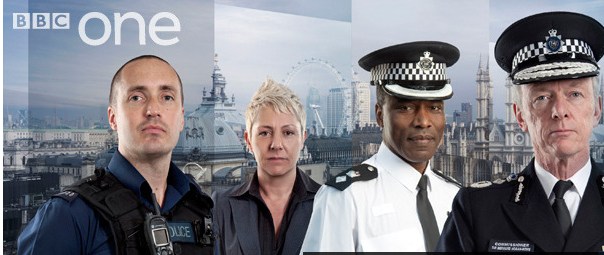
O’Brien soon found himself immersed in steering one of the biggest access-driven documentary series in the BBC’s recent history. Airing on BBC One, The Met: Policing London is the first time a broadcaster has been given comprehensive access to London’s police force.

fergus head shot
Fergus O’Brien

For O’Brien, it has been rather a bumpy ride: “Inevitably with stuff that’s dealing with the law and criminality and so on, the phone never stopped. You’re often managing people’s worries, and people’s concerns, and keeping an eye on the legalities of things and keeping a steady line of contact open with our editorial policy team and our legal team.”

Initially a six part series, the team had to drop one of the episodes, when legal restrictions prevented them from airing a major storyline about domestic abuse: “That was very difficult – it’s hard to say goodbye,” says O’Brien. “It would have been a really strong story and often those stories, where the victim is willing to be on camera, aren’t told. Unfortunately through the peculiarities of the legal system we couldn’t show it.”

As director of such films as Channel 4’s Seven Days and the acclaimed, and very funny, The Armstrongs (BBC One) O’Brien is used to following a variety of strong characters across numerous settings. But helping the four shooting teams negotiate their way through the labyrinthine Met was a job like no other: “Each of the teams was assigned to a response team in a different borough of London, and a cross-section of boroughs which would reflect the diversity of the city,” he says. “And each team also took on one or two specialist units, whether it was homicide or Trident. The idea being that the bigger units would hopefully provide us with a spine for each film and something we could come back to, and then we could pepper it with a mixture of different response stories to flesh things out and give a sense of variety in each programme.”

Whilst access had been given from the top, it continued to have to be negotiated throughout: “We had to get consent from everyone, even if they were in the background,” says O’Brien. “It’s the usual thing, from our point of view: unless people want to do it there isn’t a point. If they feel they are being forced into it, it just isn’t that great.”

The production ended up with 2,000 hours of footage, shot over the year, and edited over many months. Even now, as the series is airing, O’Brien is still putting out fires: “It’s not the same as covering a story and when it is done and dusted in the courts you put it out. It is just ongoing; it’s daily. Every day now we have to check every single case across the series to make sure people haven’t re-offended and we’re not in contempt of court. It’s a huge part of it.”

The Met: Policing London is airing on Mondays on BBC One at 9pm until early July. Read about a very different way to film police docs here.

Sean McAllister on his Syrian Labour of Love

British documentary Sean McAllister is known for launching himself into foreign lands, often in the midst of war, and finding unforgettable personal stories. Whether it’s via a piano player in Baghdad, a postal worker in Japan, Sean’s own “minders” in Iraq, these are stories of ordinary people – though always strong characters – struggling to survive in an often unkind world. Sean’s latest film, A Syrian Love Story, is perhaps his best yet. It begins as a very local story about Amer and Raghda, a couple who met as political prisoners in Syria and went on to have four sons together. When Sean is arrested with footage of them in his camara, the family has to abruptly flee to Lebanon, and the film  turns into a larger story about lives in exile.  Sean continues to follow them as they struggle to find solid footing, not least in their marriage,  whilst watching a deteriorating Syria from afar.

A SYRIAN LOVE STORY 10
Sean and Bob
I spoke to Sean a few days before the film’s world premiere at Sheffield Doc/Fest, and he explained a bit about the circuitous way the film was made:

It’s been a long time in the making. Is this your longest project?

Yes, it’s a labour of love, isn’t it? It didn’t get commissioned. That’s why it went on and on and on. I suppose the interesting side of it is that I’d given up on it actually. Then Matt Scholes, who graduated from Sheffield University film school, read an interview with me about it, and contacted me and said rather than working in the industry I’d like to edit this material of yours. I said I’ve given up on it – it’s not happening. And he said, well let me just have a look at it. And he went off for three months and started cutting it together and got me excited again. So I went off filming again because of him.

That’s amazing. At what point had you given up on it?

I gave up on it so many times. But the most significant point probably was two years ago, when I finished my Yemen film. I took off from Syria and went to Yemen and made The Reluctant Revolutionary.  Nick (Fraser, of BBC Storyville) had sort of wanted a film from Syria. I gave him the Yemen film. I think he felt after the Yemen film and post Arab spring that it wasn’t so interesting to have an Arab spring film again…So he then sent me off to Greece to make a film. So I used the development money in Greece to fly off to Lebanon to film them, with the development money from Greece.

A SYRIAN LOVE STORY 04
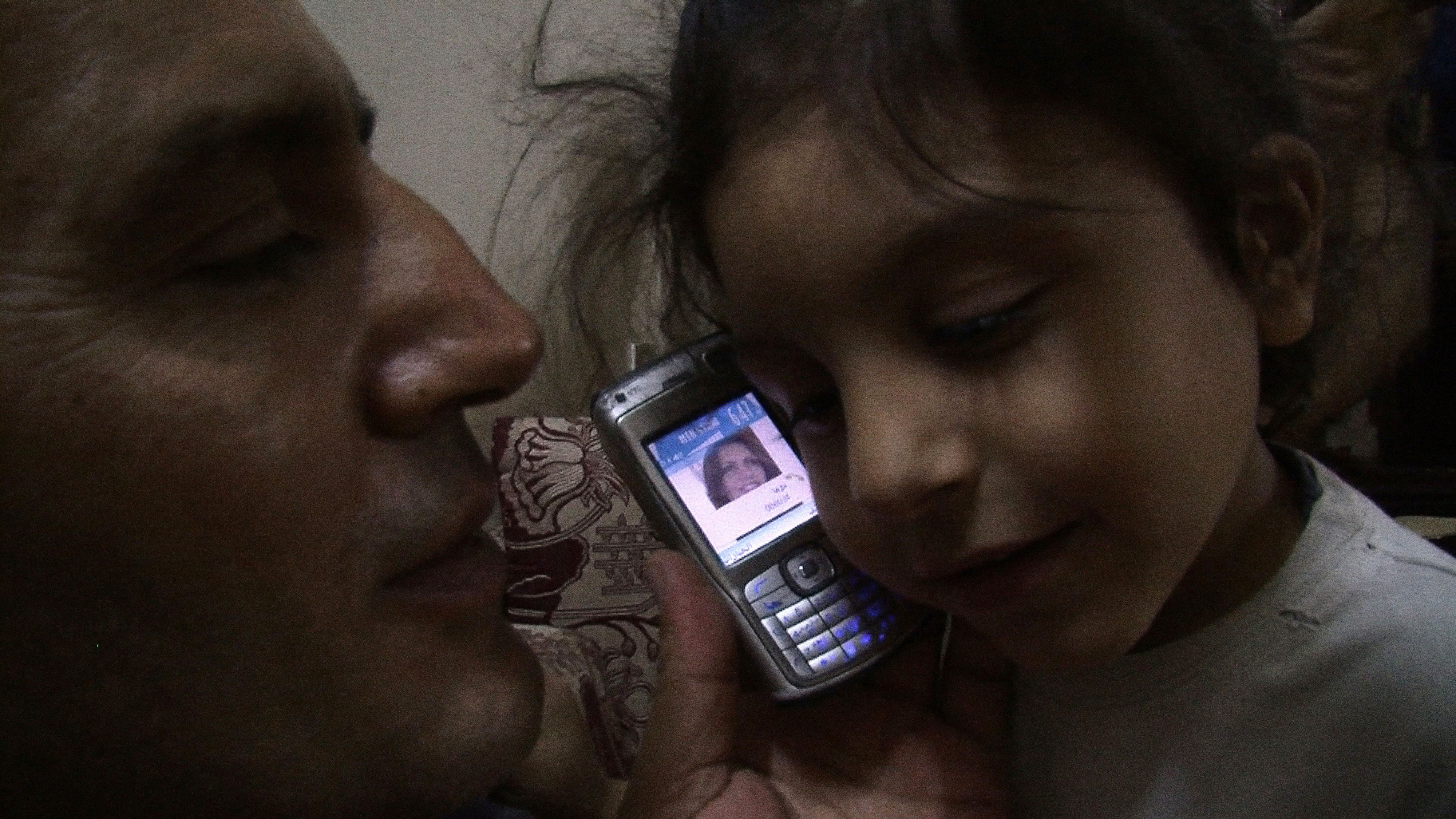
Amer and Bob speak to imprisoned Raghda
There’s no Greece film, huh?

There’s no Greece film. But like at the beginning, when I wanted to go to Syria and couldn’t get Syria commissioned, they sent me to Dubai. So I used the Dubai development to go to Damascus. So where there’s a will there’s a way. At the end of the day Nick saw there was nothing happening in Greece, and I was very passionate about this. And by then it wasn’t Arab spring; it was a different story. The arc of it had changed over the course of five years; it became a story of exile. It became something a bit more unusual because of the time frame. And this was all possible because Matt had got on board to construct the material, so we had stuff to show. And then when the BBC came on board, we pitched to the BFI. It’s perfect for a BFI pitch because they need to see what they’re getting into. And we had certain scenes cut, and they were excited.

The family’s story arc changed thanks to you, probably in a more direct way than has previously happened in your films.

I just came back from the border, screening the film with Raghda, and one of my questions (in preparation for post screening Q&As) was did she blame me for life today? Because I got arrested and they were all thrown into exile….And she laughed and said “I cried when you were arrested, I cried for you. The only people I blame in any of this are the regime.”

A Syrian Love Story has its world premiere screenings 7 and 9 June at Sheffield Doc/Fest. It will then be playing at festivals internationally and following a cinema release will be broadcast on BBC Storyville in early 2016.

How did Vanessa Engle Get Inside Harley Street?

If you haven’t yet tuned into it, get thee to the BBC I-Player to watch the first part of veteran director Vanessa Engle’s series Inside Harley Street. I’ve watched every minute, fascinated, and think it’s an exemplary portrait of a unique community – something very tricky to do. What Engle does so successfully is weave a rich tapestry of the human condition, through the many storylines we bear witness to over the three hours. Engle’s approach is very direct: conducting interviews, on site, as people undertake, or administer the myriad of medical, cosmetic and complementary treatments on offer in the Harley Street neighborhood. She also speaks to the community that keeps it humming, from the florists to the cleaners, to the rather fantastically powerful behind the scenes uber-landlord, who treats the neighbourhood like a Monopoly board (and indeed gleefully shows Engle his own custom made board replete with his properties).

Despite the simplicity of its construct, it’s clear that Inside Harley Street must have been a monster to put together. I spoke to Engle on the telephone to ask her just how she got inside the exclusive neighborhood:

Can you explain a little about the research and development process which went into making this series?

It was immense. I had this fantastic assistant producer called Liz Kempton. We started with all the conventional medical doctors, which is what Harley Street is best known for. And she just contacted enormous numbers of them…The levels of complication in putting this particular jigsaw together were beyond anything I’ve ever attempted, and I’ve done some pretty complicated ones. It’s not unusual for me to do a series where I have between 80 and 100 contributors. But for each contributor you had to get the doctor to go with the patient, you also had to get permission from the clinic. If they go for a scan in another hospital, you have to get permission from that hospital…the permissions proliferated. I’d never come across anything as complex as this.  And they’re not only places where medical confidentiality is an issue but they are all private businesses who are extremely protective of their clientele and their reputation. So you can imagine the difficulty. But the starting point was Liz contacting literally hundreds of doctors as an initial approach. She met quite a lot of them. If she thought there was something there then I would meet them as well.

Vanessa Moscow
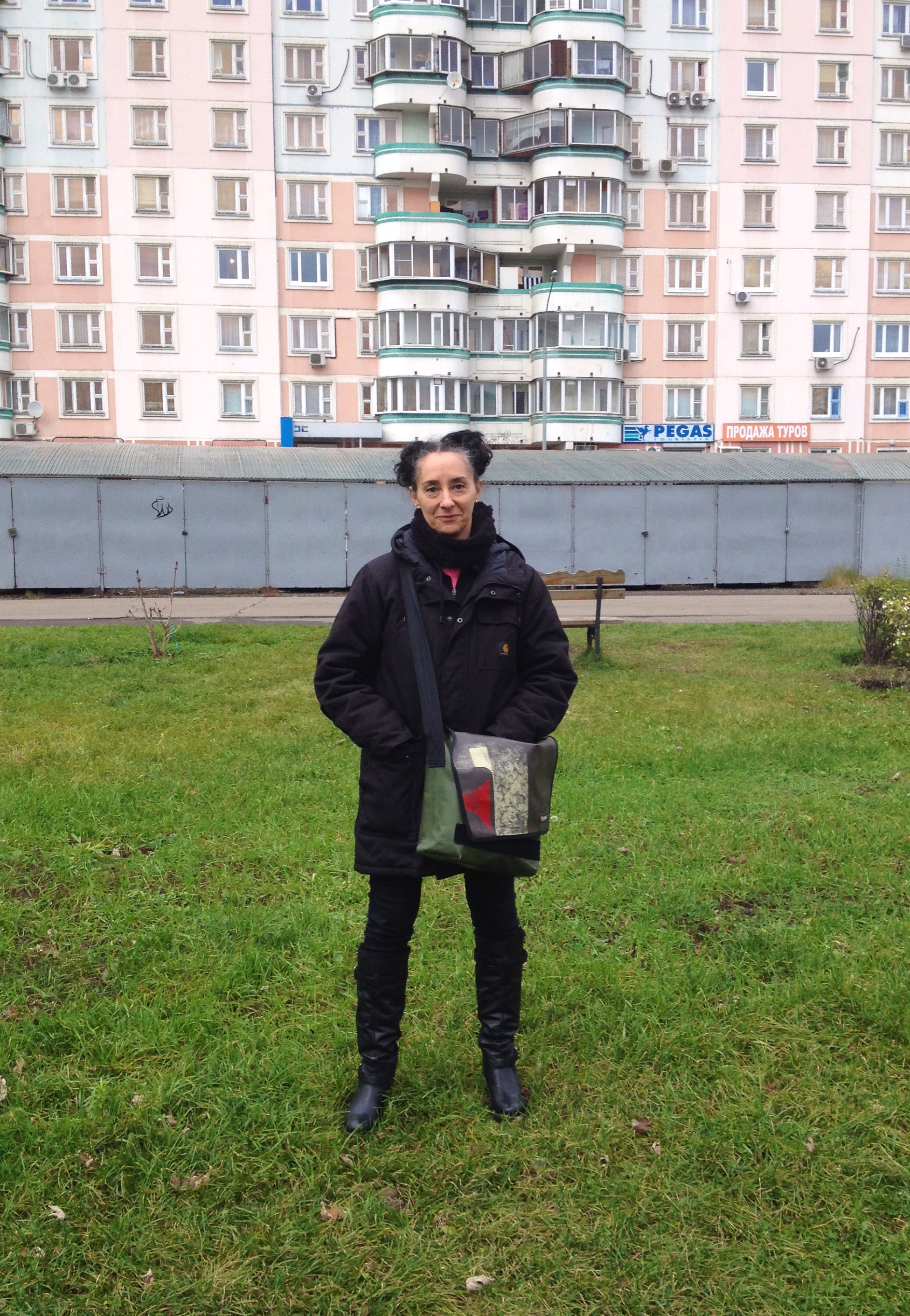
Vanessa Engle

I know often when you go about getting access, people tend to club together one way or another. Did things get easier or harder for you?

My experience in any community is once you’ve got some really impressive names that have said yes, then it does get easier, it gets significantly easier.

And that happened with you?

Yes. With some of the doctors in the film, they hold a lot of sway – their reputations go before them – so once they say yes then others will follow.

Did you use any of your films as a calling card?

I do do that – I absolutely do that. And quite a lot of people in a lot of the clinics, they have hefty marketing and PR departments, and some of them asked to see my films and others checked me out online.

Maryam's leech therapy
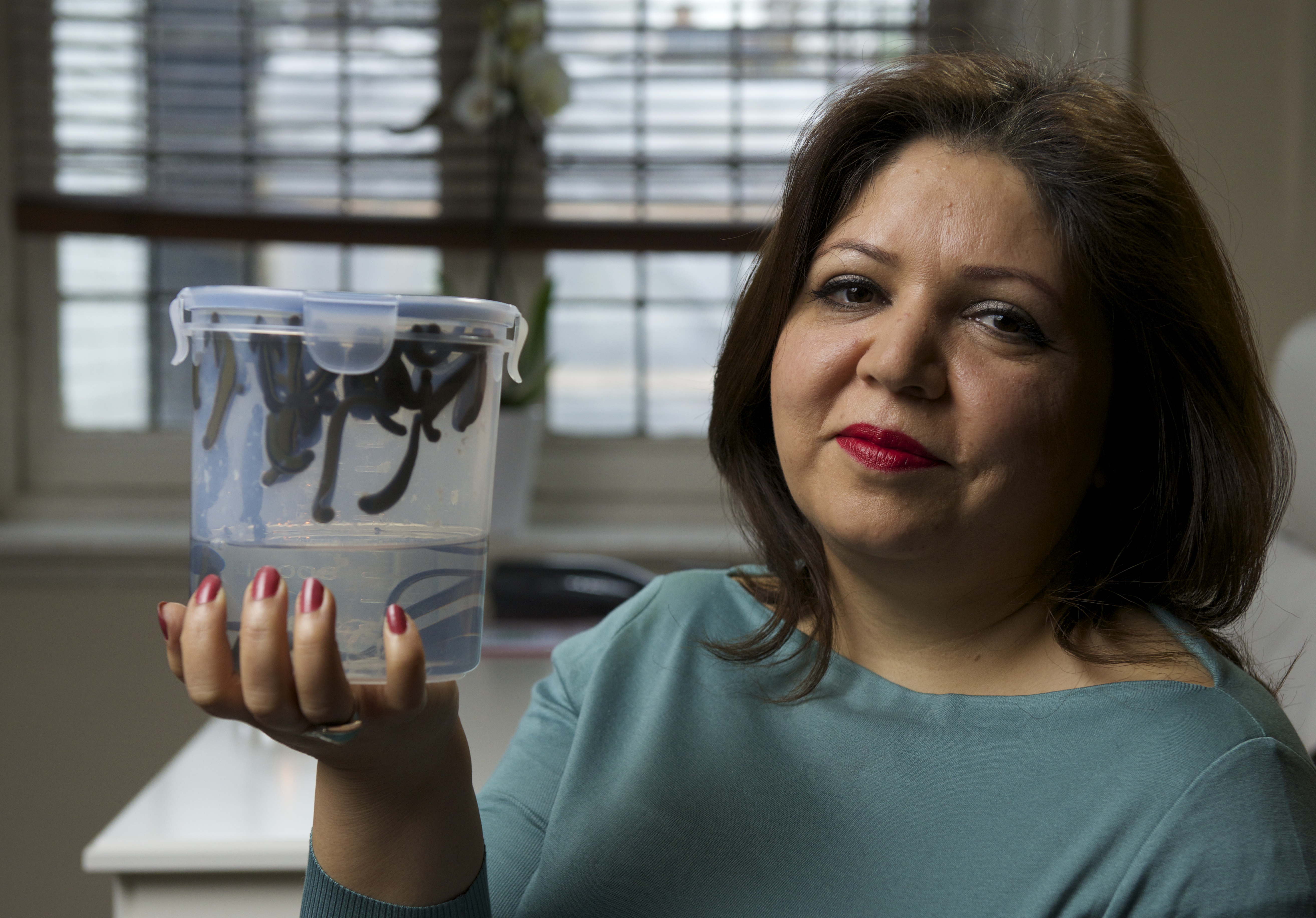
Maryam’s leech therapy

There have been quite a few series which are location based on British television lately, like Inside Claridges and Welcome to Mayfair. How did you plan your approach for this series – did these influence you at all?

That’s a very good question.  There has been a spate of commissioning around luxury brands. I’m sure it is possible that Harley Street was also commissioned in that spirit – that there appears to be an audience for films about luxury. For me, right from the outset and in the original treatment I wrote, I always knew the series wouldn’t be about that. To make 180 minutes of television – as long as two feature films – on a premise that would just be ‘here are some rich people, and here they are paying for stuff the rest of us can’t afford’, for me as a filmmaker that doesn’t take me anywhere. There is nowhere to go with that proposition. And it’s certainly not going to keep me going for three hours. Not if you are a genuinely curious documentary maker and trying to find stuff out about humanity at a slightly deeper level. Rich people buying expensive shit isn’t of enough interest to me personally and I always knew that. It was clear from the outset that there would be huge issues thrown up about aging, about illness, about how we feel about our appearance, about why women are altering their appearance frequently, about why people are choosing treatments and therapies that are anti-scientific when we live in a scientific era. It was obvious to me that there was something meaty there that was never just going to be about rich people.

I’m very proud of the access that we did achieve. Because it’s one thing to make a film where you say to someone ‘oh you can afford a ruby necklace, or you can afford an expensive hotel room’. But to say to a very rich person, who is paying a lot of money for privacy and discretion, ‘can we film you butt naked having your prostate gland removed?’ is access of a different order really.

By the way, I love the soundtrack…

I’m glad you asked me about that. That’s what I mean about this series: I just worked so hard. All films are hard to make, but some films are really a lot harder to make than others. For this I listened to over 1,800 tracks to get the music for these films!

Episode 2 of Inside Harley Street screens Monday, 20 April, 9pm on BBC Two.

Daisy Asquith Gets Personal

In nearly twenty years as a filmmaker, Daisy Asquith has told human stories the length and breadth of the UK, and beyond – not least in Crazy About One Direction, where she memorably explored the legion of passionate One Direction fans. She has also taken viewers into the world of clowns, young mums, Holocaust survivors and house clearers, in empathetic, nuanced portraits which have earned her multiple awards.

Her latest film is a departure for Asquith, in that for the first time she points her lens at her own family. In My Mother the Secret Baby, she embarks on a journey with her mum to find out more about her grandparents, who gave her mother up for adoption after she was born illegitimately in Ireland in the 1940s. In going in search of details about her birth grandfather,  Asquith alienates a number of her Irish relatives, who vehemently resist airing their family’s secrets in public – their objections becoming part of the narrative of the film. I spoke to Daisy about the film, and what it was like making a film about her own family.

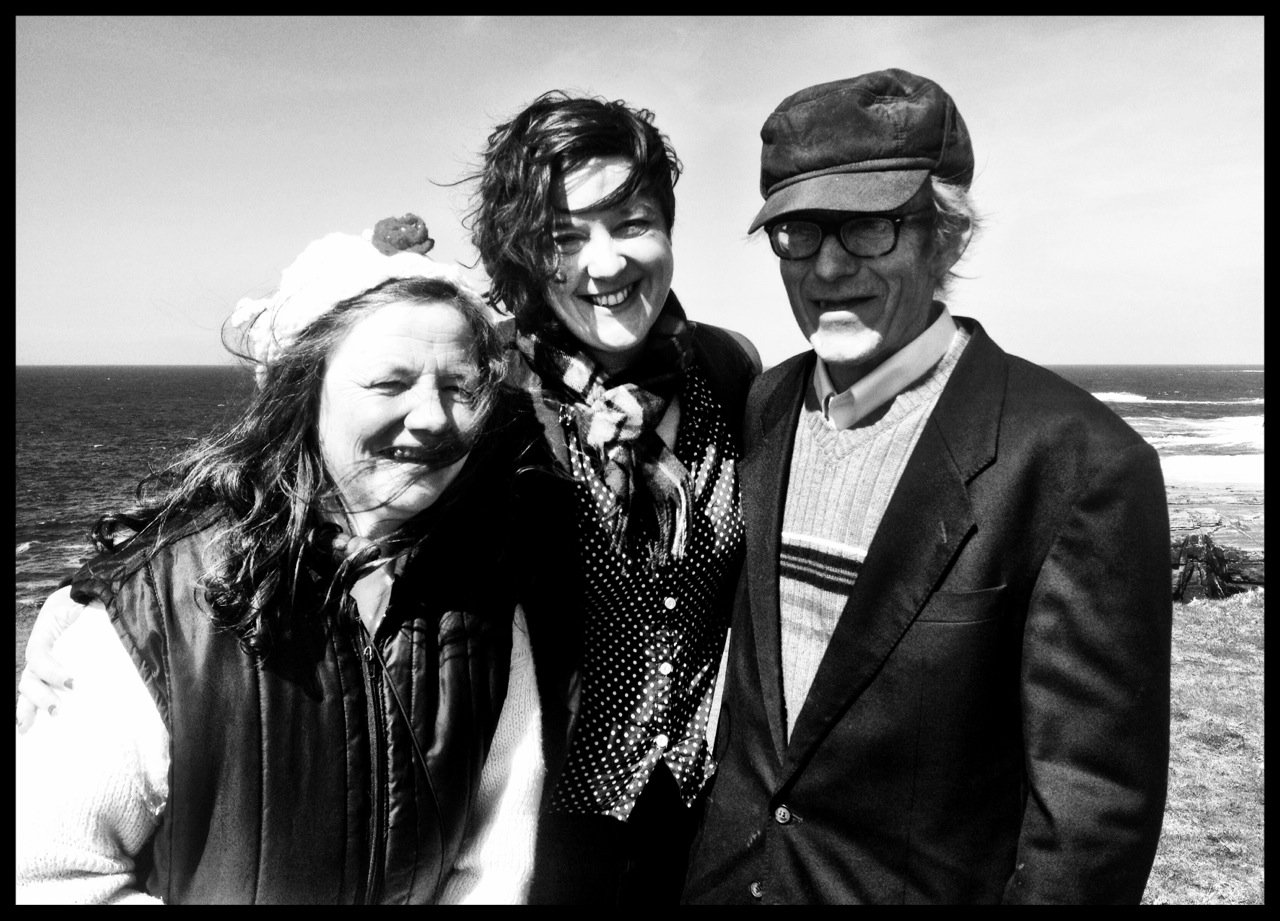
Daisy, middle, with her cousin Johnny and his wife Mary
Daisy, centre, with Johnny and wife Mary

Can you tell me a bit about the origin of the film?

I had a lot of wobbles over whether or not to make the film, because one of my aunts…is really really against my talking about our illegitimacy in public; she wanted it kept private and a secret. So I kept chickening out basically. (BBC) Storyville have supported it very patiently for about five years. I kept saying I’m not doing it. And they would say, hmm okay and then three months later it was back on again.

Is this a journey that your mum would have taken if the film wasn’t driving it?

No, she says she wouldn’t have done it. And that kept confusing me too – that I was dragging her into it. But I think it just needed all that time. We needed loads of time. She kept changing her mind as well. I tried not to push her and to be patient really. And they allowed me to do that. She came to the realisation that she really did want to know more about her father.  And now she’s so delighted that she made that decision. She loves the film and she loves the information that she has about who she is – who her father was. It’s somehow kind of filled in loads of gaps that you wouldn’t expect – why you are like you are. I think it has made her happy, actually.

You’ve pushed some family away, and others have become closer, like your aunt who is in it.

Yes, my Aunt Siobhan has been incredible. Her courage – I don’t know how she is so courageous. She is the one who has given us the confidence to do it. She kept saying ‘you have the right to know,’ and not backing down either.

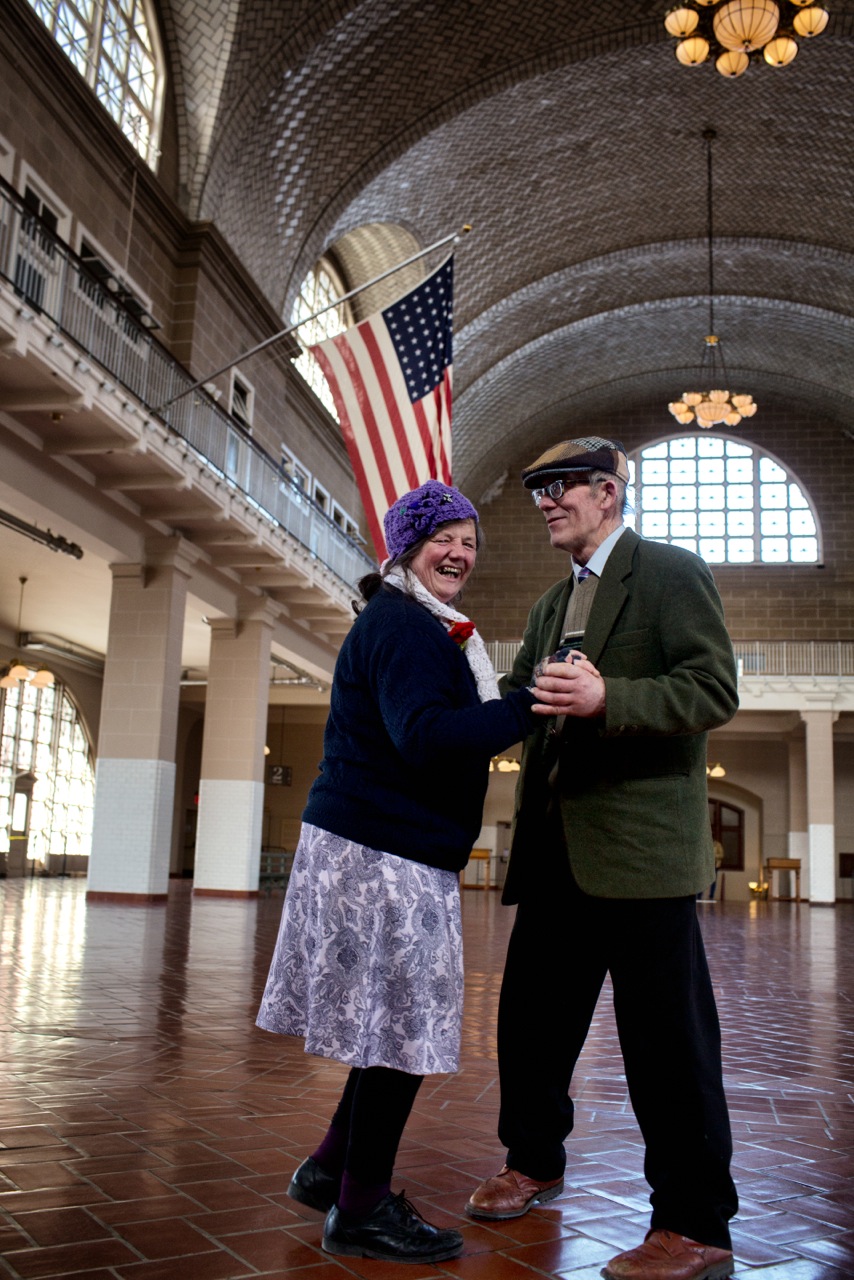
J&Mdance
Johnny and Mary in NYC

And has that led to her having difficulties with her own siblings?

Yes, it has caused her all kinds of trouble.

What was it like discovering your main characters, Johnny and his wife?

It was delightful. When I first saw Johnny and he sort of emerged from his milking shed with hay sticking out of his hat, I thought, this is just amazing. I fell in love with him really. Luckily he likes me. I must be quite challenging for him, but he seems to like it and handle it, and is in full control of me when I’m over there.

You have made a lot of films – is this the first autobiographical film that you have made?

Overtly, yes. You could say all of your films have much subjective stuff in them, but yes overtly it is the first autobiographical film. It is so different. And of course they pressured me to be in it, which is of course out of my comfort zone.

You weren’t in it that much!

I don’t’ think I needed to be in it that much – do you?

Well I have a sense of who you are already. But I do usually find myself craving to see more of the strong personality behind the camera.

I think it is a bit of a cop out to hide and not do that and pretend that you weren’t affecting everything all of the time, so maybe I didn’t do it enough.

Can you expand on how it was different making this film?

You can’t see clearly when it is your family. It’s too emotional. You get sucked up into lots of different people’s feelings, all of whom you love and all of whom are not going to mince their words in their criticism of you. I try to treat the people whom I film with huge respect and some love, and to try to collaborate with them. But actually what happened was my vision was fogged by it. I had to separate how I felt about them being angry with me to how I present them in the film.

Will any of them end up watching it and coming around?

I want them to watch it – I’ve offered. They have not taken me up on my offer yet. But you never know. I’m hoping it is way better than they imagine.

—————————————–

My Mother the Secret Baby premieres at the Jameson Dublin International Film Festival the 26th March (under the title After the Dance) and will be broadcast on BBC Storyville, 30th March, 10pm. There will be a special screening at the new Bertha DocHouse in London on 31 March at 7pm, which will include a post screening Q&A with Asquith.

Please like the Docs On Screens Facebook Group

Meet Charlie Phillips: The Guardian’s Head of Docs

Lured away from Sheffield Doc/Fest, where he was Deputy Director and ran the extremely successful MeetMarket, Charlie Phillips is now the new Head of Documentaries at the Guardian. As a huge Guardian and documentary fan it’s a job that sounds pretty good to me. But as newspapers aren’t normally in the business of commissioning documentaries, I went to the Guardian to find out more about what Charlie’s up to:

Head of Documentaries is a new position. How was it pitched to you and what are you doing with it?

I was recruited because the Guardian wants to make a push into documentaries. We’ve always had a lot of video on the website and made lots of video. Sometimes that has been documentaries, but more often it has been news and current affairs, or sometimes virals. This is a very specific thing – pushing into documentary proper. The basis for doing that is that documentary is increasingly popular. It’s being regarded in an institution like this as a really great way of doing journalism, of getting people to reflect on the news and absorb new information and be surprised. People here think that documentary is doing that better than any other art form, which of course I agree with.

I was approached to work out what we should be doing with documentaries, and then commission lots of docs for our website and also ideally our YouTube, Vimeo and Facebook platforms — in terms of commissioning documentaries for “the Guardian” that basically means for all of our platforms. So that is my remit, basically, to get the Guardian known for supporting documentary. It’s been four months now. We’ve started commissioning them and getting them out. We’re not at the point where we have one going out every week but we aren’t a million miles away from that. We’ve got a lot of possibilities, a lot of irons in the fire. The ones we’ve put out already have done very well. So there’s definitely a hunger there.

How are you commissioning? Are you doing it through contacts or is there an open process?

It’s primarily through contacts at the moment, and obviously through people directly approaching me. From my time in Sheffield I know lots of people; I know the documentary industry. So it’s not that hard for me to reach out to them. I’ve also been doing talks and have been to a lot of festivals. The word is generally out that we’ve been commissioning docs, and the films have been going out as well…Maybe once we’re up and running and have everything going out we might have some section on the side which says how you pitch to us. I’m very aware I’m not connected to everyone.

How does it work in terms of Guardian journalism? Is anything driven initially by print or are you just free to go where you like, content-wise?

We’re pretty free to commission anything regardless to what is happening in the rest of the building. And it’s very important that the video leads. What we want is for people to watch documentaries on our website regardless of whether there’s a tie in to anything else. That has to be the first thing…Although we’ve always had a lot of video up, it’s not always been that easy to find, and has not been done as consistently as we would have liked. So we have not really built up that audience like we could have done. That’s our ultimate priority – get really good stuff up there and get people watching it, and maybe don’t worry so much what other people in the building are doing. With that said, there are some subjects that are so brilliant and are such a focus of the organisation that we will coordinate, and we will commission a doc, and someone will write a piece, we might do a podcast, and we might do a data led explainer.

Can you give me an example?

We did a big focus on the Guantanamo Diaries. That wasn’t one that I was directly involved with, because it is more news than documentaries anyway. But it’s a good example. So there was coordination across publishing the diaries, a really beautiful animated doc that my colleague Laurence (Topham) made, there were readings from famous people which went out in the audio department. That kind of thing can be great but it’s not practical to do week after week.

It must be very labour-intensive too — and has to be the right type story I would imagine.

Yes, it has to be the right kind of thing. And also the kind of things I’m doing, they are not news videos. We have a separate news commissioner who does news. So I am looking for things which are maybe reflective and story led, not necessarily things that the writers here are going to want to write about. It needs to feel contemporary and relevant now but that doesn’t necessarily make it news.

Can you give me another example?

If I Die on Mars was a film about three people who want to be on the first manned mission to Mars – the Mars 1 program. And that did really well for a number of reasons. One of them was people didn’t really know about the Mars One programme. It had been reported a bit but it was quite under-reported. We knew it would intrigue people. It’s from a production company called Stateless Media, a guy called Peter Savodnik. He was quite clever – he framed it in terms of why do these people want to leave earth on a one way mission, that is effectively a suicide mission. It’s quite a melancholy piece, so it had that human element.

Another thing that we have coming up in a totally different way is we’re doing a version of They Will Have to Kill Us First, which is a new film by Together Films about music being banned in Mali a few years ago. So this is effectively what happened since the ban – and the human effects on these amazing musicians. It is also about Mali music becoming very popular at the moment.

Presumably you are aiming at people on tablets and phones – is there an ideal length you go for?

It definitely has to be under 15 minutes. Generally things are going to be the 10-12 minute mark. You could say that is quite long for online – the wisdom is that people don’t concentrate for more than 30 seconds. But we’re doing things which are very story and/or character led. So I really feel like if it hooks you in from the start, and it takes you on a journey, and it looks beautiful, and you feel like you’ve had an experience watching it, you will stick and watch it. And if people don’t watch the whole thing but they watch five minutes but really like those five minutes, that’s okay as well. You can’t assume everyone is going to watch the whole thing, but as long as a good proportion do, and also as long as they share it and tell other people about it — it’s about building up the audience.

It’s a tough model.

It’s a new model and a form a lot of filmmakers aren’t acquainted with. So it’s hard graft getting something going out…It’s not a grammar that to be honest loads of filmmakers understand, because they are used to a longer form. And that’s fine because that’s been their main thing. But increasingly people are going to have to learn how to make something that is shorter and is going to work online and get attention. It’s a medium that people should use more. But it’s different. In the same way that doing something for TV is different than the cinema – it’s a different art form.

Do you have a model that you are following from other newspapers or media?

The two big influences are definitely the New York Times in the sense of doing short documentaries, working with filmmakers, having a commitment to high quality docs, and not doing any random old thing. Vice are definitely an inspiration, especially in terms of how they’ve built up that audience. Which they’ve done very cleverly, working across different platforms.

What kind of budgets are we talking?

The range is anywhere from at the lower end, a low point of £1000 if we are acquiring ten minutes or just chopping ten minutes with very little editing, up to an original commission that we really really want where it’s all being shot up front in a far off country, then it can be up to like £8-10,000. Most things at the moment will be something in the middle of that range. We’re doing both original short commissions and cut downs of longer docs.

—————————

Please share and follow the Docs on Screens Facebook page

Fixed Rig Focus: The Exec

24 Hours in Police Custody

I know way more about the Luton police station than I ever thought I would. I know that sometimes Detective Sergeants have to have impassioned telephone debates with the Crown Prosecution Service (which are always, in a very British way, extremely polite, but nonetheless called a “huge fight” afterwards). I know that if they succeed in getting the charge they are arguing for, such as a GBH upped to Attempted Murder, that they are quite likely to follow up the phone call with a silly dance and quiet gloating to every colleague they come across for the next ten minutes. I know that desks are often a mess, that who makes the tea has little to do with rank, and that no one really wants the responsibility of fetching abandoned hamsters from a house where carnage has occurred. I know all this because I never miss an episode of the utterly outstanding 24 Hours in Police Custody. The Channel 4 series is the latest in a rapidly growing crop of “fixed rig” television programs, which have, quite simply, transformed my television viewing in the last few years. They have taken me behind the doors of real life British communities, placing me front and centre of dramatic, transformative moments – and all of the even more compelling quiet moments in between.

Simply put, the fixed rig takes the technology of the Big Brother house – multiple cameras operated remotely – and transplants it to the real world. In the experienced hands of some of the most talented factual film-makers in the world, magic then occurs. What is most compelling about every fixed rig series I have seen, is watching human interactions occurring in as natural a setting as possible – that is, without the intrusive presence of a camera crew. Yes, those being observed know that cameras are there, but filmed 24 hours a day for weeks on end, they very quickly cease to play up to the camera. “Fly on the wall” is an overused, much criticised term, but it is perhaps most appropriate here. An enormous amount of behind the scenes labour goes into bringing about the quietest of scenes.

The original real world fixed rig series was The Family, which I wrote about after it debuted in 2008. Over a mackerel lunch at a Shoreditch Vietnamese restaurant with independent producers Magnus Temple and Nick Curwin, then Channel 4 Commissioning Editor for Documentaries Simon Dickson hatched the plan for the Family. He commissioned Temple and Curwin, then of Firefly Productions, to make an eight hour series on a single family. Twenty one cameras filmed them for four months, audiences were hooked, and a new genre was launched.

Five years on, and hundreds of hours of fixed rig programming later, I feel the time has come to look at how this way of filming has infiltrated British broadcasting – and is having an effect globally. I recently interviewed Nick Curwin, who has spent much of the last half decade overseeing a raft of award winning series, from The Family to One Born Every Minute. In 2010 he founded The Garden Productions with Magnus Temple, where they have make 24 Hours in A & E, which has sold to more than 100 territories around the world, and 24 Hours in Police Custody, which first aired in September.

Nick Curwin
Nick Curwin

Did you ever think you would be here, just a few years later, seeing such a change in British television?

NC: I don’t know how many rig shows are in production today – there seems a lot – so that seemed unimaginable. On the one hand, I think the main people who were having that conversation at the time really felt, right from the get go that we were on to something. There was a fantastic belief that this was going to be amazing. We were very very excited. It’s brilliant that it has become a prolific idea but I don’t think we would have anticipated it at the time.
When I first started making factual television, I thought if you could somehow or other instead of revisiting things that had happened in the past, if you could throw a net over actuality circumstances and show them actually happening wouldn’t that be a fantastic thing? So the rig in a way is a way of doing that. It was all about, wouldn’t it be wonderful to be able to film these things as they actually happened. But you’d need this vast array of cameras to do it and you’d need to be in the right place. So that’s where we ended up with the Family because it was Simon’s suggestion to say why don’t we use that in a family home.

What are the biggest difficulties in making a fixed rig series?
NC: Now it is difficult for different reasons. If we’re doing 24 Hours in Police Custody, to find a police force which allows you to put 70 odd cameras on the walls of their police station is very difficult. Likewise 24 Hours in A & E you say to a hospital what you want to do and they say ‘you’ve got to be kidding!’. So that’s very difficult and it’s very hard to win that access. Although we now have that track record – if they can talk to people we’ve worked before that helps us. With The Family we didn’t have that track record, we didn’t really know what it was going to be like, so it was hard to articulate that. And of course it’s an incredibly difficult private situation, a family home, so they’d have to in a way be very brave to let us do it.

But in a way one of the hardest things from our point of view was not just persuading a family to let us do it but finding the right family. Because in a way we always thought we were sort of making a drama rather than a documentary, but the people in it were also the writers. We didn’t tell them what to do so they were the writers, the producers and the stars. So they were the providers of the content in every possible way. So you had to think really cleverly about what sort of person would be able to provide the best possible content.

The editing is key to all these programs, isn’t it?
NC: Of course. We have been blessed with fantastic editors. But that’s very difficult as well — it’s another challenge we face. Because we’re making thirty episodes of 24 hours in A & E at the moment and 20 hours of Police Custody. That’s 50 hours and the editing is key. So trying to get fantastic editors to do that is very difficult. But we have this magic bullet for that which is an editor training scheme. We have brilliant editors in charge and then we hire inexperienced young editors and we use is as a training opportunity and train them in the edit.

24 Hours in Police Custody has some amazing scenes. What have been the particular challenges?

NC: Finding Luton was a huge challenge. It took something in the order of a year to get accesss to a police station to make that so quite obviously an extended period of development. I suppose the other challenge we face with that production is it’s not purely a rigged show – it’s a hybrid. It’s quite a big rig – it’s not as big as 24 Hours in A & E but it’s more than three times the rig for The Family and nearly double the rig for One Born Every Minute. But we also have three or four roving camera crews who are filming in a more traditional way, out and about. We were nervous about putting together rig and non rig material. It’s worked fine in the edit but we didn’t know it would at the time. And our previous experience with trying to do that hasn’t worked very well. In the first series of The Family we filmed loads and loads of them out and about and didn’t use a frame of it because it felt really odd to put the two things together. So that was a challenge, seeing whether that would work. But with 24 Hours in Police Custody, because the two things dovetail so perfectly together – when we have a cop interviewing a suspect in the police station and at the same time other cops are searching that suspect’s house, and they come back with something that is useful to the interrogation – then it just has to go together. So that really helps us I think.

24 Hours in A&E
24 Hours in A&E

What is it about the rig that yields such compelling material?

NC: One of the thing that you get from the rig that you probably can’t replicate unless you are using a rig is the fact that you are cutting around multiple cameras. And the effect that that gives you is something that is a bit more like drama. So you are much more connected emotionally with what is going on and you are observing it much more closely. And you can’t do that with a factual program in a scene of actuality unless you either have more than one camera or ask people to do it again and film as you do with actors. But you can’t ask people to do it again in a factual program because obviously it is not real anymore and you’ve got no authenticity. So you have to have lots of cameras.

The rig partly gives you the ability to be everywhere – so we’re in multiple places in a police station at once, likewise in a hospital. And that enables you in turn to, for example, make a show out of just one 24 hour period where if you had one camera you couldn’t. But it also dramatically affects the quality of the scene so in the interview rooms in 24 Hours in Police Custody, we have four cameras in there and also they are remotely controlled, so we are getting different kinds of shots. And so a scene edited from that footage is always going to be much more engrossing than a scene from one camera.