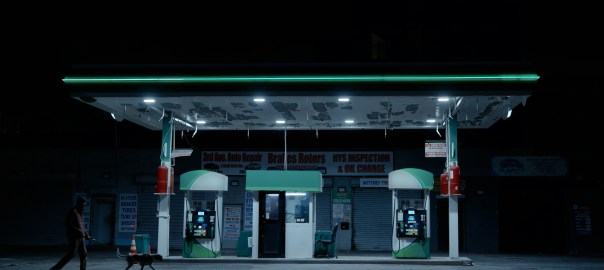
In the timely and moving feature documentary The Gas Station Attendant, director Karla Murthy creatively tells the story of her father, a migrant from India who cycled through a number of jobs over the years in the struggle to keep his family afloat in Houston, Texas. Beginning with a Laila Lamani quote “Humanity is fundamentally a story of migration”, Murthy uses archival family fragments, including a series of phone conversations she had with her father while he worked as a gas station attendant, to weave her narrative. In the following interview, which has been edited for length and clarity, Murthy explains how she set out to tell the story of an “intimate stranger”.
Carol Nahra: I found your film really moving and with an intriguing style. How did you come to conjure up this film out of all these different bits? I imagine it’s something that you had in your head for quite a long time? The film is framed by these, in large part by these telephone conversations that you have with your dad. Can you tell me about where you thought those were going and what the origins are of those?
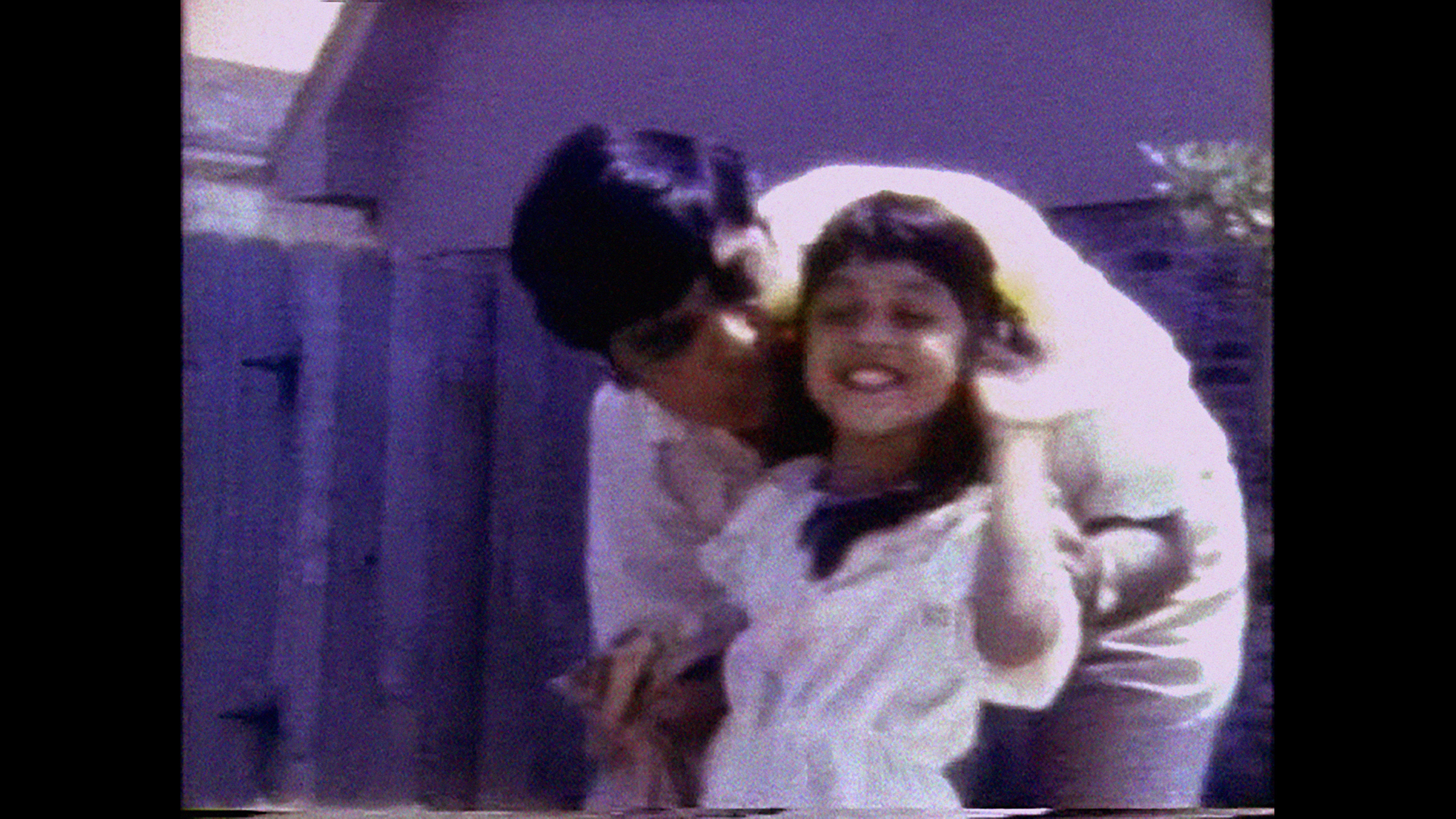
Karla Murthy: When I had first moved to New York, my father started working nights at a gas station, and I would just call him up to keep him company. And he had always wanted to record his story – he talked about getting a recorder at one point. So he’d started to tell me some of the stories and I thought we could just do this as a project together just to keep him company in the middle of the night. These were stories that I had heard all my life. But when we started recording them at night and then hearing the sounds of the cash register and of his work interrupting the stories of him coming to America, it sounded very different to me for the first time. Because he’s talking about this sort of miraculous journey to get here. And here he was working nights at a gas station. It reminded me of growing up and how we were always struggling financially…When he passed away, I started thinking about those calls and wanting to make something of them.
CN: Your voiceover script is so important. And the way that you weave together scenes and you go from place to place and you take the viewer along without them even really noticing when you move from subject to subject, I found it really skilfully done. How hard was it to develop that?
KM: That was extremely difficult, especially because I was working from these sort of little vignettes almost that I had created. And so I spent a lot of time writing. And every time those moved around, obviously, you have to change the writing again. I worked with the story consultant, Mira Jacob, who’s an incredible writer, and she introduced me to this concept of point of telling. Unlike point of view, point of telling is how close you are to the story that you’re telling. How does distance shape how you’re going to tell the story? And I really thought a lot about that. And so the point of telling in the film is revealed almost towards the end when I turn the light on and I open up and I show this box of tapes. And then it’s revealed that everything that’s happened before that is this collage of memories. I wanted it to have this feeling of you’re rummaging around through a box of old photographs – just a sort of stream of consciousness feeling.
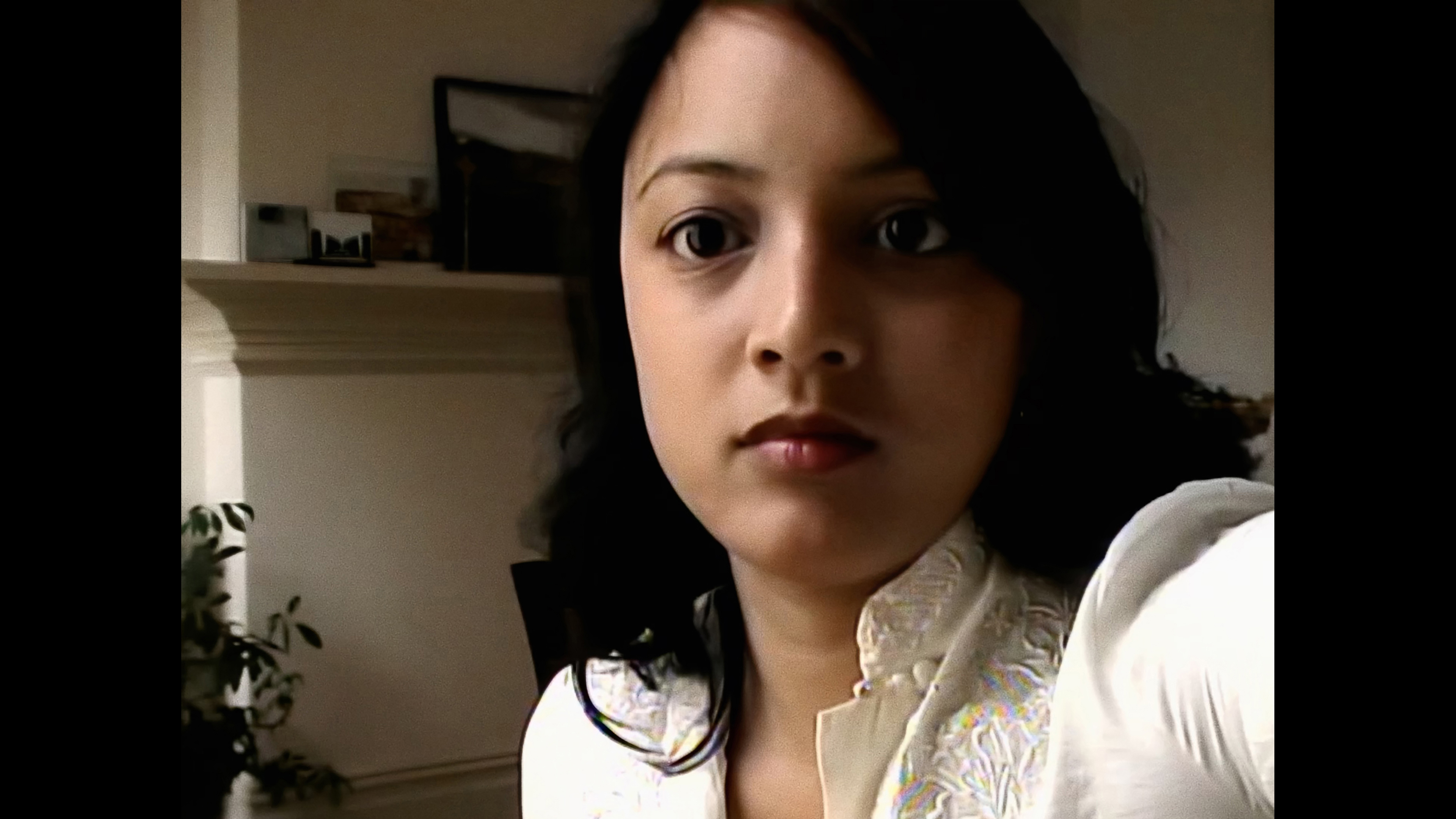
CN: You’ve got a sort of unfolding narrative in it with the trip to New Orleans with your dad. Can you talk about the process of interweaving that escapade into the film?
KM: I struggled with that a lot because I thought I don’t want this to be a road trip film. But this was the most time I had ever spent with him…And so in a way, it became this anchor for me to be able to openly just talk about my feelings and my relationship with my dad.
CN: I’m interested in your aesthetic approach to the film. You’re gathering a lot of archive that’s not personal, but speaks to your dual heritage. What were your rules in terms of the aesthetic and how did the aesthetic develop? Because I think it’s quite strong in this film.
KM: I basically tried to throw out all the stuff that I had learned making news, which is extremely conventional, and I sort of leaned into the footage that I had. One of the constructs I have is this snapping into kind of reality moments. It reminded me of what it felt like listening to my dad on those phone calls. Like he would be lulling me into this dream state about whatever. And then all of a sudden, ‘oh, wait, hold on, I need to deal with this customer’.
In terms of the editing, I kind of just really tried to focus on editing for emotion as opposed to making things work. Even chronologically, I would see a piece of footage and it would remind me of something that happened in the past. So I was like, ‘I’ll just go there. I’m having this memory – I’m just going to go there and see if it works’.
CN: In some ways, I thought this was going to be more overtly political than it was. Tell me a little bit about your considerations in terms of how much to make it of this moment and how do you navigate some of those tensions that are currently occupying all of us?
KM: One of the themes that I wanted to explore through the film was the idea of the “intimate stranger”. I know it can mean different things, but for me, it meant the immigrant working class, like the gas station workers, the convenience store clerks, the taxi drivers that you share these spaces with and you see every day and they make our economy run, but we don’t necessarily know who they are. And I really wanted to tell a full story about this person, which is why I called it The Gas Station Attendant. And then to open that up, just break that open up and tell the story of someone who’s flawed, but who’s a loving person who’s just trying to do the best that they can.
I used to have a different quote at the beginning of the film. And now that this film is being released in this climate I thought, “No, I want this film to be about migration.” This is a core principle of who we are as human beings: we migrate. I mean, this is not an unnatural thing. And we create these borders unnecessarily, but this is a means of survival for our human species.
The Gas Station Attendant will have a limited US release from Friday 12 June, and will air on POV in early August.

