Tag Archives: feature documentaries

Zara Balfour on Children of the Snow Land

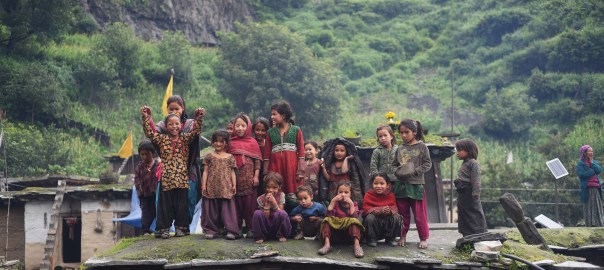
Imagine you live in one of the most remote places on earth. At age four you are sent away to school, many miles away from your mountain home. You don’t return for more than a decade. What would that reunion be like?  That’s the question at the centre of Children of the Snow Land, a new multi award winning documentary co-directed by Zara Balfour and Marcus Stephenson.

I first saw the film last year at the wonderful Valletta Film Festival, where it won not one but two awards. The film has now won ten festival awards, as audiences globally respond to its poignant themes and stunning footage, much of it shot by the film’s three main contributors who the directors taught to film themselves.

I interviewed Zara about the making of the film – as usual this has been cut for clarity and length:


CN: How on earth did you find this story in such a remote location?

ZB: I think it was fate. My co director Marcus and I went off to Nepal for a corporate job, filming charities. And we loved the charity in  Nepal; we got along really well with them. We stayed in touch with them and they told us they started funding this going home trip for these kids from the Himalayas who didn’t see their families for 12 years. And they had decided they would sponsor all the kids aged 16 finishing their compulsory schooling to go home for three months. And we were just blown away by it.

I’ve always wanted to make documentaries, and have done a lot of short documentaries but really had a longing to get into longer form documentary. And I love Nepal hugely. So we went out and thought basically let’s see if there’s a story here. Let’s see if it’s true that the kids haven’t seen their parents for 12 years, and can they express it and are they willing to express it on camera? So we went over there and thought, well, a worse case scenario we’d make a fundraising film for the school and that will be that. And the kids were amazing. They were very open, hadn’t seen their parents in all that time. Very warm and wanted to learn. We taught them filmmaking and they wanted to learn.
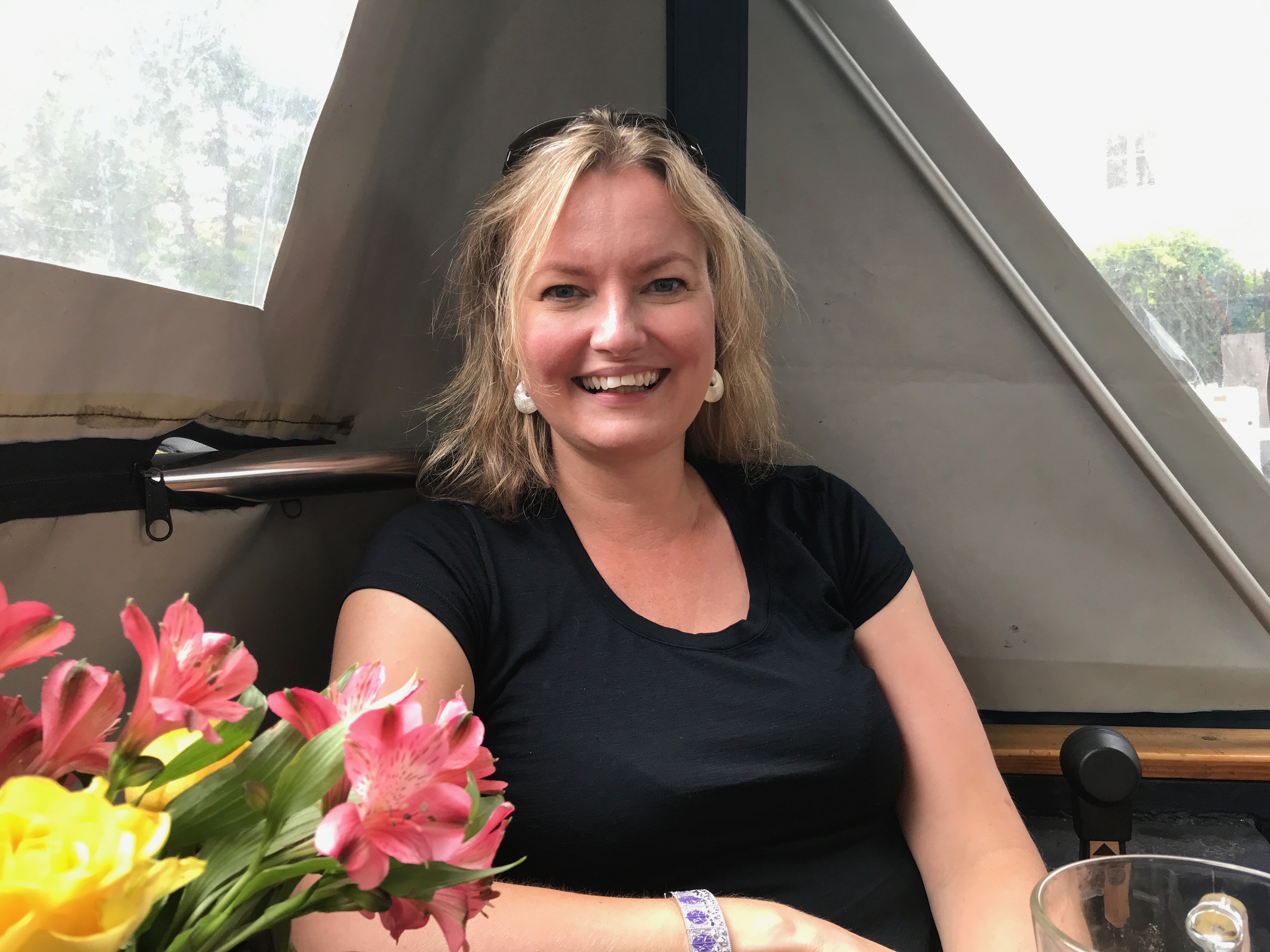
Zara Balfour

CN: Talk me through a bit about  how you taught them filmmaking.

ZB: Our first trip was basically working out who our characters were going to be – which children were most going to be able to express their story and also have an interest in filming themselves. We then went back a few months later and took some cameras and solar chargers. We basically gave them GoPro kits and solar chargers and batteries and loads and loads of memory cards. There was no way to back it up. It was very unlike most film shoots. It had to be so light because their walk (back home) was so long and so hard. And it has to be kit that’s capable of being charged. We went with them for some of the way and took slightly bigger cameras with bigger chargers, solar charges and such. And they carried on for three months out there. So the film is a combination of our footage, footage shot by Mark Hakansson our cameraman and photographer, and their footage. The training was a few days in Kathmandu. It wasn’t hugely extensive. We introduced them to YouTube.


Nima Gurung with his camera

CN: What was their experience of technology up to that point?

ZB: Nothing; they literally had nothing.  The school didn’t even have a computer room at that point. And they didn’t have any smartphones or anything like that. They do now. And they’d never seen YouTube. So we introduced them to people like JacksGap, and those guys that are travelling and doing their own stories, and they loved it. They were like sponges, they really were. And when the earthquake hit, I had some friends that were going out who work with the Disasters Emergencies Committee. They went out to help after the earthquake and as they were out there they actually  helped us get some of the footage back. So we got the footage back much earlier than we were going to.

CN: How were they able to communicate when they were up in the remote mountains with their families?

ZB: We said when you come back, bring back whatever you can. I will never forget watching the memory cards that first day. We were just blown away.

CN: What was it like being there for the reunions? The reunions are not in fact a very visible part of the film.

ZB: It was surprising. Coming from our background, if we see someone we haven’t seen for some time we just want to cry and hug them so much. But they weren’t like that; they had this very kind of shy nature. They were very stoic and don’t show their emotions. We found that the adult and the child way of dealing with the separation was very different. The kids hang onto the memory of the parents and think about it every day. The parents, in order to deal with the pain of separation basically cut off and didn’t think about it. So they were quite cold, at least to our western eyes.
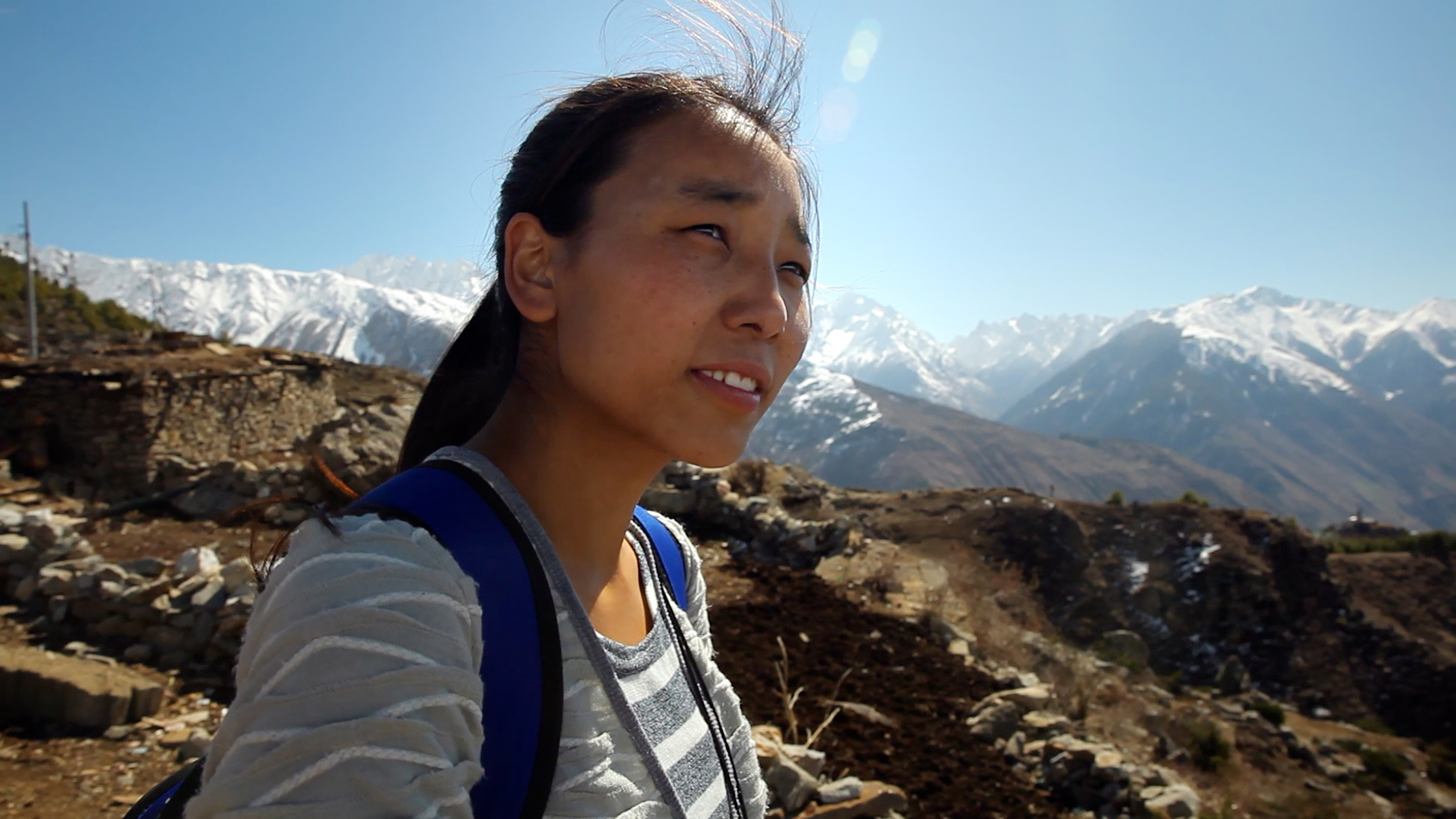

Tsering Deki

CN: It seems like it should have been the opposite – you would think it was the other way around.

ZB: They couldn’t afford themselves the luxury of thinking about it too much – it was just too painful. So when they saw each other there was this strange formality.

CN: How did you swing this with a full time day job?

It has been tough. It was great having the support through post production with McCann. They basically accepted that during my day job I would be in the edit working on the film a lot. And took quite a lot of chunks of time off. It took four years to make it – two years worth of shooting and two years of post production. They’ve been incredible and really really helpful. For Marcus he’s been making a TV show, Stately Homes with Phil Spencer. So he’s had to do that and take breaks.

CN: What was it like winning two awards at the Valletta Film Festival?

It was incredible. We were in the teen section which was a mix of documentary and drama. And it was amazing that we won that. Not only that but we won the audience pick for the whole festival. I was completely blown away by that because we were a small film made by independent means. And there were so many films there by well known filmmakers with a lot of industry support behind them. It was a tremendous validation of what we’d done and an amazing honour.

Children of the Snow Land is screening at selected cinemas including Bertha Dochouse from 5 March. See their website for details.

BBC Storyville’s Mandy Chang: “A lot of people want to make single authored documentaries. We welcome them with open arms.”

When it launched more than twenty years ago, the BBC’s Storyville strand stood alone as a home in the UK for independently made feature documentaries. Created and nurtured by the revered Nick Fraser, Storyville established a reputation in the global doc community for promoting authored storytelling, nurturing the likes of Sean McAllister, Alex Gibney, Kim Longinotto and Daisy Asquith. (Fraser also commissioned a doc I produced, Secrets of the Tribe, championing it over the many years it took to make).

While it still remains one of the few spaces on British television for feature docs, it’s now battling it out in a rapidly changing online universe where SVODs have become major players in longform documentaries. Mandy Chang has energetically taken up the Storyville reins, relocating to London from her job as Head of Arts at ABC Australia to head the strand. An accomplished filmmaker turned commissioner, Chang is determined that Storyville evolves with the times. On the day after the announcement of the Sundance doc lineup, which includes three Storyville films, I met with her to discuss the strand.

As usual this has been edited for length and clarity:

Carol Nahra: So you have been heading Storyville since October 2017. How has it been so far?

Mandy Chang: It’s been a huge period of assimilating a lot of information about filmmakers all around the globe; about who the major funders are, not just the broadcasters but not for profit organisations, and philanthropists as well. Because we fund via a patchwork of funding — we never fully fund Storyville; we just don’t have a big enough overall budget.


Mandy Chang

CN: What are your priorities for the strand?

MC: Diversity is really really important to me. It’s not just about picking the best films by the most experienced most famous documentary directors. It’s also about finding new talent and growing that talent and those relationships. It’s just hugely complex: the whole ecosystem of documentaries across the world. And the different ways that different broadcasters do things in different countries. To get on top of that has been my goal this year. Next year it’s about strategising and really making an impact with Storyville and where we are going with Storyville into the future. Because the whole marketplace is just changing so quickly. Everything is moving so quickly under our feet.

CN: How does one navigate the new world? I assume you are talking about SVODs like Netflix.

MC: Yes. First of all there’s a lot more competition. Storyville used to be in this very privileged place where it kind of had the pick of all the best stories. And now we have to fight to do that. We go to all these pitching forums and the filmmakers are selling their films and themselves to us. We also have to sell ourselves and what we can bring to their films back to them. And I think that’s new – I don’t think people had to work as hard to do that as before. And I’m acutely conscious of it. Filmmakers have higher expectations of what they want from whoever is putting their film on their platform. Now filmmakers are starting to realise that with those big SVOD organisations, they may not get publicity – they might just be a tile on that great big platform, and their film might disappear way down the trail. Because it’s not the latest thing, or it’s more niche. I think that’s where the BBC can really bring that personalised approach to the film. We really look after our filmmakers. We try to partner them up with people who can bring impact to their films. And we foster a relationship that we want to be ongoing.

Henry Singer’s The Trial of Ratko Mladic is an upcoming Storyville
© ICTY

CN: You talk about partnering up. What do you do in terms of extending the life of the film? Because of course the big hit with Storyville is the broadcast, and then the relatively short IPlayer life. I’m sure an attraction about Netflix is that it will have a longer life on there, whatever the contract is. So how does that work for you in terms of enticing filmmakers?

The other thing that we are doing with Storyville is BBC Three and BBC News often take those films and do cut downs of them. So they appear on other platforms where they might  get completely different audiences. Whether it’s current affairs or a younger audience. Again that’s after negotiation with the filmmakers because some filmmakers don’t want spoilers. But it’s a way of getting out there and getting the attention. Because we can’t always rely on the traditional press and publicity departments because they are so overloaded anyway.

CN: What was it like stepping into Nick’s shoes?

MC: It was really tough.  I have huge respect and awe of Nick. He has left an incredible legacy for the Storyville brand. I feel very lucky that I don’t have to start from the beginning – he has created this very powerful strand that people know all over the world. You can’t underestimate the value of that. So it’s building on that and bringing my own sensibilities to it without losing the good things – and there are many many good things that Storyville has. And Nick is an intellectual giant. He is always sending me links to books and articles. He’s very aware of the world – he’s a very sophisticated thinker.

As all these right wing government and forces are menacing the world, it’s really interesting that there are a lot of very young women with big voices who want to tell stories.

Mandy Chang

CN: Can you name a new filmmaker that you’re working with?

MC: A really good example of someone new that I’m really excited about who is a new voice and has access to stories we don’t usually get access to is a woman called Nanfu Wang. Nanfu has made four films in four years about China. She brings a kind of inside track to China and a subversiveness that not many filmmakers can bring. She also lives in New York so she has the security of being able to go to China and make her films and get that kind of access that really gives us those insights. She has put herself in danger but it’s not the same as living in China. She’s made a really fantastic film about the one child policy in China called One Child Nation. She’s really young and an extraordinary woman. She was a victim of the one child policy….grew up in a rural village and now making international films which get into Sundance. She’s a major talent on the international scene.

There are lots of young women making stories about their own countries. It’s a really important time as all these right wing government and forces are menacing the world. It’s really interesting that there are a lot of very young women with big voices who want to tell stories. I’ve really noticed it. And I really want to support it as well.

Nanfu Wang

CN: Do you have other Storyville films at Sundance?

MC: We have Mads Brügger’s film called Cold Case Hammarskjöld, about the death of the UN Secretary General. Mads is very provocative but brings humour to his storytelling. The team dig very very deep and what they have uncovered is extraordinary and very very horrifying. There’s also an Israeli film called Advocate, about an amazing woman named Lea Tsemel who is a lawyer who represents Palestinian people in Israel. Her story itself is amazing, but the story that unfolds in the film, is really shocking about a 13 year-old Palestinian boy who goes on trial for something he wasn’t guilty of.

I have noticed this year there’s a trend at Sundance as well to be going for more international stories. And more provocative international stories. All three films I found overseas at international markets literally by talking to people face to face.

CN: How many British filmmakers do you commission?

It varies but usually between 3 – 6 a year are British, out of 18 films. The British filmmakers come to us as they know we are there. There are a lot of people who want to make single authored documentaries and know they are never going to get that away on mainstream spaces. So they come to us and we welcome them with open arms.

CN: Anything else you’d like to say?

No except that I think Storyville does need to keep growing and changing. And I think that broadcasters will need to start growing and changing. They are going to need to move a lot quicker in the future. It’s very siloed at the BBC – I mean this is very political but I do think we need to be more joined up. We need to be talking to each other more. I think the model of copro is a really useful model for a cash strapped BBC. And they could learn a lot from the model that Storyville has where we make a very small amount of money go a long long way.