All posts by carolnahra

Time Travellers: Boyhood’s Doc Cousins

boyhood

I‘m delighted that Boyhood is getting some awards love. It’s one of my favourite films of the decade – watching it a second time on a transatlantic flight it again held me spellbound for nearly three hours. Like most people, its appeal lies mostly in watching its subjects age over twelve years – in this case actor Ellar Coltrane’s wondrous journey from a six year-old boy to a young man.

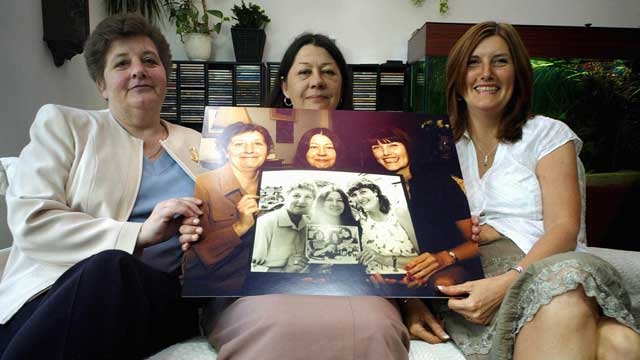
This on screen time-lapse is a pleasure I first encountered twenty some years ago, discovering Michael Apted’s Up series, which famously has been following the same documentary subjects since they were seven years old. They are now nearly 60. If you haven’t seen any of it, get thee to youtube for a sample (you might then want to binge watch the box set). It’s funny, and sad, and thought-provoking, and shows how film can make even the most ordinary of lives compelling. No wonder it topped a Channel 4 list of the greatest documentaries ever made – and led Roger Ebert to call the films “an inspired, even noble, use of the film medium”.
56-up-the-girls
56-Up

In thirteen years of watching and writing about films for Sheffield Doc/Fest, I’ve seen scores of documentaries that travel back and forth in time in memorable ways. As most of us now have the potential to cut one together, thanks to the smartphone archive in our pocket, it’s worth paying attention to how footage shot over many years can be crafted into a work of art. Here’s a few of the best of the Doc/Fest films I’ve seen, together with my original write-up:

112 Weddings (Doug Block, 2014)

 112 Weddings

Despite being one of the U.S.’s most acclaimed documentary makers, Doug Block still needs his bread and butter work. For him, it’s weddings – in fact he’s filmed 112 of them over the last 20 years. In this engrossing doc he revisits some of the couples he has made wedding videos for, asking how they stay married – or didn’t, as the case may be. His long-standing relationship with his subjects fosters an easy intimacy and his follow-up interviews take on the veneer of a counselling session. The passage of time shines a torch on the many issues that can derail the happiest of couples, from mental illness to crying babies and infidelity, whilst Block’s wedding archive allows us to look back on their most optimistic of days. The film is funny, moving and often tragic – much like marriage itself.

We Went to War (Michael Grigsby, 2012)

we went to war

In 1970, in the midst of a drawn out Vietnam War, a young British director Michael Grigsby made a film about three young veterans returning home. I Was a Soldier is an acclaimed classic – the first to depict the ravages of the war on soldiers considered to be home safe and sound. Forty years later,  Grigsby and his co author Rebekah Tolley have made an equally powerful follow up, returning to Texas to see what has become of his three characters. In a visually arresting, contemplative style that suits the dusty small town locales, and creatively merges past and present, we learn just how much their war experience shaped their lives. Still unable to understand what they were fighting for, the scars run deep. Dennis has tried not to be defined by his experience, but is unable to form lasting attachments. It took 38 years for David to receive counselling, while Lamar’s journey back to normality, would prove to be one of the hardest battles of all.

Photographic Memory (Ross McElwee, 2011)
photographic

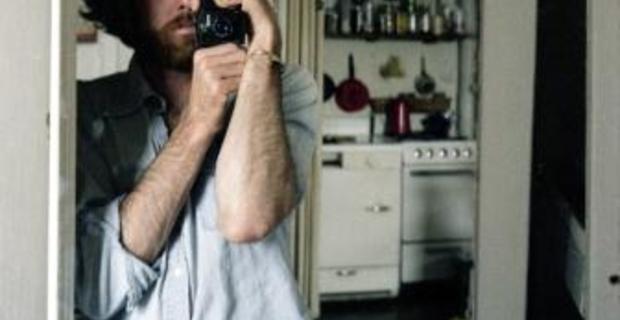
One of the masters of autobiographical filmmaking, American legend Ross McElwee returns to Doc/Fest with another film very close to his heart. Having long filmed his children, McElwee is dismayed to observe that his once sunny young son Adrian has grown into a grumpy and sullen young adult. He uses his many hours of footage to remember and mourn Adrian’s lost childhood, his ruminative voiceover reflecting the universal realities of parenting: “The young child – the one you loved so much – is still contained in the obnoxious teenager…Teenagers have no idea of how they’re protected from a smaller version of themselves that rises up to defend them.” McElwee decides to go in search of his own younger self, and heads to Brittany, where he once served as a wedding photographer’s assistant. Flitting back and forth between his past and his present, McElwee offers up another moving and memorable exploration of the human condition.

Hit So Hard: The Life & Near Death Story of Patty Schemel (P. David Ebersole, 2011)
hit so hard

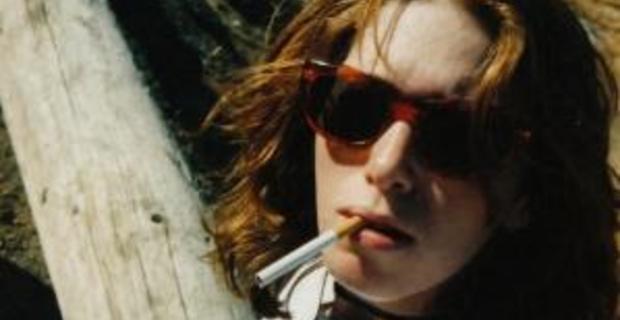
Aware that her rock and roll lifestyle was yielding some crazy episodes, Patty Schemel picked up a video camera in the early 1990s. A rising star in the flourishing music scene of America’s Pacific Northwest, Schemel’s pals included Kurt Cobain and his wife Courtney Love, who hired her as the drummer for her band Hole. Capturing some extraordinary scenes, including Cobain and Love at home with their baby daughter, Schemel also recorded her own descent from playing sell-out world tours to destitute heroin addict, and her ultimate rehabilitation. The footage is interwoven with entertaining interviews with Schemel and Hole’s surviving members (their base player Kristen Pfaff died of an overdose just two months after Cobain’s suicide) and Schemel’s own family. “I couldn’t get over that she gave up a good job at Microsoft,” says her mom. With a pace as fast moving as the music, director P. David Ebersole’s film is destined to become a classic music doc on the joys and perils of life in the fast lane.

A Man’s Story (Varon Bonicos, 2010)

a man's story

He’s neither white nor gay but somehow Ozwald Boateng has risen to the dizzying heights of British fashion. He was the first black tailor to have a business on Savile Row and the youngest to boot. A long line of A-list celebrities like Jamie Foxx and Paul Bettany sing his praises, while sporting his colourful suits. Director Varon Bonicos began filming Boateng in 1998, when his life was in tatters. A nasty divorce and the collapse of his business had left Boateng at a low ebb – not helped when his entire collection was stolen. Bonicos went on to follow the charismatic stylist over twelve years, as he was appointed Givenchy creative director, starred in his own American reality series and married a Russian model, a union made difficult by Boateng’s peripatetic, workaholic lifestyle. As stylish as the man himself, A Man’s Story is an enjoyable foray into the fashion industry through one of its most vibrant stars.

Position Among the Stars (Leonard Retel Helmrich, 2010)
position among

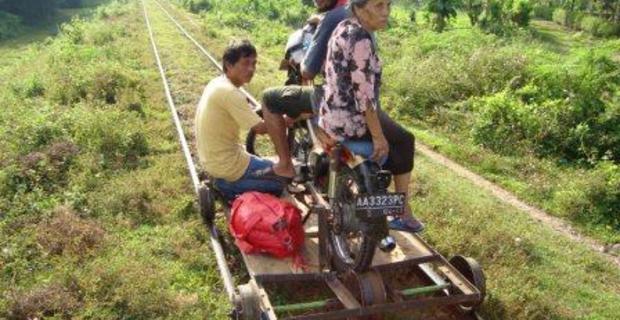
Twelve years after setting off to explore his mother’s homeland, Dutch filmmaker Leonard Retel Helmrich completes his trilogy on three generations of Jakarta’s Shamsuddin family with the masterful ‘Position Among the Stars’. Family matriarch Rumidjah has returned from the countryside to rein in her granddaughter Tari – the entire family’s hopes are pinned on the girl to lift them out of the slums. Tari’s Uncle Bakti is finding her difficult to control and would rather be cultivating his fighting fish business, much to the annoyance of his wife. As always, the family’s everyday tribulations reflect the wider, rapidly changing Indonesian society. Far from ‘fly on the wall’ Helmrich’s constantly roving camera is always in the middle of the drama, often at ground level in scenes of astonishing intimacy. Well deserving of its major prizes, including the Special Grand Jury prize at Sundance, this is not to be missed.

The Kids Grow Up (Doug Block, 2009)
the kids grow up

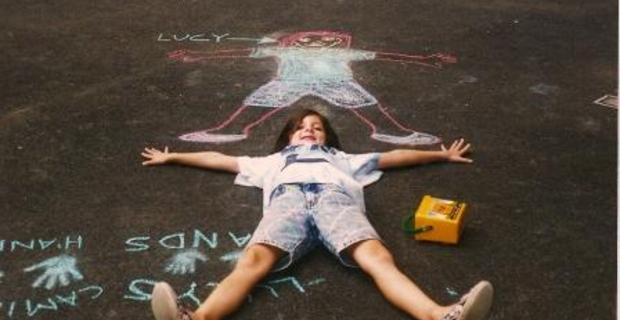
Director Doug Block has suffered from Empty Nest Syndrome for some time, and has been talking to friends and family about the traumas of having your children leave home. The thing is, his only child Lucy hasn’t gone yet, and she’s getting quite sick of Dad’s moping around after her with a camera. Anyone lucky enough to have caught Block’s last Doc/Fest outing, 51 Birch Street, will recognise his accomplished style of personal film making, with great use of family archive, and probing , funny conversations with those nearest and dearest to him. Block and his friends are the first of the new breed of dads totally involved in their children’s lives, rather than the detached providers that their own fathers were. Surrounded by images of his many filmed conversations with Lucy over the years, Block finds it difficult to be at peace with the rapid passage of time and can’t contemplate life without her at home, much to the annoyance of his sanguine wife Marjorie. A moving, intimate exploration of family life.

René (Helena Třeštíková, 2008)
Rene

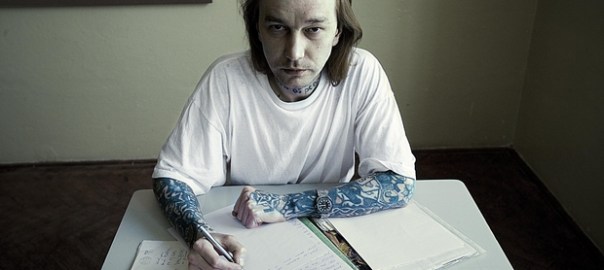
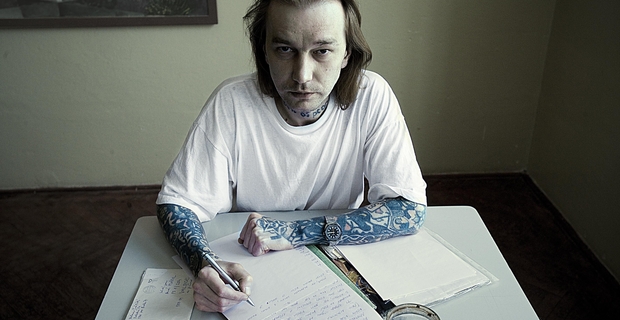
A petty crime as a teenager earned Rene a prison sentence, and set him off on a life of crime. Misanthropic, intelligent and introspective, he spends his life in and out of prison, struggling to fit in anywhere in the quickly changing Czech Republic. Veteran film maker Helena Trestikova began filming Rene in 1989, and kept up with him over the next two decades, even after he robbed her flat. Their collaboration, and his brief fame as a documentary star, spur him to writing, and he becomes a published author. Yet the demons driving him remain. This engrossing film takes us on a journey of a life lived outside of society. As his rap sheet lengthens, his body tattoos multiply, a visual testimony to the anger fueling his blighted life. His letters to Trestikova and access to the many cells which he calls home enhance this must-see film.

Fixed Rig Focus: The Exec

24 Hours in Police Custody

I know way more about the Luton police station than I ever thought I would. I know that sometimes Detective Sergeants have to have impassioned telephone debates with the Crown Prosecution Service (which are always, in a very British way, extremely polite, but nonetheless called a “huge fight” afterwards). I know that if they succeed in getting the charge they are arguing for, such as a GBH upped to Attempted Murder, that they are quite likely to follow up the phone call with a silly dance and quiet gloating to every colleague they come across for the next ten minutes. I know that desks are often a mess, that who makes the tea has little to do with rank, and that no one really wants the responsibility of fetching abandoned hamsters from a house where carnage has occurred. I know all this because I never miss an episode of the utterly outstanding 24 Hours in Police Custody. The Channel 4 series is the latest in a rapidly growing crop of “fixed rig” television programs, which have, quite simply, transformed my television viewing in the last few years. They have taken me behind the doors of real life British communities, placing me front and centre of dramatic, transformative moments – and all of the even more compelling quiet moments in between.

Simply put, the fixed rig takes the technology of the Big Brother house – multiple cameras operated remotely – and transplants it to the real world. In the experienced hands of some of the most talented factual film-makers in the world, magic then occurs. What is most compelling about every fixed rig series I have seen, is watching human interactions occurring in as natural a setting as possible – that is, without the intrusive presence of a camera crew. Yes, those being observed know that cameras are there, but filmed 24 hours a day for weeks on end, they very quickly cease to play up to the camera. “Fly on the wall” is an overused, much criticised term, but it is perhaps most appropriate here. An enormous amount of behind the scenes labour goes into bringing about the quietest of scenes.

The original real world fixed rig series was The Family, which I wrote about after it debuted in 2008. Over a mackerel lunch at a Shoreditch Vietnamese restaurant with independent producers Magnus Temple and Nick Curwin, then Channel 4 Commissioning Editor for Documentaries Simon Dickson hatched the plan for the Family. He commissioned Temple and Curwin, then of Firefly Productions, to make an eight hour series on a single family. Twenty one cameras filmed them for four months, audiences were hooked, and a new genre was launched.

Five years on, and hundreds of hours of fixed rig programming later, I feel the time has come to look at how this way of filming has infiltrated British broadcasting – and is having an effect globally. I recently interviewed Nick Curwin, who has spent much of the last half decade overseeing a raft of award winning series, from The Family to One Born Every Minute. In 2010 he founded The Garden Productions with Magnus Temple, where they have make 24 Hours in A & E, which has sold to more than 100 territories around the world, and 24 Hours in Police Custody, which first aired in September.

Nick Curwin
Nick Curwin

Did you ever think you would be here, just a few years later, seeing such a change in British television?

NC: I don’t know how many rig shows are in production today – there seems a lot – so that seemed unimaginable. On the one hand, I think the main people who were having that conversation at the time really felt, right from the get go that we were on to something. There was a fantastic belief that this was going to be amazing. We were very very excited. It’s brilliant that it has become a prolific idea but I don’t think we would have anticipated it at the time.
When I first started making factual television, I thought if you could somehow or other instead of revisiting things that had happened in the past, if you could throw a net over actuality circumstances and show them actually happening wouldn’t that be a fantastic thing? So the rig in a way is a way of doing that. It was all about, wouldn’t it be wonderful to be able to film these things as they actually happened. But you’d need this vast array of cameras to do it and you’d need to be in the right place. So that’s where we ended up with the Family because it was Simon’s suggestion to say why don’t we use that in a family home.

What are the biggest difficulties in making a fixed rig series?
NC: Now it is difficult for different reasons. If we’re doing 24 Hours in Police Custody, to find a police force which allows you to put 70 odd cameras on the walls of their police station is very difficult. Likewise 24 Hours in A & E you say to a hospital what you want to do and they say ‘you’ve got to be kidding!’. So that’s very difficult and it’s very hard to win that access. Although we now have that track record – if they can talk to people we’ve worked before that helps us. With The Family we didn’t have that track record, we didn’t really know what it was going to be like, so it was hard to articulate that. And of course it’s an incredibly difficult private situation, a family home, so they’d have to in a way be very brave to let us do it.

But in a way one of the hardest things from our point of view was not just persuading a family to let us do it but finding the right family. Because in a way we always thought we were sort of making a drama rather than a documentary, but the people in it were also the writers. We didn’t tell them what to do so they were the writers, the producers and the stars. So they were the providers of the content in every possible way. So you had to think really cleverly about what sort of person would be able to provide the best possible content.

The editing is key to all these programs, isn’t it?
NC: Of course. We have been blessed with fantastic editors. But that’s very difficult as well — it’s another challenge we face. Because we’re making thirty episodes of 24 hours in A & E at the moment and 20 hours of Police Custody. That’s 50 hours and the editing is key. So trying to get fantastic editors to do that is very difficult. But we have this magic bullet for that which is an editor training scheme. We have brilliant editors in charge and then we hire inexperienced young editors and we use is as a training opportunity and train them in the edit.

24 Hours in Police Custody has some amazing scenes. What have been the particular challenges?

NC: Finding Luton was a huge challenge. It took something in the order of a year to get accesss to a police station to make that so quite obviously an extended period of development. I suppose the other challenge we face with that production is it’s not purely a rigged show – it’s a hybrid. It’s quite a big rig – it’s not as big as 24 Hours in A & E but it’s more than three times the rig for The Family and nearly double the rig for One Born Every Minute. But we also have three or four roving camera crews who are filming in a more traditional way, out and about. We were nervous about putting together rig and non rig material. It’s worked fine in the edit but we didn’t know it would at the time. And our previous experience with trying to do that hasn’t worked very well. In the first series of The Family we filmed loads and loads of them out and about and didn’t use a frame of it because it felt really odd to put the two things together. So that was a challenge, seeing whether that would work. But with 24 Hours in Police Custody, because the two things dovetail so perfectly together – when we have a cop interviewing a suspect in the police station and at the same time other cops are searching that suspect’s house, and they come back with something that is useful to the interrogation – then it just has to go together. So that really helps us I think.

24 Hours in A&E
24 Hours in A&E

What is it about the rig that yields such compelling material?

NC: One of the thing that you get from the rig that you probably can’t replicate unless you are using a rig is the fact that you are cutting around multiple cameras. And the effect that that gives you is something that is a bit more like drama. So you are much more connected emotionally with what is going on and you are observing it much more closely. And you can’t do that with a factual program in a scene of actuality unless you either have more than one camera or ask people to do it again and film as you do with actors. But you can’t ask people to do it again in a factual program because obviously it is not real anymore and you’ve got no authenticity. So you have to have lots of cameras.

The rig partly gives you the ability to be everywhere – so we’re in multiple places in a police station at once, likewise in a hospital. And that enables you in turn to, for example, make a show out of just one 24 hour period where if you had one camera you couldn’t. But it also dramatically affects the quality of the scene so in the interview rooms in 24 Hours in Police Custody, we have four cameras in there and also they are remotely controlled, so we are getting different kinds of shots. And so a scene edited from that footage is always going to be much more engrossing than a scene from one camera.

Sundance Preview: Longinotto’s Dreamcatcher

Brenda_face_2[1]
Brenda
Twenty minutes into Kim Longinotto’s latest film, Dreamcatcher, which will have its world premiere at the 2015 Sundance Film Festival, a chilling scene takes place. The setting is an after-school club at a Chicago high school, where at-risk teenage girls are being counseled on how to say “No” to boys. As the teenagers munch through copious amounts of junk food, a girl confesses that she was raped at the age of 11 at a friend’s house. Another girl interrupts to tell a story of long-term abuse by a family friend, then another story of abuse follows, each more harrowing than the one before it. It’s astonishing to hear the details of these unreported crimes, and as they quickly pile up, to realize how endemic it is to these girls’ worlds. It’s the sort of scene that stays with you for a very long time.

For anyone familiar with London-based Longinotto’s extraordinary body of work, however, such moments are to be expected. Her subjects often take advantage of the presence of the camera to make their marginalized voices heard. While she is considered an “observational” filmmaker, and avoids interfering in the action while filming, she is well aware that by being there, she very much changes what is taking place. “It’s something that has happened a lot with making films,” she says. “People grab the opportunity to have a witness. It’s not ‘fly-on-the-wall’— a term I hate. You’re going in as someone who is going to make something with them. They feel part of it.”

Having seen most of Longinotto’s films, I point out to the filmmaker that my strongest memory of such a moment was the 8-year-old girl Fouzia in The Day I Will Never Forget (2002), who uses the camera to recite the titular poem, protesting the practice of female genital mutilation.

“Yes, The Day Will Never Forget poem is exactly like that scene; they grab their chance,” Longinotto exclaims. “Students at film school often say, ‘Being a documentary maker, I feel bad that we’re going in and we’re taking advantage of people.’ And I always say, ‘Well, why do you think that? Is it because you’ve been watching reality TV? That’s not the only way of doing it.’ If you are using that analogy, Fouzia completely used me: She told me where to stand, she bullied me into going into her house, and she wanted me there because she knew her mum would listen. So she used me, but I loved being used. We used each other. You wouldn’t even use the word ‘use.’ We were working together.”

Kim 3
Kim Longinotto

Indeed, when Longinotto first met the Chicago teenagers, she encouraged them to take control. “I said to them, ‘Look, this is your film and I really want you to feel good about the film and be part of it. And you will have the film when it’s finished. And we’re doing it together; I’m relying on you. I’m not going to interview any of you. This is your film, so you do whatever you want.'”

Longinotto also showed the girls excerpts from two of her films that feature strong women working to fight abuse: Rough Aunties (2008) and Sisters-in-Law (2005). “They all went very quiet and went off and didn’t say anything, but we all had a bit of a hug because it was quite emotional,” says Longinotto. When it came to filming the girls in the after-school club, Longinotto felt that they had built up a trust that allowed for intimacy: “I knew in that scene, I could go really close and film them. I was half a meter away from them; you can see how closely it was filmed. And there was this real level of trust.”

Brenda_Cook_Co_Jail[1]
Brenda in her work at Cook County Jail
The in-class confessions came as a surprise to the girls’ mentor, Brenda, who had been running the group for two years and was trying to prevent the girls from being abused, not fully realizing the extent to which they already had been. Brenda is the “dreamcatcher” of the title—a mesmerizing woman who has overcome a horrific life on the streets to devote herself to encouraging girls to do the same. Articulate, impassioned, non-judgemental and utterly focused, Brenda exuded a strength in character that convinced producer Lisa Stevens that hers was a story well worth telling.

Stevens met Brenda through her coworker Stephanie, when producing the feature-length doc Crackhouse USA (2010); Stephanie’s son is currently serving 42 years in prison. Recognizing the strength of both the characters and the story, Stevens nurtured the relationship for several years, ultimately bringing the idea to Teddy Leifer of Rise Films, with whom Longinotto made Rough Aunties (2008). A trailer that Stevens shot of Brenda was integral to convincing Longinotto to come aboard the project. “If I’m being totally honest about it, I thought, ‘A film about prostitutes? Do I really want to do this?'” the filmmaker recalls. “I find films dispiriting, if there’s nothing to hope for or fight for. But when I saw the trailer, and saw her feisty and full of energy and joy—Brenda and Stephanie both are—and that they are actually doing things, they are changing lives, I thought, ‘I really want to do this.'”

Lisa
Lisa Stevens

Longinotto, Stevens and a sound recordist traveled to Chicago for a ten-week shoot. Dreamcatcher was a far cry from the other US-focused film Longinotto had directed—Rock Wives (1996), which looked at the privileged lives of wives and girlfriends of rock stars. Indeed, she found Chicago to have much in common with Durban, South Africa, the location for Rough Aunties: “The neighborhoods where we were living, the largely white neighborhoods, everything worked, the pavements were nice, the roads were nice, there was lighting,” she recalls. “And then you’d go into the black neighborhoods and a lot of the houses were boarded up. There were actually plants growing out of the middle of the road…It’s surprising because America is the richest country in the world, supposedly. And Chicago is where Obama lives. It takes your breath away.”

Dreamcatcher was edited by Ollie Huddleston, with whom Longinotto has made eight films. When I visited them halfway through the ten-week edit, it was clear, as Longinotto is quick to point out, that they are equal partners in the post-production process. They were working their way through a second viewing of the rushes—an impressively restrained 30 hours. “That’s what’s fantastic for me, because she really shoots very little,” Huddleston says. “And she knows why she shot it and she shot it with a beginning, middle and end-ish in mind—or some idea that you need one.” Longinotto frequently sits back while Huddleston brings his considerable story-making skills to each sequence, their discussion focused on what each scene contributes to the story. They often finish each other’s thoughts, in a shorthand that speaks to the many months they have passed together in close proximity. “I think editing is the bomb. It’s the most important thing,” says Longinotto. “I can’t imagine doing it with anyone else.”

Dreamcatcher follows Brenda in her day job, counseling incarcerated prostitutes, and at night on the streets, as she speaks to women in a roving van, an all-night cafe, or anywhere that can provide a brief respite from the ever watchful pimps. Brenda’s ever-changing array of wigs are testimony to the many facets of her character, as she shifts between champion, motivational speaker, sympathetic ear and confessor. There is nothing that her girls can tell her that she hasn’t seen before, or witnessed herself firsthand, nor seemingly any subject that is off limits. The film is full of revelations.

Like many of Longinotto’s films, Dreamcatcher is a story where many men do not come out well; the Chicago of the film is a world of baby daddies and violent pimps. Homer, the film’s major male character, is a reformed pimp who now works with Brenda as a public speaker, but, rather creepily, says he has few regrets about his past.

Dreamcatcher is an important contribution to Longinotto’s life work documenting the attempts of girls and women to recast themselves in a world dominated by men. It’s a compelling, harrowing and utterly uplifting story of redemption that should have a long life as a resource for those working to help those with lives mired in prostitution and substance abuse.

Longinotto’s hope is that the film, above all, will bring awareness to the inherent hopelessness of criminalizing prostitutes. “I want the film to decriminalize the women—that’s what I want,” she maintains. “And help them when they’re in jail. I don’t feel comfortable with using a film to criminalize anyone. I think films have to be seen in a wider way. It’s about changing a mindset and opening windows and getting people to think more humanely and differently.”

Serial and the Imposter – True Crime’s New Wave

serial


I couldn’t possibly have been more primed to become a Serial podcast fan. Hailing from a family of lawyers, in my early twenties I was obsessed with true crime writing – my favorite book was Fatal Vision, not least for the very messy relationship between author Joe McGinnis and convicted murderer Dr. Jeffrey MacDonald. With the launch of Court TV in the early 90s I turned to TV for my true crime fix, enjoying even the most mundane of trials for their revelations about real lives. Having been raised in Cleveland, Ohio, in a truly barren television era, the only factual offerings being the news, 60 Minutes and Candid Camera, I was desperate for real life stories. No wonder then, since moving to London in 1996 I have become obsessed with documentaries and all of the messy truths they unearth, and made them the focus of my working life.

A latecomer to This American Life, I’ve spent the last 18 months listening to all of its 500+ archive, while walking the parks of North London. When This American Life announced recently they were launching a second podcast, Serial, its episodic unfolding of a long-ago Baltimore murder seemed tailor made for me.

What I didn’t expect was that five million people would feel the same way. Having devoured its first episode within hours of launching, I didn’t have long to be a smug early adopter before it became the most successful podcast in history. This week, before the end  of its first season, it has won an DocLab award at IDFA, for Digital Storytelling.

As a Serial fan, I find myself a mid-level obsessive – not at the level of pouring through the sprawling Reddit site, where amateur sleuths strut their stuff. But I have begun listening to Slate’s Serial Spoiler podcast, and read a score of articles dissecting its success. For me, and many of its fans, what’s mesmerizing about the storytelling is the way that producer Sarah Koenig takes listeners through a journey that is meant to mimic her own, and all the twists and turns she has undergone trying to figure out whether Adnan Syed murdered his ex-girlfriend in 1999.

More than anything, this masterful manipulation of the journey of discovery reminds me of the equally brilliant The Imposter documentary. In telling how a 20-something Frenchman impersonated a missing Texan teenager – and was accepted into the family home – the talented British production crew steers the audience through the same journey they undertook, when exploring the long ago story. The Imposter is worth buying the DVD, as it contains a thoroughly engrossing making of extra.

Both stories investigate old crimes in astonishingly innovative storytelling. As Serial approaches its first season finale, I’m looking forward to its phenomenal success kicking off a new wave of true crime investigative journalism.